
By Scott Essman
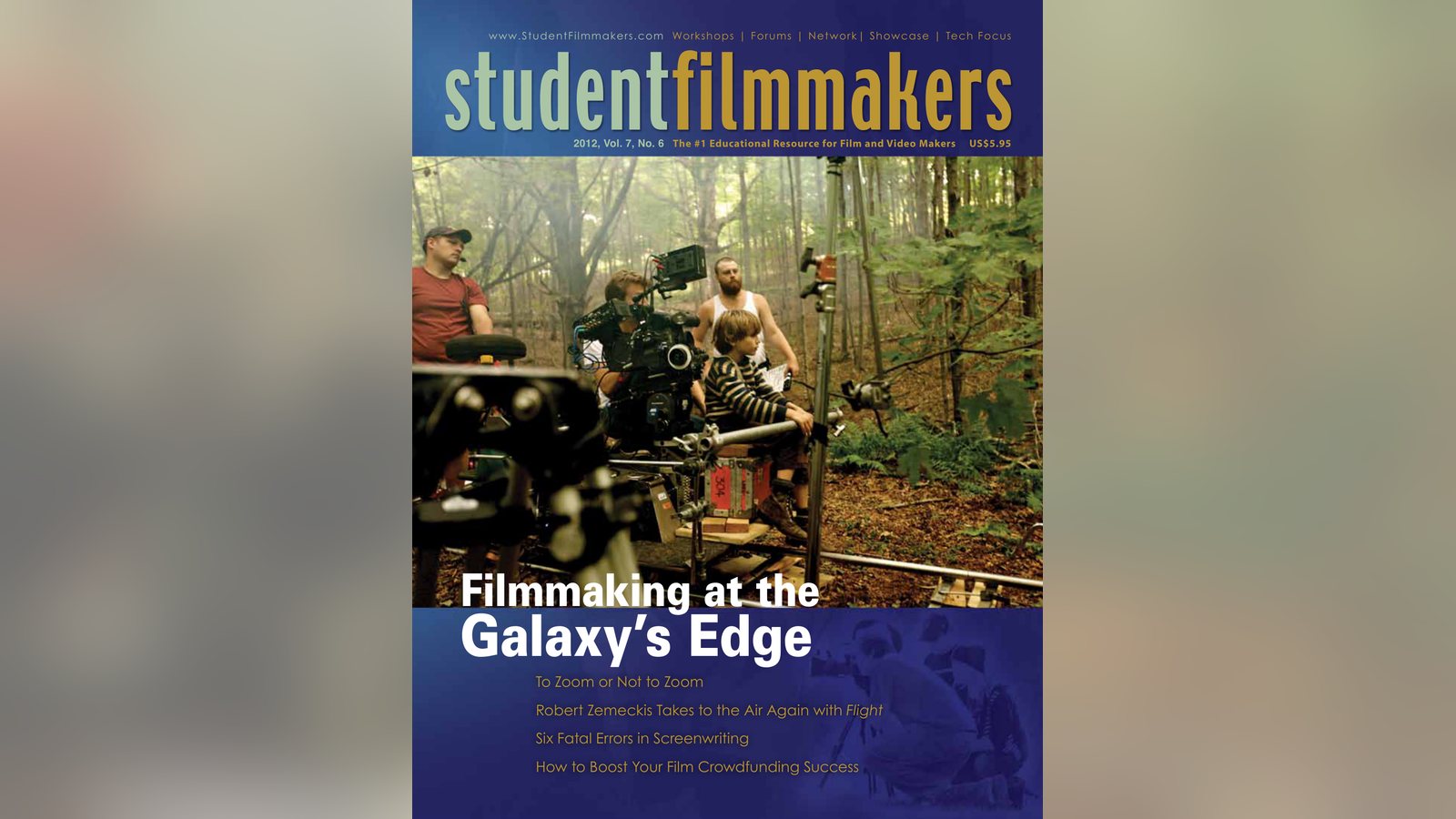
After three motion-capture features, Robert Zemeckis returned to live action with Flight. How the director made the film starring Denzel Washington.
After immersing himself in the world of motion-capture-based animation with the ImageMovers Digital company on his last three features, Robert Zemeckis can count a full 12 years since his last film with live actors, Castaway. That is, until the release of Flight, a vehicle for star Denzel Washington that is wholly unlike any film in Zemeckis’ career, and for that matter, a unique film in and of itself in many respects.
“There was a lot of discussion in my brain trust of partners and representatives about the wisdom about doing another movie with a plane crash in it,” Zemeckis said of the inevitable comparisons between Castaway and Flight. After pausing, the director of such megahits as the Back to the Future series and Forrest Gump, noted what first drew him back to live-action features. “It’s so rare to find a good screenplay like this,” he reflected. “I never felt that I went away. Movies are movies. Some bend light through a lens. Some create moving images virtually.”
After Polar Express, Zemeckis continued with his ImageMovers projects Beowulf and A Christmas Carol. Though all three projects were at least partially successful in critical terms, they were incredible expensive to produce, leading to some rumblings that Zemeckis’ lengthy experiment with ImageMovers represented his first true commercial failure. But he set the record straight on getting any project made, whether in live-action or animation. “My feeling is that movies are like love affairs,” he said. “Two people come together and if there is the right place and the right time, it gets made. I’ve connected with screenplays—it’s the romantic within me.”
One of the surefire elements to get a movie like Flight made is the attachment to the project of its leading man, in this case, Washington. “When I read the material, I said, ‘Wow this is good.’” Washington said of his reaction to John Gatins’ Flight script. “My late agent, the last two scripts he gave me were Safehouse and Flight. That was part of it – the promise I made to him.” Flight’s protagonist is anything but a traditional hero; instead, he is a seriously flawed main character which recalls the Washington vehicles He Got Game and Training Day, but Washington chose the role nonetheless. “I don’t try to decide what people should get from it or why,” he said. “I don’t do a part for those kinds of reasons.”
Self-proclaimed “nervous flyer” Gatins, a veteran screenwriter of sports films such as Hardball, Coach Carter, and Dreamer, which he directed, worked on the Flight script over a ten-year period putting it together piecemeal amongst other projects. “I wanted it to be ambiguous,” Gatins said of the unpredictable story arc and nature of the Washington character, an airline pilot who saves a troubled flight in questionable personal circumstances. “We really don’t know what he’s going to do next – he’s unpredictable.”
Washington concurred about the role. “There’s a rawness that sticks out,” he stated. “Everybody was covering their own behinds – the pilots’ union, the airlines. They needed him to be a great hero in order to fulfill their agenda. They’ve wanted him to be the hero they wanted him to be.”
Without Zemeckis and Washington on board, Gatins’ pet project lingered, but once he had those two men involved, the rest came relatively easily. “It was bold and audacious,” said Zemeckis of Flight. The project reunited him with Castaway cinematographer Don Burgess to shoot the movie on location in Georgia. “I love the complexity of everything and the moral ambiguity in every scene.”
For Washington, who described himself as a fully pragmatic actor, once he picked up the Flight screenplay, he couldn’t put it down. “You felt like you read it in 14 minutes,” he said. “This was one of those scripts I had to be a part of. It was on the page – the guts and the pain, the tears. It was like a play.”
Since the mid-1980s,
Scott Essman has been writing and producing projects about motion picture craftsmanship. He has published over 350 articles as a freelancer and has produced over twenty publicity projects for Universal Studios Home Entertainment where he made video documentaries and wrote publicity materials. He published his first book, “Freelance Writing for Hollywood,” for Michael Wiese in 2000, and has a new book about Tim Burton.
Related filmmaking guides
- Film directing: getting good performances
- Coverage and the master shot
- Camera angles in film: a beginner’s guide
Keep learning filmmaking
Want more lessons like this? Join StudentFilmmakers free for live webinars with working pros, and stream on-demand filmmaking classes in cinematography, directing, screenwriting, sound and post.






