By Ira Tiffen
Light is the lifeblood of imagery. Ira Tiffen explains how star filters turn points of light into star effects and how to use them for visual storytelling.
Light is the lifeblood of imagery. Without it, imagery dies. Knowing how to bend light to your will is an important part of visual storytelling. What can we do when light sources themselves are actually in the scene? Fortunately, this provides even more opportunities for creative control.
Let’s look at one category of effect that is particularly suited for getting the most dramatic effects from points of light in the scene. We refer to it as the ‘star’ effect.
Star filters have been around a while. They can be viewed as gimmicky by some. And, if used improperly, that may be the case. However, being able to employ them judiciously can offer significant benefits to many situations.
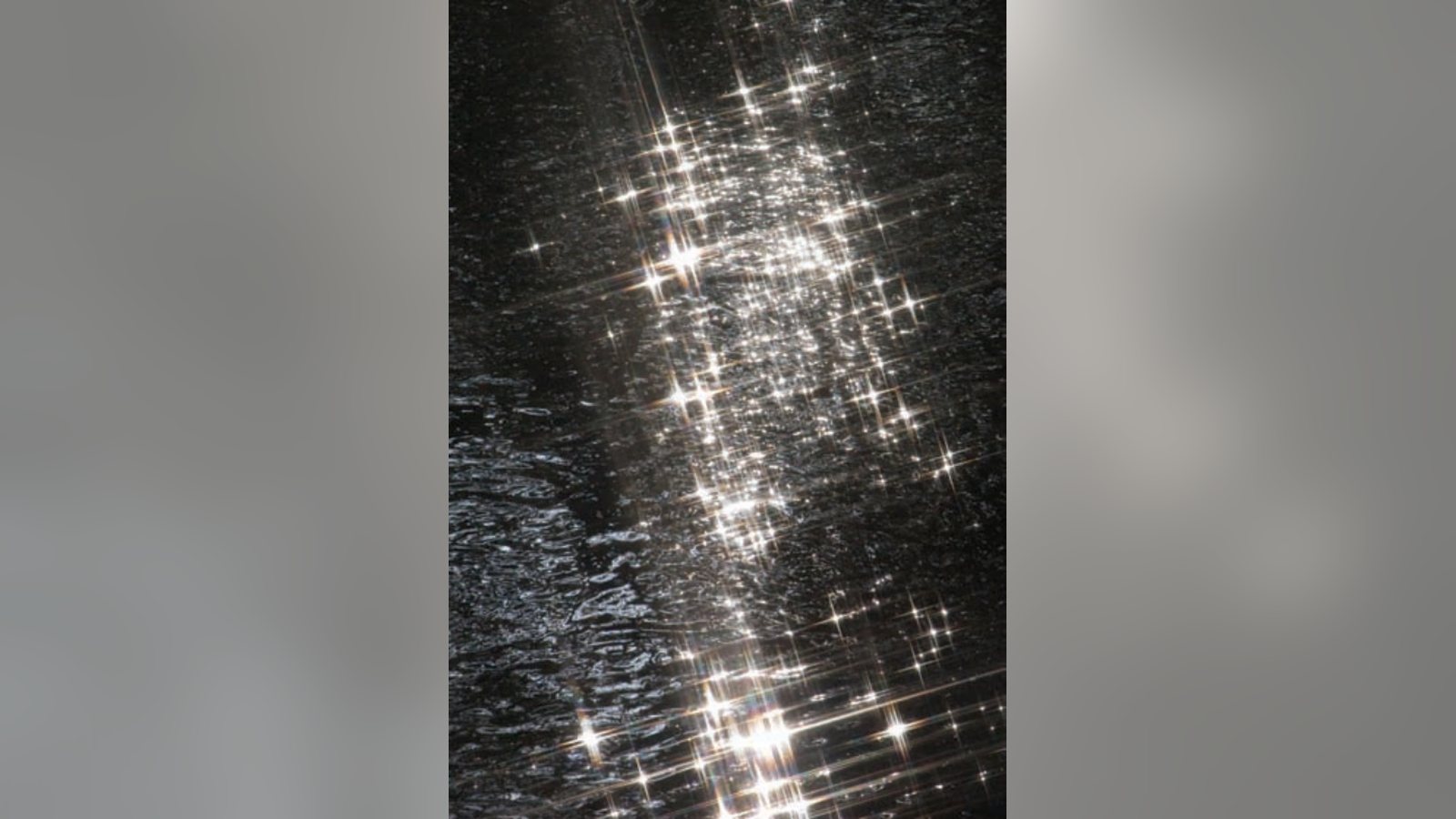
Star filters are excellent for transforming points of light in the scene into bright ‘star-like’ bursts blossoming out from each point. This has many uses, but before we discuss those, it will help us to better understand how they work.
The traditional Star filter is a clear element, usually glass but not necessarily so, that has a series of fine lines ‘etched’ into one side. These lines act like tiny cylindrical lenses (envision a solid glass polished tube, cut in half lengthwise) that cause the point sources of light to spread out thin fingers of light perpendicular to the direction of the lines, from both sides. A filter with lines, which form a grid pattern across the filter’s surface, usually spaced 1, 2, 3, or 4mm apart, and running in only one direction, will create a single line of light running through a point of light passing through. This is seen as two ‘star lines’ emanating from opposite sides of the source, and aligned in a straight line. This is a ‘2-point’ Star filter; more commonly known as a ‘Streak’ filter, due to its appearance as a streak of light through the source.
If the filter has more sets of parallel line grids running in different directions, there will be an additional set of ‘streaks’ for each direction there is a grid running. Typically, there are patterns to produce 4, 6, 8 and more points, in a symmetrical pattern, in addition to the Streak filter. The most commonly used filter is the 4pt.
The spacing between lines in a grid, mentioned earlier as measured in millimeters, determines how many lines there are on the filter. The 1mm, being closely spaced, will have twice as many lines, for instance, as a 2mm filter, and will thus create a stronger star pattern. This also created the most flare. If you want overpowering stars, use a closer spacing; more finely crafted star points come from larger line spacing in the grid. The most popular spacing are the 2mm and 3mm.
Some filters have asymmetrical patterns; they also involve grids having different line spacing in the same filter. These are designed to give a less ‘synthetic’ feel to the effect, more like a gleam or a glint than a star.
I created a number of these years ago in response to the requests of those who were not using traditional Star filters because of their ‘man-made’ look.
The ‘man-made’ look of the standard patterns is very effective, though, when the need for glitter is apparent. These are used extensively in sports arenas where the lights overhead add excitement when ‘starred.’ Religious programs, as with a speaker in front of an audience in an auditorium, often use them to extend the light into the room, adding an important psychological effect. The star lines created by these filters also take on the color of the source. When there are variously colored sources, these filters have even more impact. Theatrical events and many others can benefit as well – wherever there are strong points of light. Star effects don’t have to come directly from point sources. They are effective with bright points of reflection. This application includes anything sparkly that could use a touch of glamour: jewelry, cars, and other shiny things that reflect bright points of light that would be enhanced by such gleaming touches.
It is clear that anywhere there are bright points of light against a relatively dark background, Star filters can have a wonderful effect. There are things to know about their use, though, before you start experimenting.
As with any other ‘patterned’ filter, it is possible, with sufficient depth-of-field, to partially focus on the line pattern. This will appear as a waffle-like grid, the pattern on the filter, appearing fuzzily in the image. To avoid this, it is best to use larger iris openings and longer focal lengths, both of which will reduce the ability of the camera to focus on something mounted right on the lens, as will focusing on a subject that is further away from the camera.
In our image examples, there are two scenes. The unfiltered ‘Sparkles’ image shows the sun’s many reflective points from the water’s rippled surface as we would see it. The addition of a 4pt 2mm Star filter creates a galaxy of stars from the same scene; ever so much more interesting. Note that most Star filters are mounted to allow you to rotate the filter to best align the star pattern with your scene.
In the ‘Water’s Edge’ scenes, we see in the unfiltered image again what we would ourselves see. With the 4pt filter and a lens opening of 16 we can see the result of focusing on the filter’s grid pattern. The lines of light are broken up into disjointed segments, very distracting and not at all desirable.
In the last image, using both the 4pt filter as before and a Vector Star filter, one of those asymmetrically patterned filters I mentioned earlier, a clean and commanding star is created by using a lens opening of 4.
Star effects are another powerful way to add excitement and glamour to any scene containing bright points of light. Especially if you know how they do what they do. Have fun experimenting!
Related filmmaking guides
- What does a cinematographer do?
- How to become a cinematographer
- Camera angles in film: a beginner’s guide
Keep learning filmmaking
Want more lessons like this? Join StudentFilmmakers free for live webinars with working pros, and stream on-demand filmmaking classes in cinematography, directing, screenwriting, sound and post.