Steadicam operator Peter Robertson explains how he trained, how Steadicam scenes are planned, the rigs he used on Atonement and In Bruges, and his advice.
Peter Robertson: I went to University College London to study Fine Art before working as a camera assistant in documentary. I eventually became a camera operator, and needed to add steadicam to my repertoire of skills for drama work, so I took a reputable course. This is what I advise to any camera operator rather than ‘guess’ how a steadicam works, or copy someone else’s bad habits.
Could you describe what happens in pre-production or on set for scenes that require steadicam?
Peter Robertson: In pre-production the director and cameraman will initially discuss the need for using a steadicam. If the scene is particularly complex and challenging, I will usually get a call at this stage to get involved. Sometimes a set or location may need a special build to accommodate the steadicam, in which case I may work with the art director or special effects to make sure that the shot can be achieved.
Two examples: In the film “The Secret Agent”, I had to complete a long take for the opening credit sequence, which ended with me riding a crane to a first story window in a studio set piece. The director wanted the camera to travel inside the window to begin the first dialogue scene between two actors, which obviously involved me physically traveling through the window. I asked for the designer to build the top wall of the set to ‘fly’ as I stepped off the crane and once the lens cleared the window frame and was optically inside the room. In another film, “Unknown”, I was asked to travel alongside a taxi as it arrived at a hotel to deposit its fare (Liam Neeson), and then follow him into the hotel. I asked the special effects supervisor to build me a platform off the side of the taxi that I could step off once the car came to a standstill as I had no other way of keeping pace with the taxi’s approach.
On set, the operator’s involvement will vary according to the complexity of the shot and the amount of involvement the director wants from the operator. Generally the steadicam operator will need to look after the technical, artistic, and safety issues of the shot once the director and DOP approve it.
Which cameras did you shoot with, and could you describe your Steadicam rigs used in “Atonement” and in “In Bruges”?
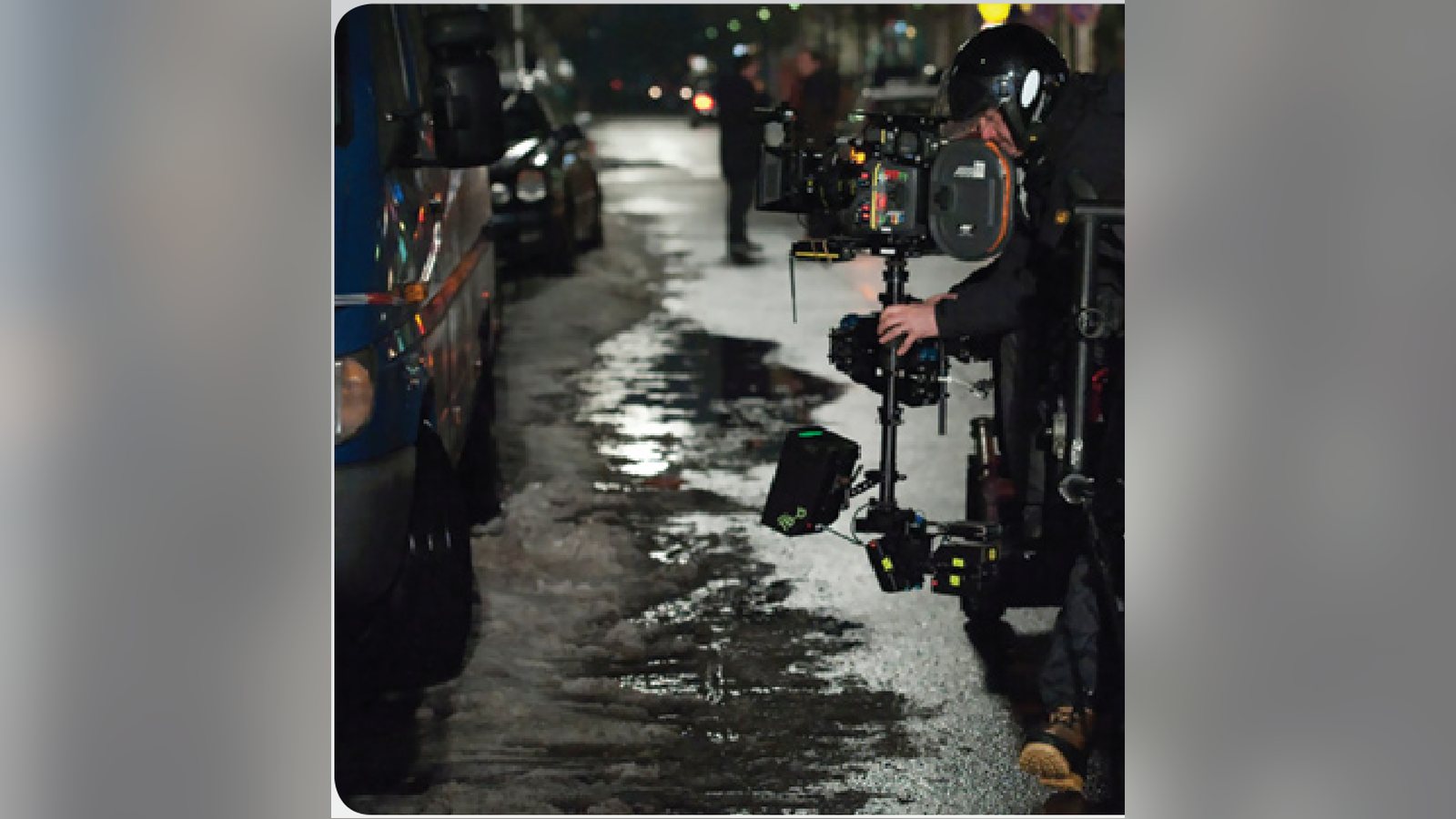
Peter Robertson: Both films were shot Super 35mm Spherical. “Atonement” was shot on the Panavision System flying a Pana XL with Primo lenses. “In Bruges” was shot on Arri LT with Master Primes. For both films, I used a GPI Pro Mk II rig with TB6 green screen monitor. I also use a Klassen back mount vest.
What’s the most dangerous steadicam shot you’ve done?
Peter Robertson: They are all dangerous if you consider that your body is always on the line when wearing a steadicam, but for sheer nail-biting anxiety, you can’t beat riding a quad bike at speed or stepping on and off cranes. However, any shot that contains an element of danger should always be controlled, shot with health and safety in mind, and with all physical risks to the operator minimized.
In relation to getting into the film business, could you share your insights or some advice for camera operators who aspire to become steadicam operators?
Peter Robertson: Getting into the film business can be very difficult and unpredictable. Jobs can pass you by and go to other people. However, these are the things that you can’t really control. Only worry about the things you can control, and be patient about getting results. Work on your skills and watch how shots are constructed in movies. If you want to extend your skills as a camera operator to include steadicam operating, as I mentioned before, take a reputable course run by operators who have good CVs in the area of the industry in which you want to work. Steadicam demands a lot of practice in which you must persevere if you are to become a ‘master’. There is really no shortcut to success, so be prepared to work very hard. If this is not to your liking, go directing. Ask questions of operators whose work you like and admire. Most operators will be happy to give their time, as that’s probably how they got started too.
If you could share your top three steadicam tips for filmmakers and camera operators around the world, what would they be?
Peter Robertson: Firstly, I would say that you should always work within your limitations, which means being honest with yourself about your skill levels. Don’t offer anything to the director that you can’t confidently deliver. You are only as good as your last shot in the steadicam world, and if it’s a cluster-fuck, that’s how you will be remembered. Word gets around quickly too. You don’t want to be standing in the lunch queue on your next job and hear a piece of unwelcome gossip!
Secondly, get the basics right in your technique, and forget the grand gestures and complicated stuff. What I mean by this is: there is not much of a point in offering a shot that is the longest in cinema history if you can’t hold a steadily composed frame at the beginning. There are some very basic techniques that directors and DOPs will expect from a good steadicam operator. Holding level and well-composed frames that give ‘cut-able’ points for the editor. Moving off and landing on locked frames without giving the game away that you’re using a steadicam will also get you noticed for your mastery. Remember, you are first and foremost a camera operator, and not a circus act.
Thirdly, everything on-set now gets shot on EPK, so learn to operate without puffing your cheeks or sticking out your tongue if you want to avoid embarrassment on the DVD ‘extras’ roll. Seriously, self-presentation is important. If you’re organized, well rehearsed, and fit for the job, you will cut a convincing figure.
Keep learning filmmaking
Want more lessons like this? Join StudentFilmmakers free for live webinars with working pros, and stream on-demand filmmaking classes in cinematography, directing, screenwriting, sound and post.