By Todd Grossman
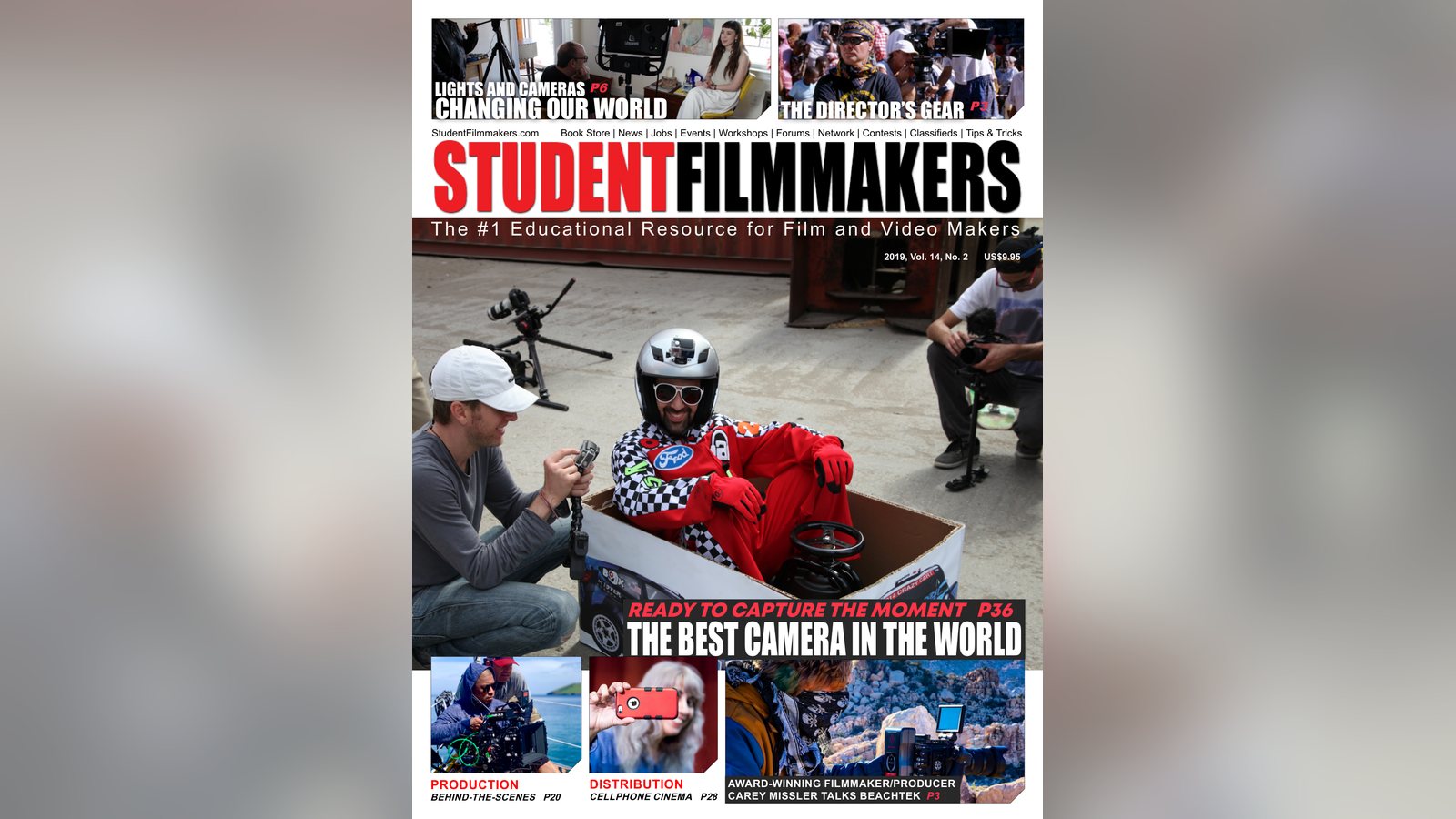
“The best camera in the world is the one you have with you.” Todd Grossman asks whether that is true and what it means for filmmakers and storytellers.
We’ve all heard it, ‘the best camera in the world is the one you have with you’. But is it true?
Behind the adage is the simple idea that if you don’t have a camera on you, you won’t capture ‘it’. But what is ‘it’? No, not the trans-dimensional shape shifting clown. ‘It’ could be the perfect stock footage moment you came across one afternoon downtown. Or that surreal sunset you need to shoot for today’s snap or Instagram post. Or you’re on set shooting a narrative short film or even Transformers 17, and you see an opportunity to capture a unique angle during an action scene, but you need another camera (seriously, look closely and you’ll see GoPro shadows clearly visible during the final battle in Transformers: Age of Extinction). Regardless of your ‘it’, there’s truth in all of these examples. As a filmmaker, at any given moment in life, you’ll find yourself ready to capture a moment, and whatever you have with you, will get the job done.
Now if time permits, there are even more cameras available to us as filmmakers than ever before. From the never-ending debate of RED vs Alexa, to the rise of DSLR and Mirrorless (such as the highly anticipated Sony A7S III) you’ll find an ideal tool for nearly every moment. On top of that, if you’re feeling nostalgic, you could shoot on good old-fashioned film with the few remaining greats that still do; such as Quentin Tarantino and Christopher Nolan. If the softness and surreal quality of film sounds appealing, I strongly suggest the Keanu Reeves documentary SIDE BY SIDE which breaks down the analogue / digital divide through interviews with countless legends in the industry.
In recent years, I’ve had the privilege to shoot a variety of action projects with companies ranging from Bluerock Creative and 87eleven to various film studios. On the one end we’ve shot smaller digital spots such as pro skateboarder Kilian Martin’s EDGE OF THE WORLD. That was captured on simple Go Pro Hero 7’s, an A7s II mounted on a Movi gyroscopic stabilized gimbal, and aerial moments on a DJI Mavic Pro drone. On the higher end we shot pick-ups for John Wick and numerous commercials, such as the ARCH Motorcycles campaign, which we captured on the ARRI Alexa, Alexa Mini, and a proprietary heavy load drone. In each case, the camera was chosen specifically for the project.
Ultimately, everything we’ve shot had a distinctly different look. Some of which was born out of choices we made in prep. Location choices, framing, cast, lighting, and performance, are just a few of the very choices you may find yourself making on projects. However, in all cases, there were times when we could have swapped cameras for a similar result. One camera manufacturer might boast a higher resolution, while another boasts less compression… but when push comes to shove, you have to choose how a final image looks to the naked eye, to really decide what best suits your project.
Many filmmakers choose cameras based on specific project needs which can include camera size, sensor size, dynamic range, color accuracy, frame rates, post workflow, and other technical merits. For action I generally prefer a faster FPS (Frames per Second) so I can snap into slow motion for that just right moment. When filming 7-Time AMA Supercross Champion Jeremy McGrath, I knew there would be fine particles of dirt flying in the air, so shooting high speed to grab those surreal moments was the right choice. With Arch Motorcycles, we had its founders Gard Hollinger and Keanu Reeves racing through canyon roads with several stunt riders, but we knew filming a motorcycle riding in slow motion often just looks like the rider is ‘driving slowly’, since there are none of those particles. So, we shot a standard 24 FPS.
In the end, we used a variety of cameras on every project based on what best suited our needs. However nearly any camera could have done the job in most cases, which is why, the best camera in the world, will always be the one you have with you. Kilian Martin being photographed skating for Edge of the World
Photo Cred: Cory Miller.
Related filmmaking guides
- What does a cinematographer do?
- How to become a cinematographer
- Camera angles in film: a beginner’s guide
Keep learning filmmaking
Want more lessons like this? Join StudentFilmmakers free for live webinars with working pros, and stream on-demand filmmaking classes in cinematography, directing, screenwriting, sound and post.