By Bryant Falk
With hard drives and flash storage, tape is done. Sound designer Bryant Falk explains how to transfer, store and back up location audio and video safely.
With the growing use of hard drives and flash storage, the day of the tape is finally up. Some of the biggest problems to tackle are transfer, storage, and backup, (the last one being most important). As I head out to shoot another short video project myself this month, I want to share with you the issues and plans of action I’m taking to capture location media and successfully back it up.
First issue to address is how you’re transferring your data off your recording device. Some have card readers that take the flash memory cards and let you transfer through a computer to a hard drive. Others will have to plug their camera or audio device into either a Firewire, (i.e., 1394) or USB2 connector. Make sure your device is compatible with your computer system. For example, some recording equipment requires an Intel-based Mac computer for transfer purposes, (or Intel PC computer). They will not work with a Power PC chip. Others may need conversion software for your files to be readable by your editing system. This needs to be ironed out before you get to the shoot.
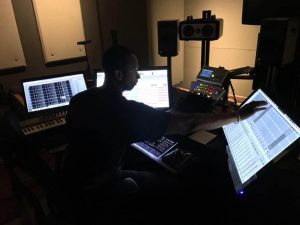
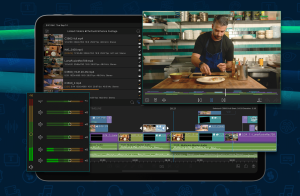
My current project will be shot using the AVCHD codec with USB2 transfer being done on sight. They have two cameras so one will be downloading while the other is shooting. We will have two external hard drives daisy-chained together for master and backup. This will all be handled with an Intel chip Macbook Pro. The files will be encoded or “wrapped” in an Apple Pro Res format to allow for Final Cut editing. I believe Adobe Premier allows you to edit AVCHD without an additional encoding step, (edits in native AVCHD).
Audio from camera will then be output as OMF files for mixing purposes. We are also running an old school Tascam DA-P1 DAT recorder for additional audio tracks. (Who would have thought a DAT machine would be, old school?).
Other portable audio recorder systems like the Tascam DR-100 or HD-P2 are showing up on more and more location shoots. Whether low budget or not, transferring your assets to another storage system for redundancy is imperative. The irony to this entire equation is the requirement of a laptop and drives on set which can be bulkier than the recording gear itself.
I’ve been finding on low budget projects that synced sound to picture is more of a luxury than a reality. The good old clapper still ranks supreme in syncing external audio tracks. This is also ironic when everything is running digital. I believe a new sync system that possibly runs on Bluetooth or some other wireless system may show itself soon. Imagine turning on your portable audio recorder and with the push of a button it looks for any available video cameras. Now that would be a great application of technology! Two steps forward, one step back. Hey, in the end we’re still going forward. Bryant Falk has been a producer and engineer for over 12 years working with such clients as The Ricki Lake Show, Coca-Cola, Sports Illustrated, Valley National Bank, and MTV’s The Shop. His company Abacus Audio handles many aspects of the audio production field from creative and production to mixing and final output. (website: www.abacusaudio.com)
Related filmmaking guides
- The power of sound in film
- Understanding microphone frequency response
- ADR: automated dialogue replacement explained
Keep learning filmmaking
Want more lessons like this? Join StudentFilmmakers free for live webinars with working pros, and stream on-demand filmmaking classes in cinematography, directing, screenwriting, sound and post.