By Dean Goldberg
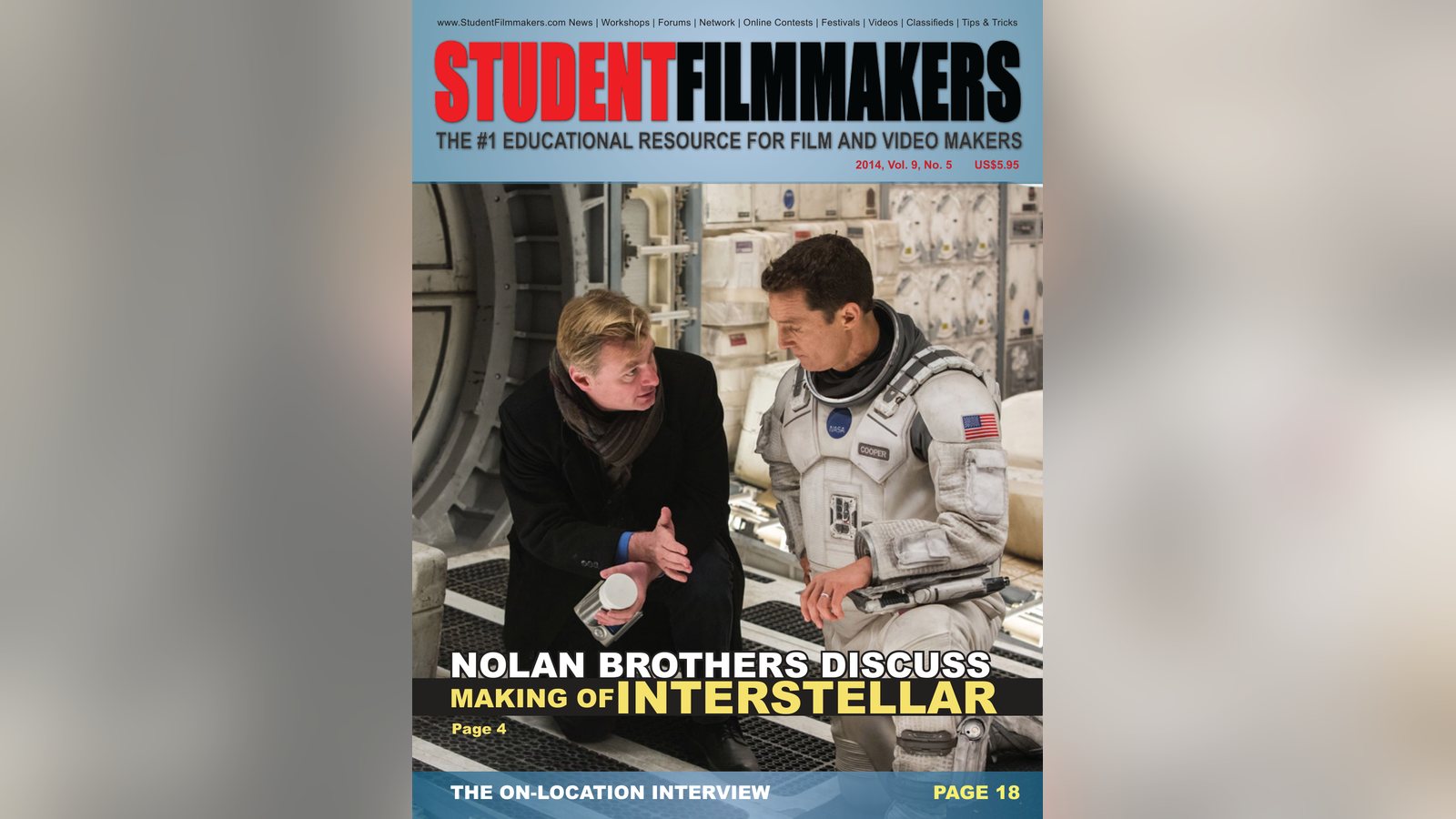
The on-location interview looks easy but is often misunderstood. Dean Goldberg explains how to set up, light, mic and conduct interviews on location.
Since my assignment for StudentFilmmakers is to write about film and video production around the college scene, I thought I’d enhance the narrative a little by beginning with a true or false quiz. Here goes.
True or False Quiz
1. True or false? My column this month is going to be pretty short. I’m on deadline.
2. True or false? Shooting an interview means making the best out of the space allocated.
True or False Quiz Answers
1. True.
2. False.
Tell the truth now, did you get 100% or did you fail? If got a perfect score, you can skip this column and read about something that’s really interesting in this magazine. If you failed, don’t feel bad. It wasn’t a trick question actually, but I admit it was kind of sly.
On location interviews can be a nightmare. Small offices, large desks, no windows – I could go on forever. And that’s not even mentioning noise and terrible acoustics (take a wireless lavaliere, please, now that’s been solved; let’s get back to our camera problems). But, so often some students – and for that matter, some teachers – forget critical production solutions. First among them are the dimensions of your “set.” If you are led to a tiny office for an interview you can do one of three things.
1. Try to overcome an impossible situation. 2. Break down and beg for another location. 3. Put your interviewee in the doorway and compose the “office” in back in the shot.
Remember, it’s your frame. You own it. Rather than trying to hang or hide lights in high corners, come out of the office! If you’re lucky enough to have ten or fifteen feet to play with outside the office, than set up your camera there, push in to the longest lens you can get away with, throw a 350/650 through a cookie or whatever you feel works best on the back wall and then light your subject with a soft light and a bounce outside the office. You can use a high corner for a rim light if you’d like.
Lighting the CEO
Like so many of you, I’ve spent lots of hours interviewing the big honchos. I’ve seen some pretty swanky offices and some pretty gigantic desks in my time. I agree it creates an impression of strength and power when clients or employees walk through the door. But… you’re not a client or an employee (thank the Lord), you’re a filmmaker, and that means you’re essentially doing the same thing you do in any situation: you’re creating a frame. A good frame will make use of the most interesting “section” of the office and not necessarily the center of attention in the room. You’re in luck if there are some artifacts or old books and stuff like that, but photos of the big cheese with even bigger cheeses? Save it for the cutaways. Most importantly if that $10,000 antique desk does take over the room, make sure you take his equally expensive leather chair, put it outside and get him to sit on a normal chair in front of his desk. Two rules you should always remember. Never, ever steal candy from a baby; and never, ever put a large desk between you and your subject.
The Three Points of Light
I wrote about the “holy trinity” a few years ago. This old school three-point lighting drill is one of the most dangerous lessons new production students learn very early on. It’s not that it’s wrong, it’s just a little misguided. And it continues to this day. I recently logged on to a three point lighting scheme posted by one of the most prominent lighting services in America. It looks as though they’re trying to melt the subject by throwing hot lights at them from the front, back and side. Maybe that’s the only way the design can be illustrated – it does tell the visual story, but I still feel it makes a very bad first impression. Yes, we need some sort of key. Yes, you want to raise the ambient light to a level that doesn’t put the subject in shadow; and yes, a kicker will crisp things up. But think logically. If you have a great window, use that as your key. A practical lamp with a little hotter bulb can spread enough ambient light to keep you out of the dark and create a sense of place as well. Or use a white card or reflector. Also, try to remember to never use the word “FILL” unless you’re calling out someone’s name.
Wrapping it up.
I was told I have to keep this short so, here’s the wrap up.
1. For simplicity, use the longest focal length you can get away with. It creates less space to dress in the frame and also makes for a nice looking background.
2. Buy a Chimera or any light that you can shine through a soft box or spun glass. If you have enough room for balanced, fluorescent lights, terrific. But for this column, I am assuming you’re using average lighting kit for a medium-sized video or film department. Kino flos are great but take up room and are fragile. 3. Don’t try to document the space that surrounds your interviewee. Your subject is your space.
4. Always come with an arrangement of flowers. Use them if you need a splash of color – or give them to the secretary so she doesn’t resent it when you ask her to order lunch.
As for the actual interview?
I’ll write about that at a later date.
I will give you one tip though: don’t make your questions true or false. It will make for an exceedingly short interview.
Related filmmaking guides
- Film directing: getting good performances
- Coverage and the master shot
- Camera angles in film: a beginner’s guide
Keep learning filmmaking
Want more lessons like this? Join StudentFilmmakers free for live webinars with working pros, and stream on-demand filmmaking classes in cinematography, directing, screenwriting, sound and post.