Top 10 Cinematography Schools
Do you want to become a cinematographer or director of photography? Choosing the right film school can give you more than access to cameras, lenses, lights, soundstages, and production equipment. A strong cinematography program can put you in the room — and on the set — with working cinematographers who understand how lighting, composition, lens selection, exposure, camera movement, color, and collaboration come together to tell a story visually.
The United States has many outstanding film schools, but not every great film school offers the same level of cinematography training. For this list, we looked specifically at cinematography education: dedicated cinematography programs and concentrations, current cinematography faculty, hands-on production opportunities, professional equipment and facilities, connections to the film and television industry, student accomplishments, and faculty affiliations with organizations such as the American Society of Cinematographers (ASC).
Some of the cinematographers teaching at the schools below have photographed major feature films and television series, won or been nominated for important cinematography awards, and belong to professional organizations including the ASC, AIC, PSC, AMPAS, ICG and others.
If you are still learning exactly what the job involves, start with StudentFilmmakers’ guide to What Does a Cinematographer Do? and How to Become a Cinematographer. A cinematographer is responsible for far more than operating a camera. The DP helps translate the director’s ideas into visual storytelling through lighting, lenses, composition, camera placement and movement, exposure, color, and collaboration with the camera, grip, and electric departments.
Here is our Top 10 Cinematography School List.
#1. American Film Institute (AFI) Conservatory — Cinematography
Website: https://conservatory.afi.com
Address: 2021 North Western Avenue, Los Angeles, CA 90027-1657
Contact: 323-856-7600 | [email protected]
Program: MFA Conservatory — Cinematography
For an aspiring cinematographer looking specifically for intensive graduate-level training as a director of photography, the AFI Conservatory is difficult to beat. Unlike film programs where cinematography is one component of a broad filmmaking curriculum, AFI has a dedicated Cinematography discipline in which Fellows concentrate on the craft of visual storytelling.
The curriculum combines technical cinematography with lighting, camera systems, composition, color, collaboration, and the practical demands of shooting narrative projects. AFI Fellows work alongside students specializing in directing, producing, editing, production design, and screenwriting, creating a professional-style collaborative environment.
Cinematographers Teaching at AFI
The cinematography faculty is one of the strongest reasons AFI earns the #1 position on this list.
Stephen Lighthill, ASC serves as Cinematography Discipline Head. His career includes documentary, feature-film, and television work, with credits including Gimme Shelter, Berkeley in the ’60s, Vietnam War Story, Earth 2, and Nash Bridges. Lighthill has also served multiple terms as president of the American Society of Cinematographers.
AFI’s cinematography faculty also includes Sandra Valde-Hansen, ASC, LPS; Jacek Laskus, ASC, PSC; Michael M. Pessah, ASC; and Valentina Martinico, AIC, among other working cinematographers and educators. Martinico is a member of the Italian Association of Cinematographers and has participated in diversity and inclusion work involving AIC and IMAGO.
AFI students also gain exposure to an extraordinary circle of visiting cinematographers. Recent and past guest lecturers have included Rachel Morrison, ASC; Ed Lachman, ASC; Ellen Kuras, ASC; Erik Messerschmidt, ASC; Polly Morgan, ASC, BSC; Ari Wegner, ACS, ASC; Catherine Goldschmidt, ASC, BSC; Steve Yedlin, ASC; and others.
For a filmmaker whose central goal is becoming a professional cinematographer, AFI offers an unusually concentrated combination of craft, mentorship, production, and industry access.
#2. University of Southern California (USC) School of Cinematic Arts
Website: https://cinema.usc.edu
Address: 930 W. 34th St., SCB-105, Los Angeles, CA 90089-2211
Contact: 213-740-8358 | [email protected]
Program: Film and Television Production with advanced cinematography training
The USC School of Cinematic Arts combines extensive production resources with one of the most recognizable film-school alumni networks in the world. For cinematographers, its Los Angeles location offers another advantage: students are studying in the same city where an enormous amount of film, television, commercial, and streaming production takes place.
USC’s production curriculum develops broad filmmaking knowledge while allowing students to pursue advanced work in cinematography. The school maintains camera, lighting, and sound equipment for hundreds of student productions and has expanded into virtual production through the Blavatnik Center for Virtual Production.
Cinematographers Teaching at USC
One of USC’s Professors of Practice is Christopher Chomyn, ASC, an active member of the American Society of Cinematographers and a member of the National Executive Board of the International Cinematographers Guild. His credits include Picture Bride, Phantasm III, Phantasm IV, Lockdown, and Sea of Dreams.
USC also added cinematographer Robert Yeoman to its faculty. Yeoman is particularly well known for his long creative partnership with director Wes Anderson, beginning with Bottle Rocket. His credits include Rushmore, The Royal Tenenbaums, Moonrise Kingdom, and The Grand Budapest Hotel, for which he received an Academy Award nomination for cinematography.
His work outside Anderson’s films includes Drugstore Cowboy, The Squid and the Whale, Bridesmaids, and Ghostbusters.
Learning cinematography from faculty with significant professional experience — while constantly collaborating with directors, producers, editors, and production designers — is one of USC’s greatest strengths.
#3. Chapman University Dodge College of Film and Media Arts
Website: https://www.chapman.edu/dodge
Address: One University Drive, Orange, CA 92866
Contact: 714-997-6765 | [email protected]
Program: BFA Film & Television Production; MFA Film Production with Cinematography specialization
Chapman’s Dodge College deserves a particularly high position because students can make cinematography an explicit focus of their education.
Undergraduate Film and Television Production students build a filmmaking foundation before specializing in areas that include cinematography. At the graduate level, students entering the MFA in Film Production can specialize specifically in cinematography, directing, or editing. Chapman emphasizes hands-on production, with students beginning production work early in their education.
Cinematographers Teaching at Chapman
Johnny Jensen, ASC is a professor at Dodge College with an unusually broad industry résumé. His professional affiliations include the American Society of Cinematographers, International Cinematographers Guild, Directors Guild of America, Academy of Motion Picture Arts and Sciences, and the Television Academy.
Jensen’s career began on major productions. His early work included serving as a technician on The Godfather, a camera assistant on Altered States, and a camera operator on An Officer and a Gentleman.
As a director of photography, his credits include Rambling Rose, Grumpy Old Men, Rosewood, and The Game of Their Lives, as well as television work including L.A. Dragnet and Heartland. He earned Emmy nominations for his cinematography on Into the Badlands and An American Story.
For a student who wants a traditional university experience but also wants to identify specifically as a cinematographer, Chapman’s combination of specialization, production volume, facilities, and working faculty makes Dodge College especially compelling.
#4. UCLA School of Theater, Film and Television — Cinematography MFA
Website: https://www.tft.ucla.edu
Address: 225 Charles E. Young Dr. East, Los Angeles, CA 90095
Contact: 310-206-8441 | [email protected]
Program: MFA in Cinematography
UCLA moves high on this list because it offers something that many prestigious film schools do not: a dedicated graduate program in cinematography.
The MFA curriculum includes introductory through advanced cinematography, motion-picture lighting, lighting for film and television, documentary cinematography, collaboration, digital workflow, color grading, and emerging cinematography techniques. Students are able to develop both the technical and artistic sides of image making instead of approaching cinematography as simply a camera course within a general film degree.
Cinematographers Teaching at UCLA
William McDonald is Professor and Head of Cinematography. He received UCLA’s first MFA degree specifically in cinematography and has spent more than 28 years teaching the craft. McDonald has been an Associate Member of the American Society of Cinematographers since 2009 and has received recognition for cinematography education, including the SMPTE Kodak Educational Award.
Ángel Granados is a working director and cinematographer whose experience includes narrative features, documentaries, advertising, and other production. His background also includes working as an in-house cinematographer, editor, and producer for the American Society of Cinematographers and American Cinematographer magazine.
He previously participated in the Global Cinematography Institute fellowship under cinematographers Vilmos Zsigmond, ASC, and Yuri Neyman, ASC.
UCLA therefore offers a powerful combination: dedicated cinematography study, a major research university, Los Angeles access, and faculty whose careers connect cinematography education directly to the professional community.
#5. New York University Tisch School of the Arts
Website: https://tisch.nyu.edu
Address: 721 Broadway, New York, NY 10003
Contact: 212-998-1700 | [email protected]
Programs: Graduate Film; Undergraduate Film & Television
NYU Tisch does not approach cinematography exactly the way AFI or UCLA does, but cinematography is deeply embedded in its production culture. Graduate Film operates as an intensive filmmaking conservatory, while undergraduate Film & Television students can take substantial production coursework including cinematography, directing, writing, producing, and editing.
New York itself becomes part of the education. Students are surrounded by independent filmmaking, episodic television, documentaries, commercials, fashion, music videos, and an enormous community of working camera professionals.
Cinematographers Teaching at NYU
Tami Reiker, ASC is an Assistant Professor at Tisch and a particularly impressive cinematographer for students to encounter in the classroom. Reiker became the first woman to win an American Society of Cinematographers award, receiving the ASC Outstanding Achievement in Cinematography Award for the HBO pilot Carnivàle.
Her credits include Regina King’s One Night in Miami, The Old Guard, Beyond the Lights, Pieces of April, and High Art, along with television work including The Morning Show. Reiker has been a member of both the ASC and Academy of Motion Picture Arts and Sciences.
Mia Cioffi Henry, a working director of photography and IATSE Local 600 cinematographer, also teaches at Tisch. Her work spans features, television, commercials, and music videos.
StudentFilmmakers’ own Exclusive Interview with Patrick Cady, ASC touches on his experience studying at NYU after first discovering his fascination with lighting, framing, and exposure.
#6. ArtCenter College of Design — Film
Website: https://www.artcenter.edu
Address: 1700 Lida Street, Pasadena, CA 91103
Contact: 626-396-2373 | [email protected]
Programs: BFA Film; MFA Film with cinematography study
ArtCenter is an especially interesting choice for cinematographers because the school approaches filmmaking within a broader culture of visual design. Students are surrounded by photography, fine art, graphic design, illustration, entertainment design, and other visual disciplines.
Film students can pursue cinematography as an area of specialization, with coursework addressing lighting, composition, and advanced cinematography. Graduate film students can likewise concentrate their studies in areas including cinematography.
Cinematographers Teaching at ArtCenter
Affonso Beato, ASC, ABC teaches graduate film at ArtCenter. Beato has spent more than five decades working as a cinematographer and has shot dozens of feature films as well as hundreds of commercials and documentaries.
He is affiliated with both the American Society of Cinematographers and Brazilian Society of Cinematographers and is a member of the Academy of Motion Picture Arts and Sciences. His courses have included Lighting the Narrative, Advanced Cinematography, and Watching Films Like a DP.
ArtCenter also has Steven Poster on its faculty. Poster worked as second-unit director of photography on Close Encounters of the Third Kind and performed significant additional photography on Blade Runner.
As a DP, his credits include Donnie Darko, Stuart Little 2, Daddy Day Care, Rocky V, Big Top Pee-wee, and Someone to Watch Over Me, for which he received an ASC cinematography nomination.
For a cinematographer who thinks in terms of image design as much as technology, ArtCenter provides an appealing intersection of filmmaking and visual-art education.
#7. University of North Carolina School of the Arts (UNCSA) School of Filmmaking
Website: https://www.uncsa.edu/filmmaking
Address: 1533 South Main Street, Winston-Salem, NC 27127-2738
Contact: 336-770-1330 | [email protected]
Program: BFA Filmmaking — Cinematography concentration
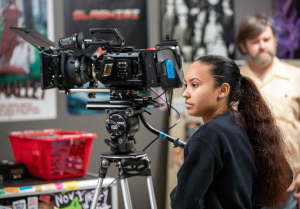
UNCSA belongs high on a cinematography-specific list because students can pursue a dedicated undergraduate cinematography path rather than waiting until graduate school to concentrate heavily on the craft.
The BFA filmmaking program emphasizes hands-on production, and cinematography students learn camera, lighting, composition, and visual storytelling while working with students in other filmmaking disciplines.
Cinematographers Teaching at UNCSA
Thomas Ackerman, ASC has a feature-film résumé containing films that generations of moviegoers immediately recognize.
Ackerman photographed Tim Burton’s Beetlejuice as well as National Lampoon’s Christmas Vacation, Jumanji, and Anchorman: The Legend of Ron Burgundy.
His professional memberships include the American Society of Cinematographers, Academy of Motion Picture Arts and Sciences, ICG Local 600, and Directors Guild of America.
StudentFilmmakers readers can actually continue learning from Ackerman on this site. Read his article Love the Look: And Leave Your Spot Meter at Home, in which he discusses film exposure and lighting in response to a cinema student’s questions about shooting a 16mm interior.
UNCSA’s cinematography faculty also includes Amit Bhattacharya.
The combination of a dedicated undergraduate cinematography concentration, substantial production work, and access to an ASC cinematographer with major Hollywood feature credits makes UNCSA one of the strongest options outside Los Angeles and New York.
#8. Loyola Marymount University School of Film and Television
Website: https://sftv.lmu.edu
Address: One LMU Drive, Los Angeles, CA 90045
Contact: 310-258-4630 | [email protected]
Program: Film and Television Production
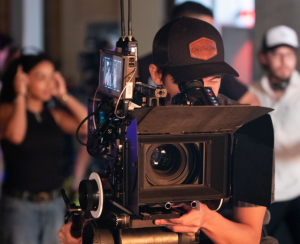
Loyola Marymount combines production education with a valuable Los Angeles location. Students studying film and television production work across cinematography, directing, editing, producing, sound, and other aspects of filmmaking while developing their own productions.
For aspiring cinematographers, one of LMU’s strongest assets is its access to highly accomplished working professionals and mentors.
Cinematographers Teaching at LMU
Amy Vincent, ASC is a Professor at LMU’s School of Film and Television and has also served there as a Distinguished Artist in Residence. She received the American Society of Cinematographers’ Presidents Award in 2024, recognizing not only her cinematography but also her commitment to mentorship and education.
Vincent’s feature credits include Kasi Lemmons’ Eve’s Bayou and Craig Brewer’s Hustle & Flow, Black Snake Moan, and Footloose. Her work on Hustle & Flow earned cinematography recognition at the Sundance Film Festival.
LMU students have also received ASC student cinematography recognition, demonstrating that the cinematography culture extends beyond faculty accomplishments to the work students themselves are creating.
That combination of working cinematographers, student production, and proximity to Los Angeles makes LMU a serious choice for future DPs.
#9. Savannah College of Art and Design (SCAD) — Film and Television
Website: https://www.scad.edu
Address: Savannah Film Studios, 2315 Louisville Road, Savannah, GA
Contact: 800-869-7223 | [email protected]
Program: Film and Television
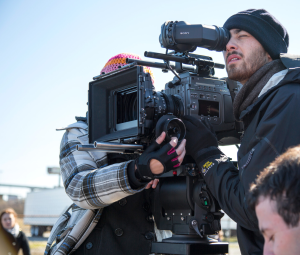
SCAD has built unusually extensive production facilities for students studying film and television. Its Savannah Film Studios complex includes soundstages, backlot environments, and virtual-production resources, giving students experience with both traditional production and newer LED-volume workflows.
For cinematographers, those facilities matter because lighting and photographing a practical set, location, soundstage, and LED volume require different skills.
Cinematographers Teaching at SCAD
SCAD Professor Alan Caso, ASC brings substantial television cinematography experience into the classroom. Caso received the ASC’s Television Career Achievement Award, with a career that includes work on Six Feet Under, Dexter, The Americans, Hawaii Five-0, Why Women Kill, Paradise Lost, and The Rookie.
SCAD’s faculty also includes Paul Atkins, ASC, a cinematographer and documentary filmmaker whose career includes extensive natural-history and large-format production.
Atkins won an Emmy for cinematography on Great White Shark and a BAFTA for film photography on Life in the Freezer. His feature-production experience includes second-unit cinematography on The Revenant and Knight of Cups and work on Terrence Malick’s Voyage of Time.
For students interested in feature production, episodic television, documentary, virtual production, or a combination of those fields, SCAD offers an unusually broad physical production environment.
#10. Florida State University College of Motion Picture Arts
Website: https://film.fsu.edu
Address: 600 W. College Avenue, Tallahassee, FL 32306
Contact: 850-644-8524 | [email protected]
Programs: BFA and MFA Motion Picture Arts
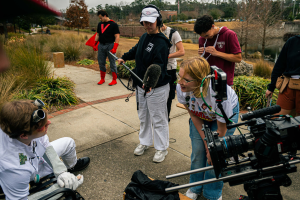
Florida State earns its place not because it offers the biggest collection of celebrity cinematographers on faculty, but because of its production model and the results students have achieved behind the camera.
FSU emphasizes collaborative filmmaking and provides students equal access to production equipment and facilities. The College also funds student film production rather than expecting each filmmaker to independently finance every project.
Cinematographers Teaching at FSU
George Reasner serves as Filmmaker in Residence for Cinematography. FSU’s faculty also includes Keith Slade as a Filmmaker in Residence for Cinematography.
FSU students have also received attention from the American Society of Cinematographers, including multiple ASC student cinematography finalists and a winner.
That is an important distinction. Famous faculty and expensive equipment can be valuable, but aspiring cinematographers should also examine what students themselves are actually shooting and accomplishing.
Florida State’s relatively small, collaborative program, funded student productions, and record of student cinematography recognition make it worthy of a place in our Top 10.
What Should You Look for in a Cinematography School?
The best cinematography school for one student may not be the best school for another. Before choosing a program, investigate what students actually do once they arrive.
Ask how frequently you will shoot. Find out whether cinematography students are guaranteed opportunities to serve as DP or whether dozens of students compete for a small number of projects. Look at the cameras, lenses, lighting, and grip equipment available — but don’t choose a school simply because it owns the newest camera.
Equipment changes constantly. Learning how to see lasts much longer.
A strong cinematography education should teach you how to make deliberate decisions about exposure, contrast, color, composition, focal length, depth of field, movement, and lighting — and how those decisions serve the story.
For more on those fundamentals, explore:
Why Focal Lengths Matter in Cinematography
Lens Selection: Maximize Your Aesthetic by Knowing Your Lenses
6 Tips for Good Camera Exposure
M. David Mullen, ASC’s Notes on Camera Movement
FAQ
Q: What is the best cinematography school in the United States?
There is no single best program for every aspiring cinematographer, but the AFI Conservatory earns our #1 position because it offers a dedicated graduate Cinematography discipline with an unusually deep faculty of professional cinematographers, including multiple ASC members.
USC, Chapman, and UCLA are also exceptionally strong options, while NYU, ArtCenter, UNCSA, LMU, SCAD, and Florida State each offer different advantages depending on the kind of cinematography education a student is seeking.
Q: Do I need a degree specifically in cinematography?
No. Many successful cinematographers studied general film production, photography, or another visual discipline. Others learned by working through the camera, grip, and electric departments. What matters is developing a command of visual storytelling and building substantial practical experience.
A dedicated cinematography program can be beneficial because more of your education is focused specifically on lighting, lenses, camera systems, exposure, composition, color, and collaboration with directors.
Q: What does a cinematographer actually do?
The cinematographer or director of photography helps create the visual language of a movie, television program, commercial, documentary, or other production.
The DP collaborates closely with the director and makes decisions involving lighting, camera placement, movement, lenses, framing, exposure, color, and the overall photographic approach.
Read the complete StudentFilmmakers guide: What Does a Cinematographer Do?.
Q: How do I become a cinematographer?
There is no single route. Film school is one path, but many cinematographers also begin as camera assistants, operators, gaffers, electricians, photographers, or independent filmmakers.
Shoot as much as possible. Learn lighting. Understand lenses. Study great cinematography. Collaborate with directors. Work with other filmmakers and begin building a reel that demonstrates what you can do visually.
Read How to Become a Cinematographer for a more detailed introduction to the profession.
Q: How important is it to study with an ASC cinematographer?
Having an ASC member on the faculty does not automatically make a school better, and there are excellent cinematographers who are not members.
However, an experienced working DP can bring valuable knowledge about professional sets, collaboration, lighting practices, crew relationships, changing technology, and the realities of building a cinematography career.
Students should look beyond the letters after a professor’s name and examine whether that professor actually teaches their courses, mentors student productions, and is accessible to students.
Q: Should I choose a school based on its cameras and equipment?
Equipment matters, particularly when students have sufficient access to use it regularly, but it should not be the primary factor.
Today’s newest cinema camera will eventually become yesterday’s camera. A cinematographer who understands light, exposure, composition, lenses, color, and storytelling can adapt to different camera systems throughout a career.
The more important question is:
How often will I actually be allowed to shoot?
Q: Should cinematography students still learn to shoot film?
Learning photochemical filmmaking can still be valuable because it encourages deliberate exposure, careful preparation, and an understanding of the photographic process.
At the same time, today’s cinematographers must be highly comfortable with digital cinema cameras, monitoring, color pipelines, LUTs, RAW formats, and post-production workflows.
The strongest education teaches principles that remain useful regardless of capture format.
Q: How important is lens knowledge for cinematographers?
Extremely important.
A lens does much more than bring an image into focus. Focal length, distance, aperture, optical design, and lens characteristics influence perspective, depth, distortion, separation, and the emotional relationship between the camera and subject.
StudentFilmmakers has two useful starting points:
Why Focal Lengths Matter in Cinematography
Lens Selection: Maximize Your Aesthetic by Knowing Your Lenses
Q: Do cinematographers need to know lighting?
Yes. Lighting is one of the cinematographer’s fundamental storytelling tools.
A DP must understand not just how much light is required for exposure but how direction, quality, contrast, color, movement, and practical sources influence mood and audience perception.
Explore Lighting Practically and Adding “Kick” to Three-Point Lighting for more cinematography lighting instruction.
Q: Is Los Angeles or New York the best place to study cinematography?
Both cities provide tremendous access to professional filmmakers and production, but they are not the only places to receive an excellent cinematography education.
UNCSA, SCAD, and Florida State demonstrate that strong production programs exist outside the two largest American filmmaking centers.
The best location depends on the school, finances, type of filmmaking you want to pursue, and where you ultimately hope to build your professional network.
Q: Can I become a cinematographer without going to film school?
Absolutely.
Film school provides structure, equipment, mentors, collaborators, and time dedicated to making films, but it is not a license required to become a cinematographer.
You can learn by shooting independent films, working in camera or lighting departments, assisting experienced cinematographers, studying photography and filmmaking, attending workshops, and continually creating your own work.
What matters is whether you learn to tell stories with images — and whether other filmmakers trust you to help them tell theirs.
Learn Cinematography from Working Cinematographers
One advantage StudentFilmmakers readers have is access to years of conversations, articles, and instruction from professional cinematographers.
If you are researching cinematography schools, don’t stop with their admissions pages. Begin studying the craft now.
Career and Craft
How to Become a Cinematographer
What Does a Cinematographer Do?
Understanding Cinematography and Selecting a DP
Lenses, Lighting, Exposure and Camera
Why Focal Lengths Matter in Cinematography
Lens Selection: Maximize Your Aesthetic by Knowing Your Lenses
6 Tips for Good Camera Exposure
M. David Mullen, ASC’s Notes on Camera Movement
Conversations with Cinematographers
A Conversation with Roger Deakins, ASC, BSC
Matthew Libatique, ASC: Lighting, Camera and Color
Exclusive Interview with Patrick Cady, ASC
Exclusive Interview with Peter Levy, ASC
Richard Crudo, ASC on Being a Working Cinematographer
A Conversation with Anna Foerster, ASC
Exclusive Interview with Ron Dexter, ASC
Thomas Ackerman, ASC: Love the Look
These interviews are especially valuable because they move beyond specifications and equipment. Working cinematographers discuss the creative decisions, collaboration, lighting, camera movement, lenses, and career experiences that ultimately define the profession.
In Conclusion
The best cinematography school is not necessarily the most famous film school. If your goal is to become a director of photography, look closely at who will actually teach you, what you will actually shoot, how often you will have access to equipment, and whether cinematography is treated as a serious discipline rather than one required course in a general filmmaking program.
AFI stands out for its concentrated graduate cinematography program and extraordinary depth of working cinematographers on its faculty. USC combines professional faculty with enormous production resources and Los Angeles connections. Chapman and UCLA provide clearly defined opportunities to specialize in cinematography. NYU offers access to acclaimed working cinematographers and New York’s production community. ArtCenter brings cinematography into an intensely visual design environment, while UNCSA provides one of the strongest dedicated undergraduate paths.
LMU, SCAD, and Florida State demonstrate three more approaches: Los Angeles mentorship from prominent working cinematographers, extensive modern production facilities, and a collaborative production model producing recognized student cinematography.
But the school is only the beginning.
The cinematographers whose work lasts are not simply technicians who know which camera to rent. They learn to see light. They understand why one focal length communicates something another does not. They know when a camera should move and when it should remain perfectly still. They understand exposure, color, and composition — but, most importantly, they understand that all of these choices must serve the story.
Study the programs. Watch their student films. Research the faculty. Ask how frequently students shoot. Find out who gets to DP thesis films. Investigate equipment access, production funding, internships, and alumni connections.
Then start shooting.
Because whether you ultimately study at AFI, USC, Chapman, UCLA, NYU, ArtCenter, UNCSA, LMU, SCAD, Florida State — or learn through an entirely different path — becoming a cinematographer ultimately happens by learning to turn ideas, emotions, and stories into images.