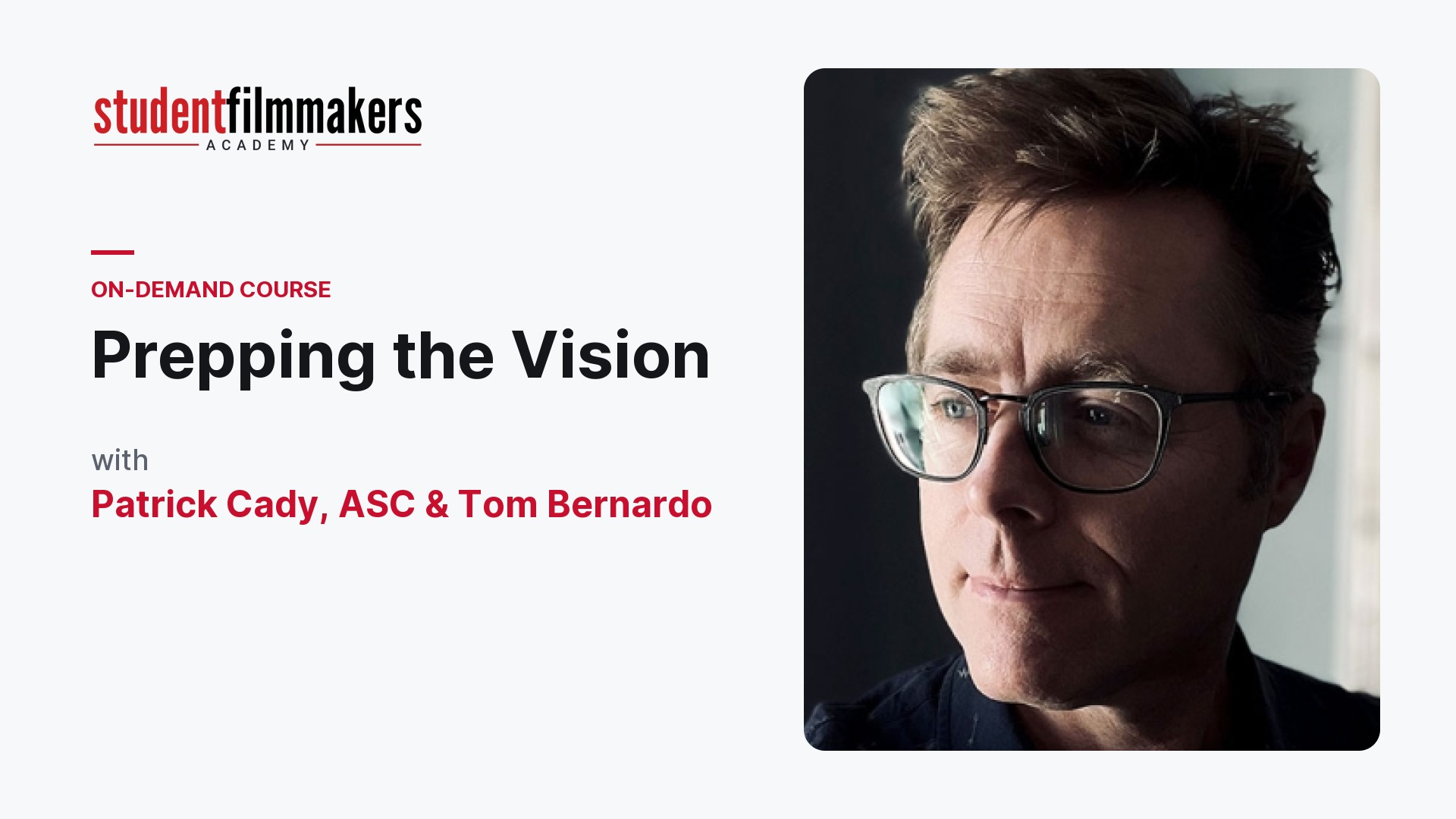
Patrick Cady, ASC, who has directed episodes of Bosch and Bosch: Legacy and earned an Emmy nomination as a cinematographer, teamed up with Tom Bernardo, co-developer and executive producer of Bosch: Legacy and a writer-producer on Bosch and The Lincoln Lawyer, to show how one episode gets prepped. The lesson that runs through the class: a guest director has roughly a week, and the way to use it is to ask what every scene is for, then share the plan with everyone early.
What does a guest director’s prep week look like?
On an episodic drama, the director of a single episode joins a show that already has its look, its cast and its rhythm, then gets about a week to prepare. Cady and Bernardo walk through that week using one real Bosch: Legacy episode, from the first conversations with the showrunner to the finished shot list. They stay with a single dramatic sequence the whole way, so you see how one piece of story moves through every step.
They also put the real paperwork on screen: the one-liner, which squeezes the shooting schedule into one line per scene, and notes from the production meeting, where department heads go through the script near the end of prep to confirm what each scene needs.
What happens in a tone meeting?
In a tone meeting, the director sits down with the showrunner or the episode’s writer and walks the script one scene at a time. Cady and Bernardo explain who belongs in that room and why it works like a stress test: every scene gets pushed on until everyone agrees what the moment is meant to do.
From the writers’ side, Bernardo admits a new director will sometimes overlook a point the writing staff considers plain, and says he tries to be patient about it. He also makes the case for having an episode’s writer serve as its producer during the shoot.
How does scene analysis shape coverage?
Even a one-line scene gets analyzed. Cady shows how deciding what a short scene contributes to the episode changes how he covers it. He adds a rule worth taping to your monitor: every scene must still work when seen in a wide. If the staging and the story hold up in the wide, the closer coverage has something solid to build on.
From there, he plans coverage, transitions between scenes and multi-camera setups so the core moments of the episode get the most time and attention.
What do location and tech scouts solve?
Scouts are where story problems turn practical. On this episode, a fence at one location began as a story issue and ended as a hands-on fix, and the class follows how that happened. On the tech scout, key crew return to the chosen locations to work out exactly where camera, lights and gear will go. The two also describe a director they admire who checks every corner of a room on the tech scout. It is a habit that moves surprises into prep, where they cost the least.
Which small decisions changed the episode?
Some of the most useful parts of the class are the small calls that shaped the final cut:
- An attack in a warehouse was changed so the attacker uses a crowbar, for a practical reason that came up in prep.
- Bernardo still wonders whether a close-up of the villain should have stayed in the episode.
- A key confrontation landed last on the second shooting day. Knowing that, Cady planned everything before it differently.
Each shows how scheduling, logistics and story pull on each other during a short prep.
What about the people side of prep?
Much of a good prep week is about people, not forms. Cady talks about thinking carefully before he gives an actor a note, shares his personal rule about equipment, and admits to the two moments he fears most when directing. Getting scripts into every department’s hands early comes up again and again.
The habits they describe are what keep a compressed week calm and help a crew trust a director they may have only just met.
Does this only apply to television?
No. The examples come from one streaming crime drama, but the habits carry anywhere: know what each scene is for, test it in a wide, scout with your eyes open and get your shot list out early. The class also makes a point that matters most to indie filmmakers: when money is tight, extra days of prep buy back shooting days. The class ends with filmmakers’ questions on locations, scheduling and giving actors notes.
For more from this pair and on prep, see A Masterclass in Story Structure with Patrick Cady, ASC, Know Your Story Beats: Directing for Impact and Navigating Location Scouting: Essential Steps for Student Filmmakers.