By Dana Dorrity
In the Communications program where I teach, documentary production is a foundation course. Students learn ENG style production in their first year and begin work on thirty-minute documentaries as sophomores. We believe that students challenged to conduct research, shoot interviews, and edit long form documentary projects will be much better prepared to become television journalists and narrative filmmakers. We also think there are expanding opportunities in documentary-style production both on television and in feature film.
Documentary Techniques in Fiction Films
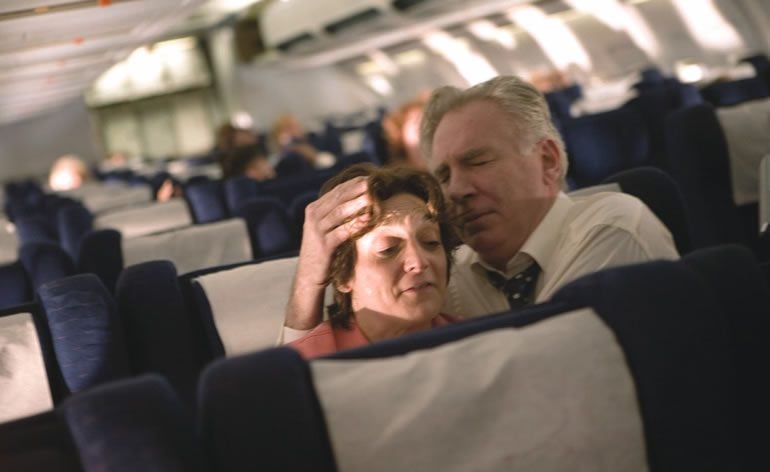
Many contemporary filmmakers are borrowing techniques from documentary to craft fictional stories. Paul Greengrass, the director of United 93, has built his career crafting true stories into emotional, compelling feature films. His films are not documentaries, but rather they are elaborate, dramatic reconstructions that often employ some of the real participants in the events to play themselves in the movie. In what is probably the most compelling performance in United 93, Ben Sliney, the chief of the FAA’s air traffic control center, reenacts the events that led him to his decision to close the skies. September 11th, 2001, just happened to be Sliney’s first day on the job. Although Greengrass has also directed action films like The Bourne Supremacy, he developed his non-fiction dramatic recreation techniques working on his 2002 film, Bloody Sunday, about the 1972 massacre of protestors in Northern Ireland. As Gillo Pontecorvo depicted the inner workings of terrorist cells in Algeria in The Battle of Algiers, Bloody Sunday shows the roots of insurgency in an occupied territory. It should be required viewing for all of us who are trying to make sense of the war in Iraq and the endless conflict in Israel.
There’s nothing new about using documentary techniques in fictional films. Bob Fosse’s classic Biopic, Lenny, intercut interviews with the characters into the story. Reds, Warren Beatty’s 1981 biographical epic about John Reed, used interviews with American communists who lived through this turbulent period to reinforce the dramatic scenes between Beatty, Diane Keaton and Jack Nicholson. Woody Allen used a hand-held and cinéma vérité style for his film Husbands and Wives about the dissolution of one marriage and strength of another. Although Orson Welles’ Citizen Kane followed a reporter’s search for the meaning of the main character’s last word and uses a fake news reel to set up the story, it uses a more traditional feature film technique and never breaks the third wall. Characters speak to each other rather than directly to camera as they do in documentary-style films.
Free for members
Sign up free to keep reading
It’s free and takes less than 30 seconds. You’ll also get our Interstellar issue free, and a community of filmmakers sharing their work.
No credit card. Continue with Google or your email.