Cinematographer Stephen Goldblatt, ASC, BSC recalls starting as a stills photographer in London and why the camera should be an invisible character.
SF: How did you start working in the film industry?
Stephen Goldblatt, ASC, BSC: I was 17 or 18 as a still photographer in London. One of my jobs was going to Shepperton Studios outside London to do special stills on movie sets. I did this for about six months and I got to know the crews on different films and I became very friendly with them. I liked the collaborative life. I had always loved movies and they had been a passion of mine, but I hadn’t really seen how I could possibly get into the industry because the unions at that time were exclusive, nepotistic and strong. But I enjoyed the experience of watching a film being made and the collaboration I saw between the director and the DP, his camera crew, the script supervisor, everyone really. So, I decided to go to film school, and I went to London’s Royal College of Art. I had never made any films to gain entry but this being a post-graduate school they always had a couple of places for the lunatic exceptions, and I was one of them. They took me on the basis of my photography, because I was a working photographer and had also worked as a picture editor.
It was a good time to be in London – Ridley Scott had just graduated from the same film school, Tony Scott was my good friend at the school [we were in the same year] and Elton John played in the student bar every Friday night. I was there for three years and when I left I sold all my still cameras. So that I couldn’t go back to it because, even though I wasn’t wealthy, I was making money; I could pay the rent easily and I shared a studio and I had an agent, but I sold my Hasselblad, the Mamiyas, the Nikons, and all my lenses and became a sort-of industrial cameraman and went through the whole thing of doing anything from children’s television to the most boring kind of work. Of course I wasn’t really qualified yet to do anything else – film school doesn’t equip you for anything. A fellow student from film school [Carlos Pasini Hansen] had a semi-suicidal documentary to do in the Xingu in the Brazilian jungle so off we went. It was just him, myself, the soundman, and an anthropologist for four or five months, [I got malaria and we all nearly starved to death]. At that time documentaries were still sort of insane, but they eventually led to commercials for me.
The useful thing about film school was that we all knew each other – and of course Tony [Scott] shot off like a rocket in the commercial world and I would shoot for him sometimes and many others. After a few years we were deluded enough to think we were qualified to make a film and we did; it’s called “The Hunger” (1983). It was Tony’s first feature film and maybe my second and it was very beautiful. On the basis of that film, Francis Coppola offered me “The Cotton Club” (1984), to take it over – he must have been insane – but it was a great opportunity. That is really the beginning of my feature work in America.
One of your more recent films, “The Help” (2011), is set in an early-1960’s Mississippi. What did you do to try and recreate that era?
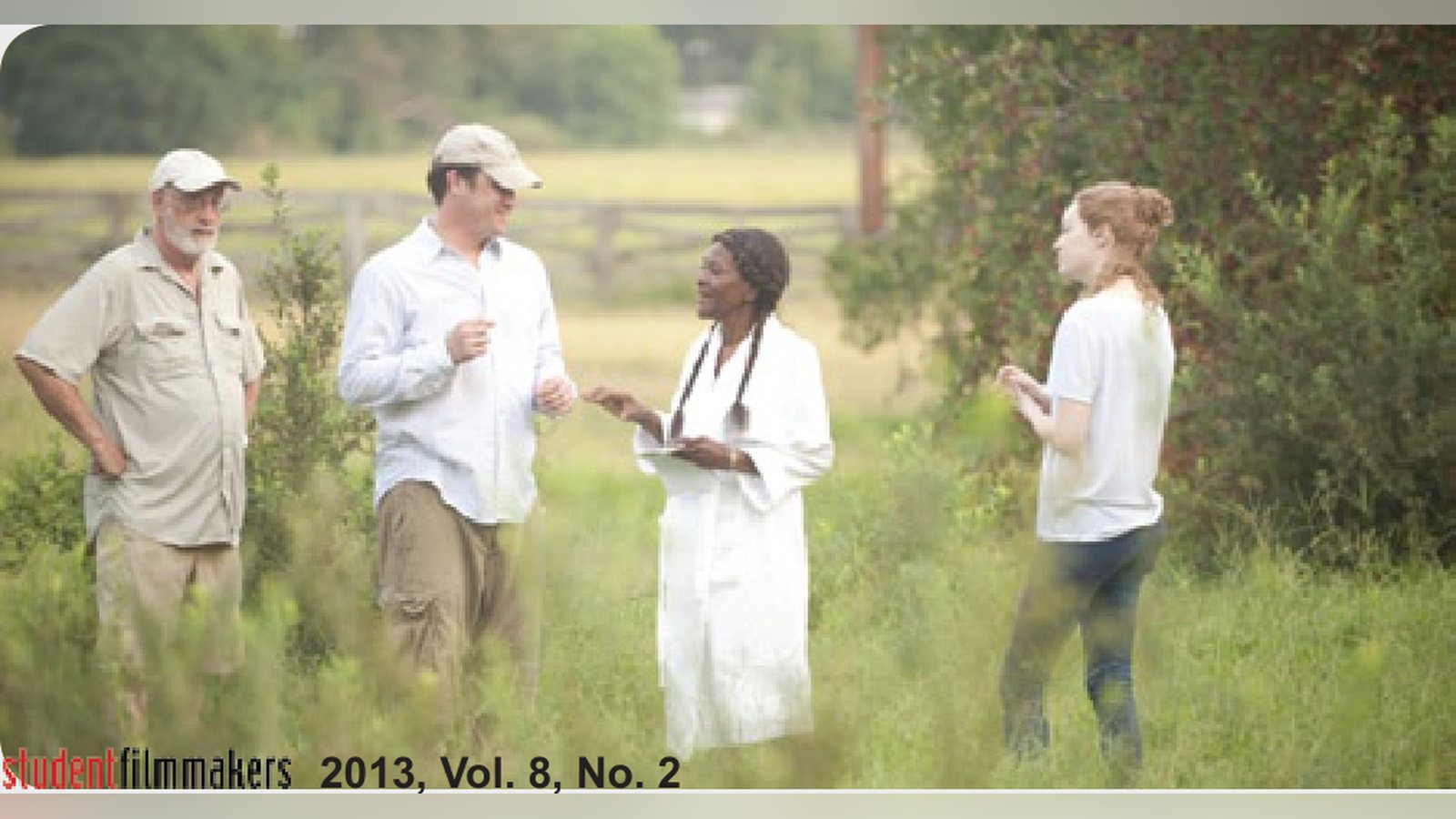
Scene from “The Help.” Emma Stone, Ahna O’Reilly, Bryce Dallas Howard, Anna Camp, and Viola Davis.
Stephen Goldblatt, ASC, BSC: The recreation of an era is only partly my responsibility, but I’ll say that I contributed to it, by collaborating with the production designer [Mark Ricker], and he’s brilliant. He was responsible for the set design, the room design, the props: everything that gives you all the subconscious knowledge of a different time. And then of course costumes, and Sharen [Davis] is so very talented and working with her – I think I contributed more by being a collaborator and being helpful to both of them. Even though this was low-budget, we would test the dresses on the girls so that Sharen could see where the color was working and where it wasn’t. Film and digital are not accurate in their depiction of color, their red is not the red you might imagine. Particularly greens and blues can change a lot and I also like to do that with the sets so that Mark or whomever the designer I’m working with can see what is good and what is not as good. Sometimes I’ll do it using still photography and I calibrate my computer display to mimic the film stock (on “The Help” we shot on film), but it’s becoming much simpler in some respects with digital cameras. Nevertheless, I hope you get to understand that the director of photography is by no means the most important person in recreating a period-feel. However, the style of photography is definitely a concern of mine and my responsibility. And the concern I always have is that the camera is not obtrusive and that it’s an invisible character. So you don’t use the zoom very much, you don’t use fancy cranes, and if we do use them they should be sort of hidden within the shot. There are some period films which are shot in a blazingly modern style, which makes me hate the photography because it doesn’t help the suspension of an audience’s disbelief. It’s an ancient, cliché of a phrase, but it really means something. There is a lot of stylization involved in the cinematography of a movie where it’s little details, the use of lenses, the kinds of lenses, the kinds of diffusion, the quality of the light, a certain quality of saturation and contrast available in the digital intermediate, which all build up detail upon detail so that you eventually you have a movie that’s evocative and hopefully, successful. Was there a particular scene that you found difficult to shoot?
much with the idea of it, the difficulty was that we didn’t have enough money and sometimes we’d have sets that were very small and they were in real buildings, so there were technical difficulties involved in say, hiding the lights. Which is often the case with films that are made entirely on location – of course that’s not specific to “The Help”. I’d say the overall difficulty for me was that we had to make a 150-page script in 58 days, all on location, for $25 million. And then the hope was to make it look like a $70 million film, so in effect we could have no mercy on ourselves to achieve that.
Of course there were technical difficulties involved in having the combination of a very dark actress, like Viola Davis, with a very white baby, and that was one of the reasons I didn’t shoot that film digitally. I was reasonably confident that film could hold that contrast and brightness spread but I wasn’t confident, at the time [which is over two years ago] that any digital camera could. And they probably couldn’t at that time – they probably can now. Do you have a preference between digital and film?
Stephen Goldblatt, ASC, BSC: I’m a still photographer when
I’m not doing movies and I have shot nothing but digital stills for ten years now. And it’s way better than film, incontrovertibly, in every respect. In sharpness, in dynamic range, in color accuracy, the whole damn thing. I’m completely comfortable with digital as a technology. It’s really how it’s implemented in a motion picture camera as opposed to a still camera that’s the question. In a still camera, each still I make is between 20 and 100 megabytes and therefore it can contain so much information, and aesthetically that means a great deal. The most data that a digital movie frame can contain is about five megabytes, with the present technology. So there are immediate constraints on dynamic range and resolution. That’s my biggest worry. But the sensors have improved immensely in the last two years, and I’m feeling very confident nowadays. The workflow doesn’t worry me, and neither does much else. It’s more of the implementation that determines if film is better or if digital is better. Film is disappearing before our eyes; this year or the next they’re going to be shutting down the last labs in Hollywood and that’s going to be tough.
Can you share a special tip or piece of advice for aspiring cinematographers?
big tip: study film. And I don’t mean just modern film, all film. Film that goes backwards and forwards in time – see how your cinematographer colleagues solved the problems that you’ll be faced with if you’re lucky enough to shoot films. Those problems aren’t just of exposure and color, but they’re of movement and emotion and originality. A lot of decisions that a cinematographer makes are concerned with how to make a dramatic piece that works. I’ve found that being in love with film and being passionate about film involves watching a lot of film, with enjoyment and also with insight, and that has really helped me to work because if you’re informed by what’s gone before it can be very useful if not inspirational. Film did not start with “Raiders of the Lost Ark”; it has a long, long history, and a fascinating one too.
Keep learning filmmaking
Want more lessons like this? Join StudentFilmmakers free for live webinars with working pros, and stream on-demand filmmaking classes in cinematography, directing, screenwriting, sound and post.