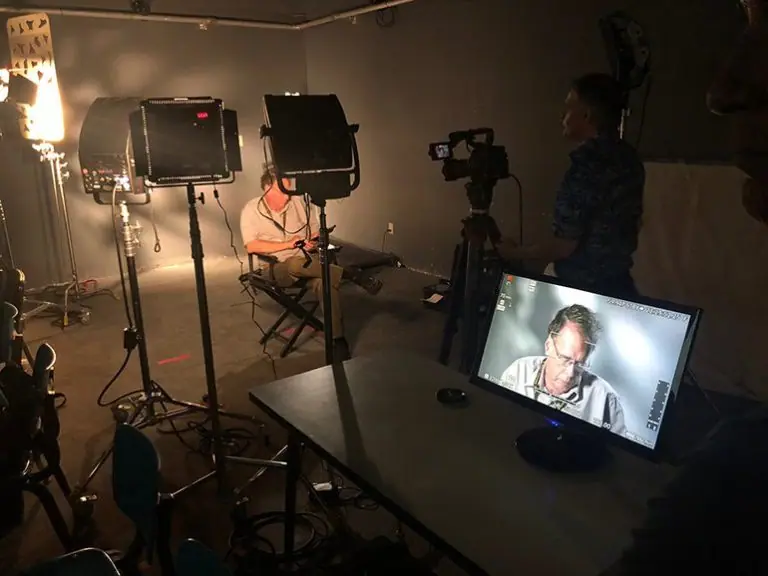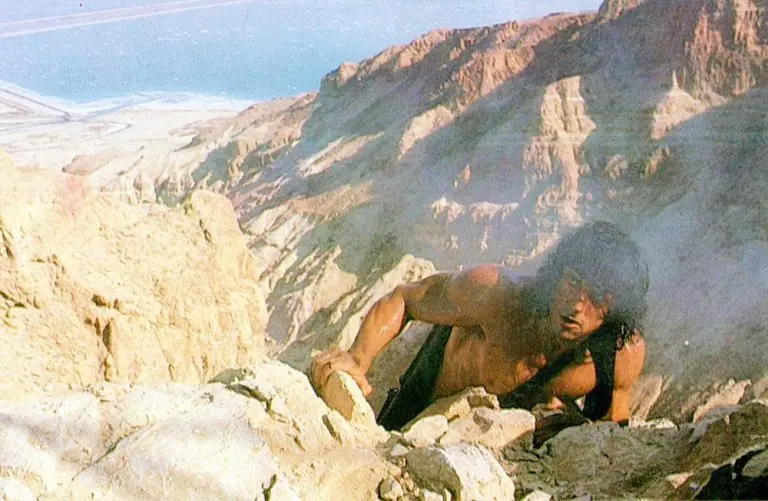
Shane Stanley, an Emmy winner whose credits include executive producer on Gridiron Gang and director of the thriller Night Train, openly says he is not a colorist. What he brings to a grading session is a storyteller’s view: color sets the emotional temperature of a film, and a director who plans for the grade from day one gets far more out of it. In this StudentFilmmakers class, he walked filmmakers through log footage, LUTs, the difference between correction and grading, and how he works with his colorist while the cameras are still rolling.
He started with the script, black words on white paper. Every reader fills it with colors, he said, because we learn as toddlers that red is hot, blue is cold and ice is white. A director’s job in the grade is to choose the temperature, emotionally, that the audience should feel.
Why does log footage look so flat?
On set, the monitors look beautiful. Then the files arrive in the edit:
“And then you get the footage, you get the footage and you go through post production. And it’s almost black and white, it’s lifeless.”
That flat, desaturated log image is on purpose, he explained. It keeps the most room to push color, crush blacks and shape saturation later. To make months of cutting bearable, an assistant editor lays a LUT over the footage. Stanley’s warning: make sure they do it scene by scene, not one LUT across the whole movie, or dark interiors and bright exteriors will both look wrong.
The scary part comes when the colorist goes back to the camera masters. Things hidden under the LUT suddenly show: a boom shadow, a reflection in glass, a piece of lint on an actor’s shoulder. Talk with your editor and colorist early so there are fewer surprises.
Color correction vs color grading: what is the difference?
Stanley wants filmmakers to use the right words in the room, so he laid it out simply.
| Color correction (first) | Color grading (after) |
|---|---|
| Exposure | Shot matching between cameras and angles |
| White balance | Removing objects, a light form of VFX |
| ISO and noise | Shape masks and power windows |
| Contrast | The cinematic look of the whole film |
Shot matching matters more than people expect. A wall behind one actor can look fine in person and jarring when you cut between over-the-shoulder shots. The colorist evens it out. Our magazine has a fuller guide to using correction to give a movie one unified look.
How can a colorist save an actor’s eyes?
If a scene was lit so dark you cannot see the whites of an actor’s eyes, the colorist can draw a shape mask around them and lift just that area, leaving the rest of the scene alone. The mask can track the actor’s head as it moves. The same tool can tame a blown-out wall behind someone, as long as the camera recorded some detail there.
He compared it to real estate photos, where a photographer shoots the same room three times at different exposures for the room, the hallway and the view outside, then blends them. A grade can split one image into as many layers as a shot needs. Stanley grades in DaVinci Resolve often enough to fix a shot himself after the colorist’s pass, and points out there is a free version to practice on.
When should the colorist start?
Long before the edit is done. While Stanley is shooting, his assistant editor emails the colorist still frames from every angle of every scene. The colorist builds a preliminary grade in downtime, so when the cut is ready, the look is already waiting. On a low budget this matters, he said, because you are rarely a post house’s top priority.
The same habit saved a scene on his newest film, Six Days in Evergreen. A night shot looked like a black silhouette in his edit bay. He sent the raw A and B camera files from the Alexa to his colorist a hundred miles away, and within ten minutes got back a grade showing the actor’s expression was there after all.
Who decides the look?
It depends on the director’s power. On Gridiron Gang, shot on 35mm, director Phil Joanou wanted a skip-bleach style that would leave the film desaturated but still colorful. Back then that meant treating the negative during development, which could damage it, and the studio’s head of production refused to risk the masters. Digital grading removed that risk.
On Night Train, Stanley chose the look through the camera instead. He wanted a desert that felt starved of anything nourishing without looking cheap, and he picked the camera for that texture so grading with his colorist was easy. The film, he noted, had about 3,700 edits, and every shot still gets graded. Once an angle is set, repeat cuts to it are a light lift.
He once had a colorist show him a “tobacco” pass on a film shot in the tropics. It was interesting, but they kept the blue water and color. People watch that kind of film to escape.
Should you follow color trends?
Peter John Ross asked about teal and orange. Stanley pointed to the skip-bleach look of Friday Night Lights, which suited that film but now marks movies from that era:
“I think following certain trends can date your picture.”
“Every trend comes to an end,” he added, like bell-bottoms or ’80s hair. Do what serves your story. On Six Days in Evergreen he is glad they never locked a look early. What started as a romantic comedy grew into a music drama, and a rom-com grade “would never work in this film.” In his words, “every film deserves its own color and its own style.”
What monitor should you grade on?
Not a cheap big-screen TV. Grading suites use costly calibrated monitors, and he has watched technicians come in mid-session to recalibrate. He compares the final check to mixing music, when artists play a track in the car, on a home stereo and on a phone. He watches a silent version of the film on a big living-room screen, a computer and his phone. If you do not own a good monitor, rent time on one for your final touches.
Is the grade like the score?
Yes, in Stanley’s view. A composer nudges the audience toward a feeling, and “you have that same power with the color grading.” He brings composers in at the script stage, and a filmmaker in the chat recommended Patti Bellantoni’s book If It’s Purple, Someone’s Gonna Die on color and emotion. New to the software? Read how Resolve grew from a grading tool into a full editor.