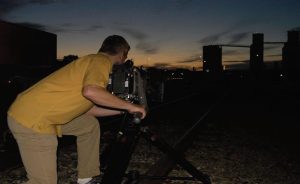
By John Klein
Distribution is the golden ticket of filmmaking. John Klein explains domestic and international channels and the strategies indie films use to reach fans.
Employ a Variety of Strategies to Reach Your Audience
Distribution. It’s that golden ticket of filmmaking. For many of us, it’s the reason we submit to film festivals and garner reviews and acclaim in the first place: to find a distributor! We want our movies to be out there in the world, in theaters, on DVD, on Netflix or iTunes or what have you. We want our movies to make money… at least enough to maybe make the next film. For others, of course, distribution is less about income and more about viewership, or even simply about the art, about creating content and telling stories and making those stories widely available. And for others still, it’s about having complete control over the way your film is distributed to the world, rather than handing it off to a distributor or sales agent who may have different interests at heart than the artistic integrity of your film.
Our production company Glass City Films has had three feature-length films distributed to some degree, including our most recent film, the Kickstarter-funded post-apocalyptic thriller Chrysalis (www.TheRestAreDead.com). Each film had different audiences, but for Chrysalis in particular we employed a variety of distribution strategies to reach that audience.
It’s important to let your film dictate your strategy. This sounds like common sense, but I can’t tell you how many filmmakers believe their film is destined for theatrical distribution despite a lack of “name actors,” a very typical indie drama aesthetic, or a production value level that reflects a low budget. None of these are bad things! But when you approach a distributor, it’s important to understand this concept: it’s not what they can do for your film, it’s what your film can do for them. And no matter how artistically brilliant your film is, they’ve crunched the numbers and know exactly what they can expect to make and what you can expect to make just by looking at your IMDb page and trailer. Take that to heart.
For Chrysalis, a zombie-esque horror drama, we were a pretty easy logline sell for distributors; horror is a consistently marketable genre, especially worldwide, and the raging success of The Walking Dead has brought all sorts of zombie films out of the woodwork. But we had no recognizable name actors to speak of, and our fan base, however passionate, was small compared to larger, more established films or companies.
So we opted for a two-pronged approach. First, we sent our trailer out to various distribution companies, both domestic and international, in a pitch email that looked something like this:
Pleased to e-meet you! For your consideration, I’d like to submit our most recent feature film Chrysalis. All worldwide distribution rights are available. You can check out our most recent trailer for the film here (link and password).
We think we’ve got a special and unique product here that taps not only into the zombie film demographic but a variety of unique international demos, and we think your distribution company would be a terrific fit for distributing Chrysalis in this vein.
Please contact me if you would like to see a private screener or if you have any further questions concerning us or the film. Thanks for your time, and I look forward to hearing from you! At the same time, we were also prepping ourselves to go the self-distribution route in the event we didn’t garner the interest we hoped. In this instance, “non-exclusive” – a term that essentially means you can distribute through a platform or website and still retain the rights to take the film elsewhere – was key. We researched non-exclusive venues such as Tugg (www.tugg.com), a crowd-sourced theatrical distribution company, and Vimeo On Demand (www.vimeo.com/ondemand), which had recently emerged as a great place for filmmakers who wanted to stream content for rental or download at a cheap price point with good returns.
And for our own website, we wanted a platform that would allow us to sell downloads directly to our fans, complete with special features and other content. We admired indie films such as Upstream Color and The Battery, which were able to convert their rabid festival and social media following into direct sales via their mobile-ready websites, and searched for providers that would give us the best bang for the buck. We decided on VHX (www.vhx.tv), which integrated nicely with our custom-built site and came with all sorts of metrics for learning about our viewership.
By not putting all our eggs in one basket, we were able to relieve ourselves of the pressure of having to secure a big-time distribution deal, which made us more willing to negotiate fairer deals with distributors and sales agents and not just jump at the first sign of interest. And in the end, we found a domestic distributor interested in DVD and television rights who allowed us to go forward with our online plans separately, and we found a separate international sales agent who could do what we didn’t have the resources to even attempt: build an audience and sell rights to the film in territories all over the world.
Mind you, this was not a perfect strategy, and it certainly isn’t one that would work for every film in our budget range. We were caught entirely off-guard by the cost and specificity of deliverables for our distributors, and if there’s one piece of advice I give every indie filmmaker I meet asking about distribution, it’s to plan for anywhere from $10-20k in post-production costs to mix stems, create masters, buy insurance, and deliver all your marketing materials and paperwork. Some distributors will do that for you, but will dock royalties or add it to their back-end costs.
In the end, we decided it was a necessary cost to break into a new audience, and our newfound knowledge of the process will serve us well on our next films. Self-distribution is rewarding but also limited in its audience, and often becomes a fulltime job because of the amount of promotion you have to do on your own. And our own sales of Chrysalis on the self-distribution front have been minimal compared to the success our distributors have had with different artwork and titles for the film. Thanks to them, we’ve reached an audience we never would have otherwise.
Bottom line: do your research, know yourself and your film, and decide what’s best for you! And…good luck.
Aerial Video and Photography
As much as I enjoy shooting and editing weddings, commercials, sports, and more, I decided it was time to up the ante on my video business. What better way then starting an aerial photography and video business.
After spending a month or so of researching drones I decided to buy the Phantom 3 Professional for its user-friendly operations, and it was also in my price range. Prior to this purchase I never touched or let alone fly one. After taking online classes and practicing at the local parks I decided to go all in and start a website, become an LLC, and take the FCC test, which is required by law to pass in order to fly commercially.
Related filmmaking guides
Keep learning filmmaking
Want more lessons like this? Join StudentFilmmakers free for live webinars with working pros, and stream on-demand filmmaking classes in cinematography, directing, screenwriting, sound and post.