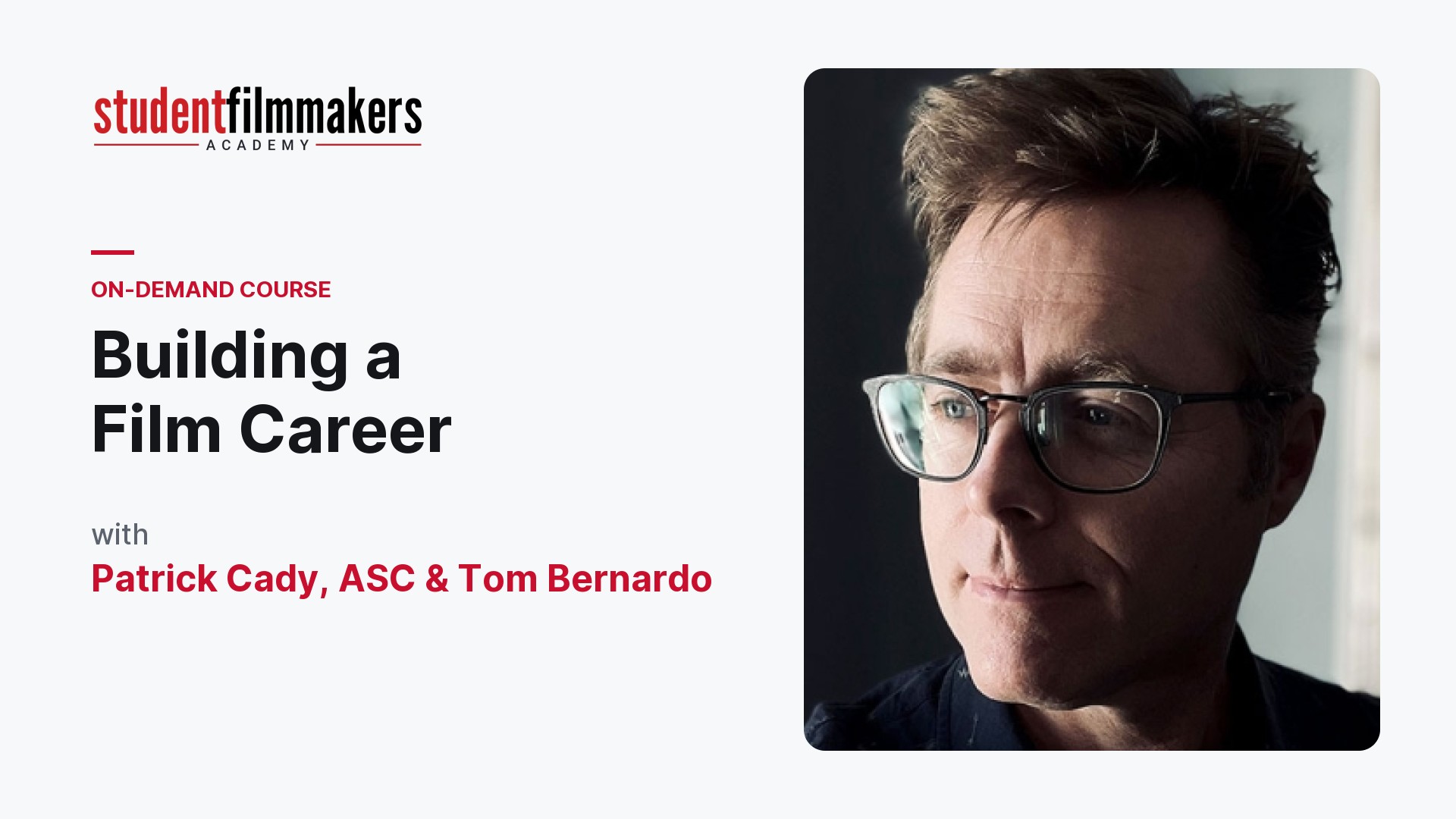
Patrick Cady, ASC, the cinematographer of Girlfight and a director and DP on Bosch, and Tom Bernardo, who helped develop Bosch: Legacy after writing and producing Bosch and later produced The Lincoln Lawyer, spent this class on the part of a career most talks skip: the years before the first real credit. Their message for anyone trying to break in is steady rather than flashy. Take the useful job in front of you, keep the friendships you make, and expect the payoff to come years later.
The two have worked together for years on the Bosch shows, but they came up in very different ways. One climbed through lighting crews. The other left a law office for television writing. Put side by side, their stories make a simple point: there is no single door into film and television.
How did Patrick Cady become a cinematographer?
His road started with a letter he wrote in high school to Industrial Light & Magic. From there he went to Ithaca College, then took a phone job working for a producer of John Sayles’ films.
The bigger part of his training came on lighting crews. Cady spent years as an electrician and then a gaffer, the head of the lighting department, before moving into the director of photography chair. His credits as a DP grew from Girlfight, Karyn Kusama’s Sundance prize winner, to series work like Cold Case and then Bosch, where he also directed.
The lesson he drew is that crew jobs are not a detour. Electricians and gaffers spend every day beside the camera and the DP, and many cinematographers started exactly there.
How did Tom Bernardo get into a writers’ room?
Bernardo began at a law firm. He left to write, and his first step into television was a production assistant job serving a writers’ room. A PA there runs errands, takes notes and keeps the room supplied, but also hears how episodes get pitched, broken and rebuilt. From that start he worked his way to writing and producing on Bosch, then Bosch: Legacy and The Lincoln Lawyer.
His story shows that the entry-level job and the dream job can sit in the same room. A writers’ room PA learns the process from the inside long before anyone reads their script.
Should you turn down crew work while you wait to shoot?
This came up in the Q&A. Cady recalled a student of his who said no to assistant camera jobs again and again, holding out to be hired as the DP. His advice ran the other way: saying yes to the work in front of you usually beats holding out for the ideal job. Assistant work keeps you on sets, near the people who hire, and sharpening the skills you will need when the bigger chance arrives.
Both guests returned to the idea of goodwill. A favor done on a small set, or a friend made on a crew, can bring a call years later, sometimes from someone who had no power when you met.
What about self-doubt and missed chances?
Neither guest pretended the path was smooth. They talked openly about feeling like an imposter on set and about opportunities they missed. Their point was that a missed chance is rarely the end of the story. It can teach you what to say yes to next time.
Filmmakers in the audience asked whether to push harder or step away during a slow year, and what a shrinking job market means for someone just starting. The guests also discussed how the 2023 strike changed things for staff writers, whether it is worth learning virtual production tools, and why a hobby such as painting can make you a better filmmaker.
How should a TV director think about action scenes?
Two craft answers stood out. First, an action scene works best when it is tied to what a character feels, so well that it would still play with the sound off. Second, a director hired for an episode of a series is there to serve the show’s story, not to stamp a personal style on someone else’s world. Both ideas come from people who have spent years inside the same long-running show.
Where to go from here
If you are taking a first crew job soon, read First Day on Set: Tips for First-Time Production Assistants. If a writers’ room is the goal, 10 Must Know Tips for Getting Staffed is a good next step. And for a reminder about pace, see Impatience: A Huge Career Stopper.
The full class runs about 73 minutes, with the guests’ stories first and filmmakers’ questions after.