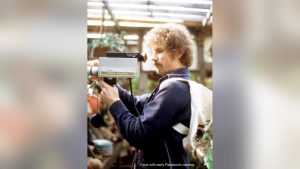
Meet Luis Villalon, a director of photography based in California, United States and a member of the StudentFilmmakers Filmmakers Network. See Luis’s Network profile to connect.
Job: Director of Photography Location: California, United States networking.studentfilmmakers.com/profile/DirectorDP
Work/Projects: “In 1997, I started working with Luis Molina, a Puertorican director, originally a documentary maker, who was in the process of shooting his second dramatic feature. Since then, I have worked in four of his feature length projects, as well as in two shorts. His output has been mainly associated with the short stories of Abelardo Diaz Alfaro, a Puerto Rican writer whose work has been published in 12 languages. His stories deal mostly with the daily lives of the common people, sometimes with a lot of tragedy sometimes with a joy of life, typical of the person who sees the best in everything.
“Teyo Gracia is Diaz Alfaro’s main character. He’s a campesino with little formal education but with a lot of natural wit and intelligence. In the books, he introduces all the stories as a remembrance of things that happened long ago or recently. This project was based on a set of 12 stories that had never been published. The production was sponsored by the US Department of Education among a group from different states who submitted stories or themes related to their peculiar history or modus vivendi.
“I lived and worked in Puerto Rico for many years but mainly shooting high end commercials for national brands in PR, in the Caribbean and in the US mainland. So I am perfectly aware of the vagaries of the weather and other problems. I used mostly a local crew that has worked with me for many years. They are veterans of films with the likes of Spielberg, Richard Donner, Bruno Barreto, and Michael Bay. Puerto Rico often doubles as Cuba because as part of the US you don’t need visas and there is a sophisticated commercial industry, with experienced crews, camera, grip and lighting equipment.”
Cameras: “For this project we used a Panavision camera with 18, 24, 35 50, and 75mm fixed focal length lenses as well as a 25-250mm zoom, mainly for exteriors. We used Kodak Vision 5219 T 500, which we cut down in exteriors with ND filters. The reason being that we jumped from INT to EXT constantly and rather than use a different stock we could just keep shooting.”
Challenges and Solutions: “The main challenge was that the stories went from the early 40s to early 60s. As with any period film, you find a great house that looks mid 40s but next to it is a modern drugstore or apartment building. Especially in Puerto Rico, a small island where progress has decimated most of the old structures. A lot of times the art department had to put on fake windows on top of the modern ones. This problem also limits whatever camera move you want, you can only dolly in or out to a point. We found a treasure trove in the town of Guayama, where they have tried to save a lot of the wood frames houses, besides it’s one of the most movie friendly towns in the world, you go to the town hall and it’s like, ‘How many streets you want closed?’ ‘You want us to ban parking around the town square the day before?’ They are great. Main problem: it gets cloudy almost every day after 2pm, so you better shoot all the wide shots before then.
“Sunlight is fierce in PR, so we had to deal with 12ks and even 18k HMIs to balance shadows. Butterflies and every mode of bounce were used every day in EXTs.
“Most INTs were shot in studio, due to the fact that most old houses were not meant to have movie lights, dollies, sound, grips and cameras milling about. This project was a record in the history of filmmaking in PR, 36 sets were built in 2 studios, 3 at a time on each. We finished in one, went to the next one, while the set building crew dismantled, and built the next 3. We were running against time so we could not wait for the lab (Continental in Miami) to tells us that it was all okay. Fortunately, only 1 CU was ruined and it was easily reshot.
“The interiors were shot looking like sunlight lighting from the outside or like from a few practicals or gas lamps for night shots. This was very important because some of the stories took place in rural areas in the 40s, where electricity was nowhere to be found.”
Related filmmaking guides
Keep learning filmmaking
Want more lessons like this? Join StudentFilmmakers free for live webinars with working pros, and stream on-demand filmmaking classes in cinematography, directing, screenwriting, sound and post.