Filmmakers Klaudia Kovacs, Gleb Osatinski, Steve Taylor and John Trigonis share how to plan, launch and run crowdfunding campaigns that reach their goal.
Interview with Klaudia Kovacs
My crowdfunding starts the day I decide to make a project. However, that does not mean, I post my campaign on Indiegogo right away. For a crowdfunding campaign to be successful, first you need to build a crowd, since you can’t rely on friends and family for each film. Your crowd needs to be as large as possible and every crowdfunding campaign starts with creating your community, email by email, person by person. Your crowd also needs to be specific to your project’s theme.
The 30 or 60-day campaign part is the easy part. The PR and the marketing for the campaign is the hard part. You need to take the time to build anticipation and excitement for your campaign beforehand, so when you start your crowdfunding, the money practically flows in.
Be unique, stand out, make your campaign specific to your target market. You need to define your target market before you start building your crowd and start your campaign. For example, if you’re making a film about blind athletes, you’re going to target blind institutions, schools, clubs, communities, non-profits, visually impaired celebrities, etc.
Passion is pretty irresistible. Also, branding yourself as a professional, reliable and trustworthy person with total integrity. Commitment to quality also helps.
I personalize my giving when it comes to larger donors. I actually ask what they want besides the usual giveaways like tickets to the premier, posters, etc. There was one time a really kind but worried man asked me if I was willing to sit down with his teenage daughter for a few minutes to talk with her. His daughter was doing drugs at the time, and the father felt that her talking with me and seeing someone successful would inspire his daughter. He gave me $2,000 for a 15-minute conversation with his daughter. It was very touching. Frankly, I would have spent much more time with her if she wanted me to. You never know what someone’s needs are, so the best thing is to ask.
It really depends on the nature of the project and the size of it. Generally speaking, as far as grassroots projects go, crowdfunding is now part of all fundraising campaigns.
Just one. Focus your energies on one site, otherwise you’re going to dilute your campaign.
Crowdfunding is part of my online strategy, but I also do offline fundraising at the same time. Also, when it comes to fundraising, it can be donations, investments, in-kind donations, crowdsourcing, as well as hybrid fundraising, which means your entity’s legal setup is such that you can accept donations and investments at the same time. This is important because larger monies are usually preferred to be handled as investments because of tax purposes. There are many Do’s and Don’t’s. One thing I would highly recommend is to get a strong team together before your campaign, and make sure everyone knows what to do, when, and how. Crowdfunding can be tiresome, and you want to have a powerful support team on board.
Be appreciative and express it regularly. Also, be emotionally anchored in the fact that your artistry is important to the world, and making films is as important to humanity.
interview with Gleb Osatinski
Right at the beginning. I had a picture I took with my Canon 5D, color-corrected it, and published as a start for my campaign. It should be a good picture, likely, something unique, and so people would relate to it one way or another. Uniqueness is the key. As we moved into Production, I replaced the picture and added a trailer. I also re-phrased the campaign, re-worked it emphasizing what yet needs to be done. It is like a moving target. Do what you can with resources you have in hands. Once you have them, use them up to generate more resources.
I used RocketHub. Rocket Hub is a great resource. They help you with the project. They conduct an interview with you, they promote the project, tweet about it, and help to create awareness. I highly recommend them.
Believe in what you are doing and be completely sincere with people. If people see that your heart is in the project they help you to complete it. It is all shown on the page. Somehow, you can see what projects are successful and what are not. You see uniqueness, talent, and pulsing heart in it. If you don’t have it, your project will fail. Crowdfunding is a very powerful test, actually. It is your idea at work. If you succeed to convince people that your idea works, your idea works. Many people believe in your idea, and that is why they want to contribute. It is not necessary that one person puts a chunk of money. You don’t want that. What you want is a lot of people to know about your project. It gives you confidence. It gives you responsibility to finish it. If you have these qualities reflected in your campaign your project will work. Otherwise, it is a waste of time, yours and others. It is also waste of resources. So, please be mindful. Confidence and uniqueness of the idea. Also, packaging it is very important. You need to be creative.
Different things, and it all depends on the amount. If the amount is large enough, they can become executive producer of the film. If the amount is really huge, they can have a dinner with me. Kidding… Fundraisers are another good idea. Basically, it is a party or a gathering where we invite people. More like an event where people can contribute. If you have another film to show, or music to play, or anything relevant to the film, it will help people to realize where in the process you are and what yet needs to be accomplish. They also will see the work you do, and see if they can relate. It is just a part of my film financing. The rest of financing came from my savings.
One site is enough. You end up asking for help from the same group of people. Really, one campaign is enough, in my opinion. It is not about making money it is really about proving if your idea works. If you have multiple campaigns, but one idea, it won’t give you any good, if your idea doesn’t work. Having multiple ideas and multiple campaigns, just shows that you are not spending 100% on what you are doing. Again, this is my opinion, I can be wrong, but I would not do it.
Good visuals, good concept, and good creative packaging of the idea are Do’s. Be realistic; don’t put too much money as a goal. Start smaller, and if you surpassed it, amazing, it works, otherwise, you will lose money, and it won’t look good, if your goal is $25,000, and you made only $700. Try to be real and in touch with your ambitions.
Really believe that you will succeed and spend promoting your idea day and night. You will find people who love it and who hate it. You will find people who will tell you good luck and those who will turn their backs.
The bottom line is, the process is extremely powerful and it reveals a lot of things. Ask yourself if you want to know truth and trust it. If you do, and if you go through all things every day, like having a breakfast or dinner, think about your project as another food intake. Without this feeling, the project will never lift off. Don’t be shy. Go for it, and you will get it what you want.
Interview with Steve Taylor
Director Steve Taylor’s film, “Blue Like Jazz,” reached its $125,000 goal and raised a Kickstarter film record of $345,992 in October 2010. Seeing the interest, Steve’s backer in Seattle matched that amount and contributed more. Steve shot the movie for $750,000 and had $500,000 left for post-production. (www.bluelikejazzthemovie.com)
Our situation was somewhat unique in that, although I’m listed on Kickstarter as the project’s creator, it was really two fans of the project — Zach Prichard and Jonathan Frazier — who came up with the idea after the author of “Blue Like Jazz” announced on a blog that the movie wasn’t going to happen due to lack of funding. They contacted us to see if they could help because they wanted to see the movie get made, and it was their enthusiasm that sparked the “Save Blue Like Jazz” campaign that ultimately proved successful. From there, we collaborated on various ideas for promotion and incentives, but it was really their tenacity and effort that made the campaign possible. Be specific about your goals and inventive with your incentives and the way you present your project.
With “Blue Like Jazz,” it is primarily the attachment people had to the book, which was a New York Times bestseller. The author, Donald Miller, was also a huge help in promoting the campaign, and it wouldn’t have worked without his active support. I was going to say “the usual,” but I think our project was early enough in the life of Kickstarter that it became something of a template for future projects.
Crowdfunding ultimately provided about 30% of our budget, but it was the spark that caused other investors to join us. I’m partial to Kickstarter, as I feel it’s the most transparent, and I like the idea of setting a goal that must be reached. I wouldn’t recommend using multiple sites.
Gratitude and constant contact with your backers is essential. I’d like to think that our backers feel like we under-promised and over-delivered. Since I was skeptical that we could reach our $125K goal, it was my idea to add the incentive of personally calling everybody who contributed $10 or more. I ultimately ended up making 3,500 thank you calls over the following year, so I wouldn’t recommend that particular incentive, but I must say that I greatly enjoyed talking to our backers and hearing their stories about what the book and project meant to them. If you promise it, you must deliver it.
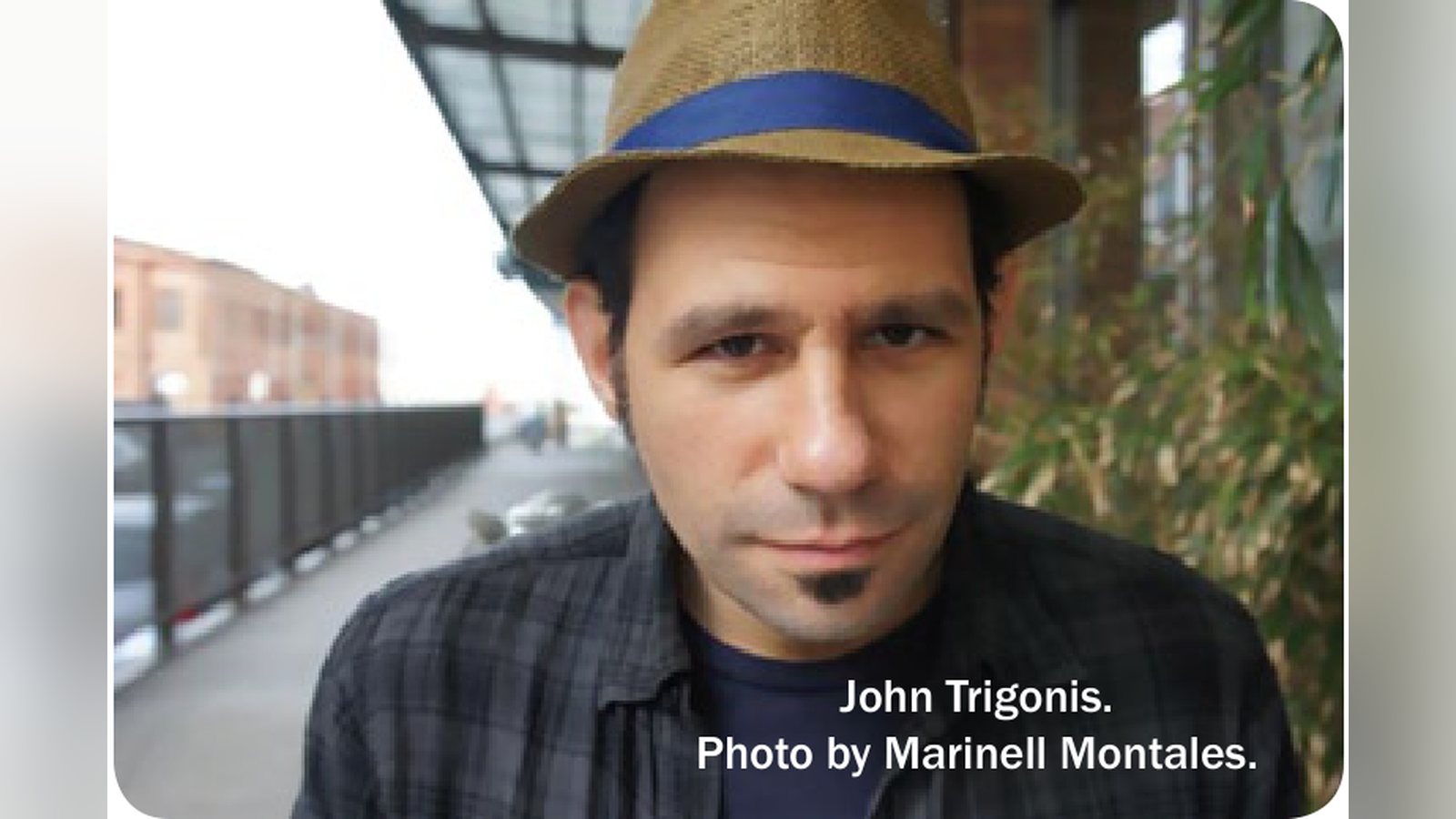
Interview with John Trigonis
John Trigonis is a published poet, writer and storyteller, DIY filmmaker, freelance professor, and author of “Crowdfunding for Filmmakers: The Way to a Successful Film Campaign” (2013). He also serves as the Film, Web & Video Manager at Indiegogo, and successfully funded his short film, “Cerise,” surpassing his $5,000 goal and raising $6,300. Since then, John has consulted on dozens of campaigns and has helped filmmakers raise over $2M over the past three years. (www.johntrigonis.com)
Crowdfunding, when done right, is its own stage. Crowdfunding for a film is a full-time job. And as Indiegogo’s manager of film and video campaigns, I advise filmmakers to start “crowdsourcing” early on, somewhere between development and pre-production if the funds will go to shoot the film. If for postproduction funding, then you do it once you have a rough cut of a trailer so you can show folks what their money will be going to help make even better.
My main tips are as follows: Be in your pitch video, personalize every element of your campaign, from the pitch down to the perks and your social media promotion, and be prepared to devote all of your waking hours to your campaign through its duration. Also, it’s important to be just as innovative and creative with your campaigning as you will be when making your film. It’s gotten to a point where it’s not enough to simply set up “another crowdfunding campaign” that offers what I call standard definition perks; we as filmmakers have to start striving to create crowdfunding experiences for our potential contributors, so your campaign is the talk of the crowd months after you receive your funding.
First and foremost, you’ve got to give them a good project to fund. But even still, the general rule is that people give to people, not to projects. So what do I give people? I give them a show, from my pitch video to my update videos, to referral contests and beyond. In short, I give them an experience, invite them into my world and the world of my film, ask them to participate in the creation of something great. I never, ever ask them for money; I elicit a response from them, and that response usually comes in the form of a monetary contribution.
For instance, my $10 perk was an acrostic poem written in the form of the funder’s name, then formatted beautifully and posted directly to their Facebook wall (or emailed, in the rare event they didn’t have a Facebook account). People loved this perk because I made it about them, about me (I’m a poet above all else, even filmmaker) and my film (“Cerise” is about words –– a former spelling bee champ has to face the word that took him down). Therefore, personalization is the most important thing you can do. A crowdfunding campaign may seem like it’s about you, but it’s never about us and it’s seldom about the films we’re trying to produce; it’s always, always about the funders.
It’s all about personalization. I mentioned my $10 poem. Michael Ferrell from the campaign for Twenty Million People offered up a choose-your-own-adventure-style story for every funder at the $25 level. YouTuber Hanna Hart offered an e-certificate of polygamous marriage at the same perk level. And there are lots of other campaigns who offer up things like social media shout outs, associate and executive producer credit, Skype calls with the director.
Crowdfunding can be used for both entire budgets or for partial funding. If you’re an independent or student filmmaker, oftentimes raising $10,000 to $100,000 can finance an entire short or feature. But the higher up we get on the filmmaking totem pole, the more money we’ll need to make our projects “reel,” and that means utilizing crowdfunding as a means to raise the community and its awareness of your film project, plus partial funding; then, you can look to the more traditional channels for further funding in order to put a nice capstone on the film funding part of the process.
You should choose one platform based on the tools they offer that you yourself can make best use of. At the end of the day, it’s not the platform, but the person using it, that makes for a successful film campaign.
As a truly independent short filmmaker for the past dozen years, the only methods of financing I’ve ever employed are crowdfunding and fishing into my own pockets for the $5,000 to $50,000 I need to make my films.
Do be social media savvy. Do strategize. Do choose a target amount that you can commit to versus a lofty goal. Do have a team. Do be in your pitch video. Do your homework. Do fulfill your promises. Do strive to run an amazing campaign. I don’t think in terms of Do Not’s, since if you’re doing all you should be doing, there’s nothing that will be left undone (my Taoist philosophy at work right there).
But… if I have to mention what I’ll rephrase as a “should not” of crowdfunding, it’s this: filmmakers should not jump into crowdfunding trying to raise money; crowdfunding (or crowdsource funding, as I’ve been calling it lately) should be all about community engagement. Strive to engage the community and the funding becomes a lovely byproduct of a well-wrought campaign experience.
Always do all the “Do’s.”
Keep learning filmmaking
Want more lessons like this? Join StudentFilmmakers free for live webinars with working pros, and stream on-demand filmmaking classes in cinematography, directing, screenwriting, sound and post.