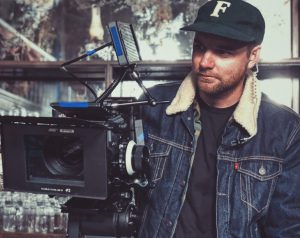
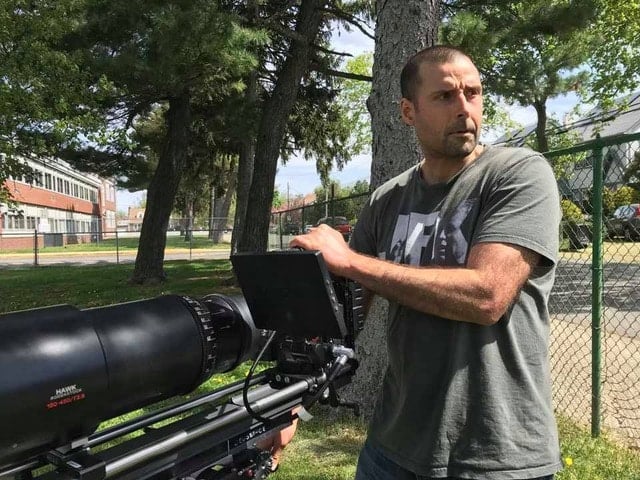
By Brendan Cochrane, Director/Producer
Whether you are shooting a short, feature or commercial it is inevitable that you will run into an unforeseen event and problem solving on the fly can lead to a successful or hampered production and sometimes worse. The goal is to be as prepared as possible and even prepare with backup plans.
Here are some general tips, plans and approaches that I have picked up from a variety of sources over the many years of producing and working in different capacities on film, TV, and branded content projects.
It all starts with a script or creative. Whether it’s a film, TV, commercial or music video you are working off some creative which should be written and or contain references to some aesthetic or combination. That creative – and I’m going to focus more on film and TV, but it is just as applicable to commercials and other types of shoots.
Planning is 50% of your production. Who, what, when, where how, and why are all questions that your physical production should be able to answer. I was taught early on when I was a PA on “A Bronx Tale” and “Die Hard 3” that production is much like a military operation. You need to assess a plan, gather (preferably the strongest team), and go to a particular location or locations and execute the objective within a specified time with the resources you have.
You would be surprised even on the biggest productions the simple problems sometimes you see that make you shake your head going why didn’t they plan to avoid that? Examples, showing up to a location only to find there is no holding area. Or you have everything set up, but the actor doesn’t have the T-shirt they were wearing in the previous week’s scene. You have an expensive camera car, but they don’t have the right mounting bracket because no one did a camera check out or talked to the rigging department or in the case of Alec Baldwin the cinematographer gets shot dead. How does that happen? Was this due to lack of planning? Oversight, failed communication, recklessness, or all the above? You want to get the job done and go home safe.
Here are some concrete specifics that should guide you in creative pursuits that will help you cover your bases. It all starts with the script. From the script a plan needs to be put in place in the form of a shooting schedule (which also encompasses a plan). That plan can be very meticulous or general depending on the type of production. Some software programs will take a script and break it down into sections, strips, from which you can move around to organize a schedule. Every ingredient in that compartmentalized section or scene needs to be planned out. All the scenes’ ingredients and the physical way you will cover the scene and the things tangential to that such as bathrooms, food, break time and transportation.
The responsibility of this breakdown on a more professional set can be shared between an assistant director and or a line producer (someone who basically looks at a creative whether script, or visual deck, treatment and uses their expertise to plan a schedule, budget, and understand the hurdles, and sometimes legal ramifications). To use the example of a short or feature film, you will first want to confirm that that is the final version, and everyone is working off the latest and correct draft.
This seems very basic, but you will be surprised that often revisions and changes are made which inevitably get incorporated into a schedule. So, if you start planning and then the producers and writer, director, or someone else adjusted the creative without telling the appropriate parties that has a chain reaction. Ideally you want to manage a reasonable amount of dialogue a day. You would be amazed that experienced producers push unrealistic production schedules on people who understand what is realistically accomplishable. I had a California company reach out to me to do a line producer breakdown for a feature film. They wanted to shoot out their celebrity talent in less than six days and that talent had about 90 pages of dialogue. That would mean we would have to shoot 15 pages of dialogue straight for six days. The working ideal is between 4-8+ pages a day depending on the type of content, complexity, and ingredients to a scene. Shakespearean actors are lucky to memorize 15 pages let alone do it 6 days straight. Most actors you are lucky if they know 1-2 pages. So, knowing this was not achievable I pushed back and gave them my assessment and they kept pushing because they wanted the money – but I want to be known as a responsible and safe producer and so far, that has worked in my favor. So, if I lose a job because I am concerned over safety, or a ridiculously ambitious schedule its better than losing your reputation because you forced a plan that was poorly thought out or dangerous.
So, breaking down a script with dialogue not only means physical production but what is manageable for an actor. Also, the type of director. Does the director want a lot of rehearsal time? That will eat into your schedule. On a professional set you are looking at 10-12+ hour plus days Sometimes less or more but you will have a happier and more efficient crew if you are working a manageable schedule and people can get rest (turn-around time) and return to work.
For simplification a lot of information is compressed for this article, each topic could be expanded into specific nuances and extreme details for very case specific situations but the purpose of this is to get you to think and plan and plan for the unforeseen. This goes back to the military operation approach. Even though it’s going to be a nice day should we bring lights? My answer is always to defer to the craftspeople who handle their specific department – but experience also plays a role in the saying is it better to have it and not need it or need it and not have it?
From your broken-down plan you will want to consider the following: The location you are going to? Where is your crew and actors going to land? Put their belongings? Is there power in there? Do you need power (electricity). Are there any environmental things that could affect our production? Examples – aircraft noise? A freight elevator that closes at a specific time. Or wild animals? Or wild people? I produced a film where we were in Connecticut and a herd of wild Goats was running around on the property and we were shooting an exterior scene, and someone had to become a Goat wrangler in Connecticut.
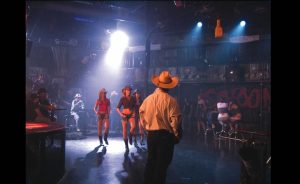
Part of the plan and there are two components to the production plan – a) what’s required for the scene in the context of the film or creative and b) what’s required to film and sound record said scene or scenes. Let’s look at a specific example. Let’s say you are filming a scene in a bar or in prison. There are the main actors and background actors. You have 4 pages of dialogue. Here are some things you should consider. Did you receive the appropriate permission from the location? Assuming you have a window of time did you calculate for the entry and breakdown of your equipment? Is there an area to stage that is separate from where you are filming? From a production design standpoint do you need to dress (style it with props, construction or set design) or alter the existing location? How much time is needed? Have the respective departments seen the location and communicated their needs? Is there power in there? How are you covering the scene? Meaning do you need to move the camera? How? What tools? Do you need to light? Will the lighting set up only favor one view? Or can the actors play the environment? How much time is needed?
I was taught that on average every time you move the camera you are looking at a half hour to an hour. This isn’t for little moves although sometimes this can apply but if you go from inside to outside or vice versa all the camera, support, monitors, accessories, and team moves along with the staging and every ingredient to the scene. Very often people fail to plan for the time it takes to move a camera or the entrance and exit of a location and often on smaller independent projects the transportation, parking, loading, and unloading and people to support the efficacy of this. I can’t tell you how many times I’ve watched the young DP who ordered a ton of C-Stands, lights, sandbags, and boxes of cables, to show up to a location where they don’t have the keys, or competent help or PA’s or even parking. It all starts with the military mindset. The plan. Who, what, when, where how and why?
Now let’s get into the how and why. Often, I will see inexperienced productions shooting some haphazard schedule – and sometimes you may need to. You lost an actor, location or failed to plan and are adjusting on the fly but with a proper plan this shouldn’t happen. You always want to shoot your exteriors first. Why? Because if you run into inclement weather or a problem with an exterior you can always shoot interior. You can usually make an interior look like any time or part of the year but not an exterior.
When I was working on “A Bronx Tale” we shot Robert DeNiro driving a bus so much (exterior) that if you watch the film closely and look at the trees you will see scenes where the leaves are on and off the trees. Basically, we shot from summer to late fall. The second consideration is to think about the creative. Do you need to shoot some massive, complicated scene first? Why or why not? Does the scene involve some emotional peak or realization that would read more powerfully on screen after the actors have spent time with one another on other scenes or are they that good where they can pull it off on day one and reinvent the relationship.
The why can also be in coverage. This is everything from director’s notes illustrating their vision to the way the cinematographer captures the scene. Are you using a dolly, Steadicam, handheld, tripod, or combination? Have the details of this vision been communicated to everyone. I’ve also learned from some very experienced writers and directors that some of them give the days plan to everyone down to the crafts service person – why because it makes them feel involved and part of the plan and people collectively understanding an objective are more likely to pay attention, know what is taking place and be an asset to a production. The more informed everyone is the better the result. However, there is one creative exception to this rule for me personally and that is shooting rehearsals. I’m a huge fan of shooting rehearsals because I believe sometimes the freshest most naturalistic performances can be captured when the actors are literally playing and trying things for the first time.
A lot of actors won’t push back on that approach, but some have their approach and it’s a collaborative approach to filmmaking so it’s always good to gauge their acceptance in earlier conversations in pre-production and then capture what you need to provide it works. They call this 50/50 that is when the camera team talks internally together and rolls. This however can present challenges in post-production if you did not slate (mark the take) so you need to keep your production organized with both good notes, a script supervisor, and preferably slating.
Now I’m going to compress the who, what, when, where how and why? Who? Who is in charge?
There is nothing worse than being on a set with no direction, or no assistant director to keep the pace and understand the coordination or a producer who failed to order food for the crew or never bothered to understand that there are three vegetarians or someone allergic to peanuts. The who needs to know your production plan inside and out and know who is involved to help make that day’s creative goals are met.
What. What are we filming? Is it a chase scene? A walk and talk? Green screen? A helicopter scene? Multi-camera scene? What needs to be covered in terms of coverage. What type of equipment is being used? Do we have the appropriate camera support meaning both personnel and equipment. You would be surprised on larger productions a coordinator calls in a camera order without understanding what they are ordering, what pieces go with what or who is even picking the stuff up? So, understanding everything from the type of equipment, how its being transported, used and the coverage is essential. This involves conversations with what the director wants to see, conversations with an AD or producer as to how we will cover this plan along with the cinematographer who will help shape the vision. On top of this is the world you will, see? What is needed? Everything from props to production design, to the timing and set up and breakdown or all of this.
When. Does this scene need to take place now or later? Is it an early call? Does the sound person need to be there on time? We know that it will take a certain amount of time to get set up so maybe the sound person can come an hour or two later as you won’t really be ready until a certain time. Likewise, is the scene you are shooting part of another scene? Have the transitional elements been thought out? Meaning, do you have the right wardrobe, character look? Emotional state and physical ingredients to make this work and integrate into the rest of your plan? Or should we reschedule this?
Where. Where is the scene taking place? Where is the crew meeting? Where is holding? Where are we charging batteries? Where are we downloading footage? Where are we getting hard drives from? Are they the correct ones? Where are they going at the end of the day? Back in the 90’s when most of you were ovaries I worked on a production, and we shot film. The “dailies” were given to a PA to be dropped off at a famous processing lab. The PA left the dailies in a cab never to be seen again. I don’t think he was either. Where should encompass every aspect of where are the actors going when they show up to set? Where are the hair and makeup stations going? Where is the call sheet? So many where’s you can write a book about them but as time and experience come you will understand what is essential and what can be figured out.
How? How are we filming this scene? Have the actors studied their lines? How much time is needed? How is the break happening? How is the food getting to holding or wherever you are eating? Are you eating lol? How is the equipment being loaded and unloaded? Stored overnight? How has the insurance and payroll been set up? How has the plan been communicated to everyone? Call sheet? General itinerary? How have we filmed previous takes? Does it match? Is there a need to match? How have the director, cinematographer, actors, production design and or props been informed of each other’s needs and requests? Is it possible to accommodate them? How has a plan from a timing standpoint been thought out? Have they considered the camera move times? The staging? How are we dealing with the freight elevator that closes at 5PM or the fact that commercial parking requires commercial plates? Or how are we talking to each other? Walkie talkies? Headsets?
Why? Why can translate into so many aspects as can every topic here. But the goal is to get you to think and appreciate your journey as a creative or filmmaker or artist who works in a visual medium. Why are we telling this story? Or why are we doing this? Is it being conveyed true to its origin? Why is the scene taking place here? One of the other tragedies in filmmaking are lazy producers or people who don’t seek out the things that will make the scene really work. I’m not a fan of process trailers (vehicles that are put on towable platforms to make it easier to film). The problem with process trailers many times is that the actors get so comfortable that they talk to each other without looking at the road because they are being towed. This translates on screen. Plus, the background is six to twelve inches higher. No one usually notices but I do and so do people who take the time to put a well-crafted scene together. Tom Hardy one of my favorite actors does an entire movie in a car. Locke. And you can see he is invested in the scene and the coverage looks real and well done.
Your why will define you and why you are even reading this article which I am grateful and appreciative to share with you. It’s a long journey and you should anticipate obstacles, adversity and challenges and embrace the journey. The best creatives learn every day, but every project brings some gem and jewel that they can reflect on. The best advice is to plan and prepare you will be one step further toward success.

About the Author
Brendan Cochrane is a writer, director and producer who has worked in feature film, Television, and commercials. He is managing director and owner of New York City Production company Digital Seven and is currently working on a feature film being shot in New York and developing a Television series. Brendan is a member of the DGA, WGA and Dramatists Guild and a native New Yorker. His company is www.digitalseven.nyc and personal site www.create.live.