Weekend Watch: A Revisit of “Bright” (2017)
A Gritty Urban Fantasy with Layers Worth Re-Examining
This past weekend, I watched Bright (2017), directed by David Ayer and shot by cinematographer Roman Vasyanov. What initially made waves for its controversial reception and genre-blending ambition actually reveals something far more nuanced when viewed through a narrative and character lens—particularly in the portrayal of Daryl Ward, played by Will Smith.
Ward is not the one-dimensional, tough-cop archetype some reviews initially accused him of being. In fact, his character presents a compelling duality—one that holds space for both grit and grace. On one hand, we see a pragmatic, streetwise LAPD officer who is fully aware of the dangers around him: untrusting of his partner, guarded with his colleagues, and sharply strategic in the face of gang threats. But on the other hand, there’s a deeply human, emotionally intelligent layer to him. A key moment that stood out was when Ward advises his daughter to see past species and judge individuals by their character, not by race—or in this case, not by species. That brief but potent scene exposes a man who understands the stakes of his world yet still strives to instill empathy and fairness into the next generation.
It’s this internal contrast—moral conviction coexisting with battle-hardened realism—that makes Ward’s character feel dimensional. Not just a cop, not just a father, not just a product of his environment—but all three at once. That’s the kind of layered writing and performance that often gets overlooked in blockbuster critiques, but for storytellers, it’s worth paying attention to.
As for the worldbuilding—Bright doesn’t go for a completely fantastical aesthetic, and that’s precisely why it works. The urban fantasy elements are integrated into a world that still feels grounded in our own: graffiti-tagged buildings, cracked sidewalks, fluorescent-lit convenience stores. It’s Los Angeles, but with orcs and elves walking alongside humans. The visual treatment doesn’t scream “science fiction” at every turn; instead, it subtly folds the fantastical into the familiar. This juxtaposition makes the world feel both accessible and uncanny—a society evolved from ours, rather than a parallel realm. It’s a bold choice that challenges what audiences expect from fantasy and sci-fi, and it opens up rich terrain for socio-political allegory.
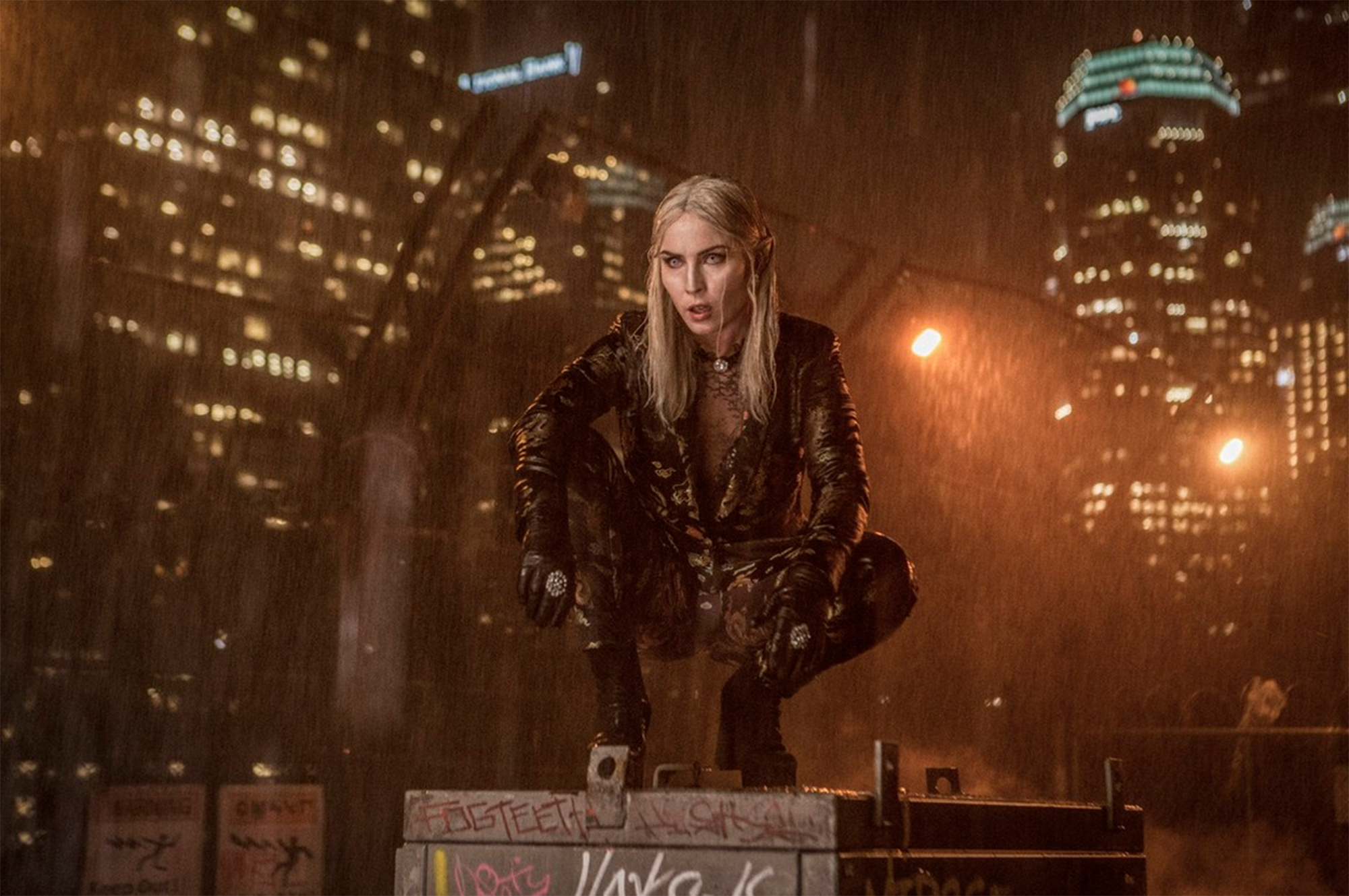
And of course, for those of us who appreciate sci-fi/fantasy storytelling—but aren’t necessarily entrenched in the genre—the depiction of elves in Bright was both captivating and elegant. The elves are powerful, highly intelligent, and physically superior, yet also coldly elite and politically intimidating. Naomi Rapace, as Leilah—the formidable elven antagonist—delivers a performance that is both fierce and enigmatic. Her presence commands the screen without relying on overplayed villain tropes. She portrays Leilah as calculated, visionary, and terrifying in her control—an embodiment of beauty, power, and detachment. It’s a refreshing departure from the usual portrayals of elves in genre cinema, and a reminder that sci-fi/fantasy can push character archetypes into richer, more compelling territory.
In the end, Bright may not be a perfect film, but it’s a rich text for filmmakers and storytellers to unpack. It’s not afraid to take risks. It blends genres. It complicates character. And perhaps most importantly, it challenges the visual and narrative boundaries of what we consider “fantasy” or “sci-fi.”
But then again—what is a perfect film? For artists, maybe the more urgent question is: does the film provoke something deeper in us? And in that sense, Bright is far more successful than it’s often given credit for.
A Moment That Lingered: The Fairy Scene
One moment early in Bright really caught me off guard—when Ward (Will Smith) casually kills the fairy outside his home. The act is quick, and everyone around him—his wife, the neighbors—react as though it’s no more significant than swatting a mosquito. But I felt a pang of discomfort watching it. I couldn’t shake the feeling that it meant more than the moment allowed. Was it foreshadowing? A quiet nod to how easily we justify dehumanization—or devaluation—when it’s wrapped in cultural norms? I felt it echo quietly throughout the film’s worldbuilding—the way beings are ranked, dismissed, or feared—and it took on new weight in the presence of Noomi Rapace’s Leilah, the elven queen. She’s portrayed as elegant and lethal, alien yet commanding—a stark reversal of the fairy’s fate, but born of the same tension. Bright doesn’t hand you a moral conclusion, but it does plant these moments for you to wrestle with—if you’re paying attention.
What Did You Think of the Characters?
Did Daryl Ward resonate with you the way he did with me? Did you find the characters in Bright dimensional, flat, symbolic, or surprising? Let’s talk about how they were written—and how they were performed. I’m especially curious about your thoughts on the elves, the orc police partner, and how those characters function within this layered, socio-fantastical world.
What Were Your Weekend Watches?
I’d love to know what you’ve been watching lately—films, series, anything that sparked your imagination or challenged the way you think about story, worldbuilding, or performance. Share your latest discoveries. I’m always on the lookout for titles that push creative boundaries or open unexpected doors.
And Hey—No Judgment Zone
You know how Bright asks us not to judge others by their appearance or background? I’m invoking that energy here. Don’t judge me too harshly for my take on this film — whether you agree or not, this is a space for curiosity, re-examination, and maybe even a little creative contradiction. I welcome all perspectives—especially the ones that complicate my own.