By Jennifer Falk
Editor Jennifer Falk shares how she organized hours of footage and wove the story of the documentary Ten More Good Years, plus tips for doc editors.
Ever since I knew I wanted to become an editor, my dream was to work on a documentary project. The idea of searching through hours and hours and hours of footage looking for the best moments that could be linked together to tell a touching and thought-provoking story seemed not only a monumental challenge, but also a rewarding one.
After seven years as a freelance editor, the opportunity presented itself when I met Mike Jacoby, an independent documentary director/producer. Mike showed me a teaser he had edited for his project. It was called, “Ten More Good Years,” and it was about the struggle that many LGBT seniors face, growing old and gay in America today. He had been working on the project for over four years, traveling the country interviewing subjects and experts on the topic. He had over a hundred mini-DV tapes that were loaded onto a Final Cut Pro editing system, with all of the tapes logged and transcribed. Looking for an editor with experience, I was recruited for the project.
I couldn’t wait to get my hands on the footage. We met in October of 2006. Mike needed to have a finished piece by March 2007. Because of my work schedule, I could only devote weeknights and weekends to the project. So I took his drive, brought it home, and got started.
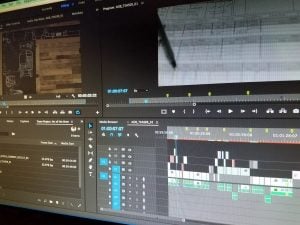
My first approach was to watch down the tapes and start pulling the sound bytes that I thought would be useful – looking for similar or dissimilar stories, struggles, emotions that could be used. After about a month, I put a dent in the subject matter, but knew that there was no way, at this pace (even working on it full time), we could ever get to the finish line in time. So I expressed my concerns to Mike about meeting his deadline – and we came up with another plan. Since he knew the material, (and had made the transcriptions), ‘why don’t we sit down and start putting the story together.’ This idea was really effective. With each of us being able to use our talents to the fullest: Mike with his knowledge and passion for the subject matter; and myself, efficiency on Final Cut Pro and my storytelling skills.
The film looks at the subject matter as it pertains to the lives of three males and one transgender person. We started the movie introducing each one of these “characters” and some background on their lives – their partners, occupations, being gay in a far less tolerant society than today. These sections were supported or connected together with sound bytes from various experts.
Another important section that was to be the peak or middle of the film was the 2005 White House Conference on Aging. (A conference making recommendations to the president and Congress to help guide national aging policies). This was important, because what did or didn’t happen at the conference would affect the lives of every aging American.
This conference footage created the perfect arc for the final section of the film, integrating our characters with the impact of the conference on their community. We watched it down numerous times – adding new bytes, taking some bytes or smaller sections out, trying to keep focus on what our objective and “motivation” was. This is always the hardest part, since every byte and idea seems so important. But a great lesson I learned was that the viewer never knows and never misses what was left on the “editing room floor”. Shortlist of Tips for Documentary Editing:
(1) View all your material.
(2) Create transcripts of tapes. This will be used to create scripts.
(3) Find a beginning, middle, and end for your story.
(4) Be aware of unexpected links while creating your storyline.
(5) Don’t be “married to anything”. No one will know what’s not in the final cut.
(6) Keep your story moving forward.
Once we had a first version of our story, I left Mike to start covering the sound bytes. Once he had that done, he brought me in to give it a polish and make sure our pacing was on track. Of course there were screenings with friends and colleagues to get their opinions. We had a finished piece for Mike’s screening, but that was not the end of the project. Over the last year, “Ten More Good Years” was screened in over five film festivals and broadcast on the Sundance and Logo channels. I am extremely proud of the film and of the work that we did. As with most projects, I learned a lot. Most importantly is that each project has it’s own approach on what works best for the editor, director and the story they are trying to tell. Our approach though a little unorthodox was very effective. As both an On-line and Off-line Editor,
Jennifer Falk has worked for numerous clients including CBS (Upfront Presentation 2002-2006), ABC, Food Network (The Next Food Network Star 2007), A&E (“Fathers & Sons in Hollywood”, a two hour Biography special), History (Deep Sea Detective series), The Travel Channel, MTV, Comedy Central, Discovery Health (Supervising Editor for the National Body Challenge 2004 series), ESPN Classic Sports Network, Discovery/Animal Planet, and Sony Music. To learn more about the documentary, Ten More Good Years, go to www.10moregoodyears.com. Jennifer’s website is www. jennruggedit.com.
Keep learning filmmaking
Want more lessons like this? Join StudentFilmmakers free for live webinars with working pros, and stream on-demand filmmaking classes in cinematography, directing, screenwriting, sound and post.