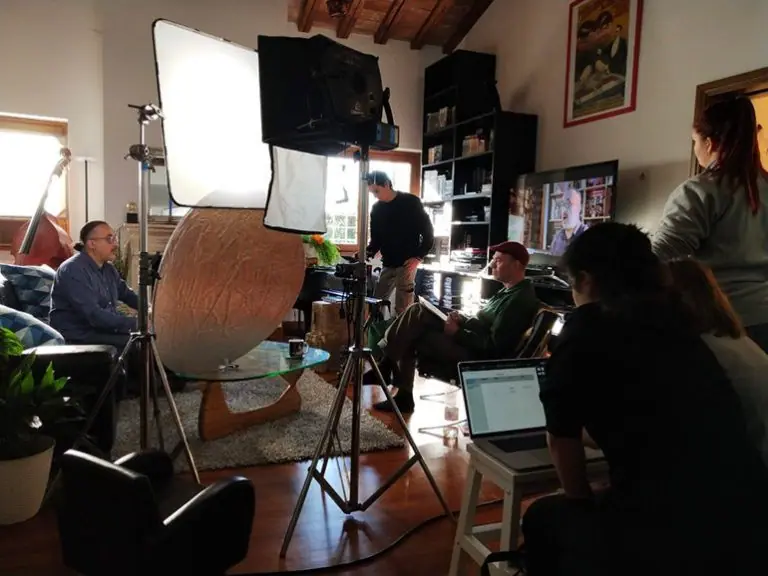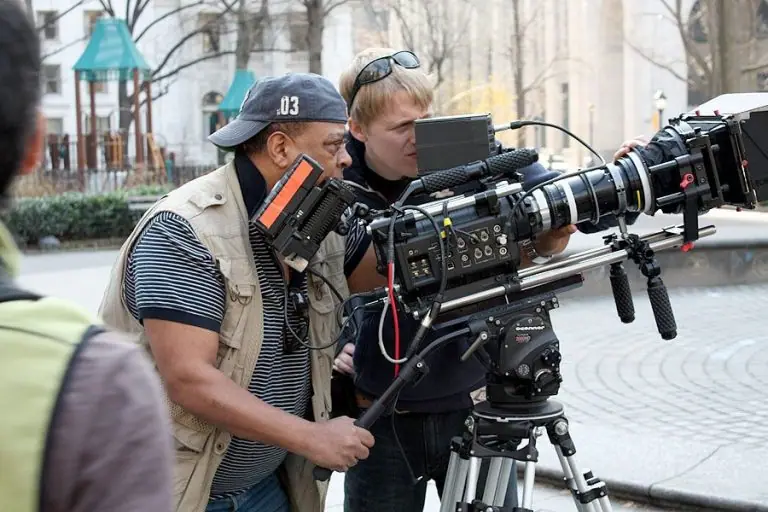
Patrick Cady, ASC, cinematographer of Girlfight and Insecure, later stepped behind the camera as a director on Bosch, finale included. In this class he sat down with DaJuan Johnson, who played Detective Rondell Pierce on Bosch, to look at the director-actor relationship from both sides of the lens. Their shared lesson: trust is earned in small moments, and every note an actor gets should come with a reason.
Why pair a director with an actor?
Most advice on directing performance comes from one side of the camera. This conversation puts both voices in the same room. Cady speaks as someone who spent years behind the eyepiece before moving to the director’s chair. Johnson speaks as an actor who has worked as a day player, a guest star and a recurring cast member, and who now directs as well.
That mix keeps the talk honest. When Cady describes a habit that helps him run a set, Johnson can say right away how it lands for the person in front of the camera. Many of their stories come from the years they both spent on Bosch, so the examples are specific to a working TV drama rather than a classroom exercise.
What should you say before another take?
Something. The pair agree that “that’s great, let’s go again” with nothing after it leaves an actor guessing. Was it the pace? A missed mark? A focus problem? An actor who doesn’t know will start changing things at random, and the take you liked can drift away.
So the rule they teach is simple: always give a note, and always explain why you are going again, even when the reason is technical and has nothing to do with the performance. Telling an actor that the camera bumped, and that the performance was right, protects what they just gave you.
They also keep notes short and give them one at a time. A list of five corrections is hard to hold in your head while acting. And the best notes speak to what the character feels or wants, not to the result the director is hoping to see. If that distinction is new to you, Categories of Direction: Playable, Result and Demonstration lays it out well.
Why does Patrick Cady walk to set to give notes?
Because calling out a note from video village, over the wall of a set, is public and impersonal. Cady prefers small monitors placed close to the action so he can step over and talk to an actor quietly, face to face. A private word feels like collaboration. A shouted one can feel like a correction in front of the whole crew.
The same care applies to line readings. Many actors dislike being shown exactly how to say a line. Cady tells a story about working with Jamie Hector on Bosch, where he asked permission before offering one. Asking first turned what could have been an insult into an offer.
How do you welcome a guest actor to a running show?
On an episodic series, a guest actor walks into a family that already has its routines. The regulars know their characters, the crew knows the rhythm, and the newcomer may have only a few days to fit in. Cady and Johnson talk about what helps on that first day: a real introduction to the cast and crew, a clear sense of the scene, and a director who is visibly on the guest’s side.
A director coming in for a single episode faces a version of the same problem. The series regulars often know the show better than you do. Winning them over starts with respect for that knowledge.
Johnson remembers an early job on 24 where he lay on the ground while two other actors played the scene above him. Small parts like that teach you how much a set’s mood depends on whether anyone notices you.
What does “block, light, shoot” protect?
It is the working order on a professional set: the actors rehearse their moves, the crew lights what they found, and only then does the camera roll. Cady, a cinematographer by training, explains why that order matters for the cast: the actors find the scene first, and the lighting serves what they found.
To explain why, he borrows an idea he traces to Natasha Lyonne: a performance is fragile. A performance can be lost through long waits, confusing notes or a crew that ignores the cast. Part of directing is guarding it.
Cady admits he is addicted to shot lists. He still throws them away when the actors discover something better in rehearsal. He also shares what he learned from the late Lance Reddick, whose Bosch character, Irvin Irving, was stern and strict on screen.
How do you keep a scene small and true?
The camera sees everything, especially in close-ups, so performances built for a stage can look too big on screen. Both speakers talk about helping actors play smaller and more private, trusting the lens to find the thought.
Ensemble scenes heavy with exposition bring their own challenge. When several characters stand around delivering plot, each actor needs a reason to be there and something to play beyond the information. Johnson also describes how directors on a comedy keep jokes fresh after the crew has heard them so many times that nobody laughs anymore.
Notes to take to your next set
- Give a reason with every extra take.
- One short note at a time, about feeling, not results.
- Walk over. Don’t shout notes from the monitors.
- Ask before giving a line reading.
- Block, then light, then shoot.
For more on this partnership, read Working with Actors: A Cinematographer’s View and Techniques for Successfully Collaborating with Your Actors.