By Patrick Moreau
Shooting solo is daunting but far from impossible. Patrick Moreau explains how to plan and run a one-person shoot and become a better storyteller.
Shooting solo is definitely a daunting task, but it is far from impossible. It takes a special sort of person and outlook to try and tackle a shoot often needing 2-3 people with only one. That doesn’t mean that makes it is a bad idea, it means you need to be prepared to put in a little more. Some of our best work has come from weddings shot with one person or shoots on “A Game of Honor” where only one person was there. Sometimes it takes a little luck, but shooting solo will really push you to know what you want out of a scene and will push you to be a better storyteller.
One of the best examples of a wedding that was shot solo by us would be JC and Esther (http://vimeo.com/6496808). At over 200k views on Vimeo it became our most viewed wedding film to date. With most of our weddings shot with 2-3 people and dozens of lenses, I learned a lot in approaching a story with one person and needing to really simplify things. The first thing to go was… …The gear, just so it could become more manageable for one person. I brought two bodies, 4 lenses, a tripod, a monopod and a slider (plus audio gear). It was a very manageable setup that allowed me to carry everything in one trip. It also meant less decisions every step of the way allowing me to be much more present while things were happening.
Four lenses are a great number as three fit into a shootsac plus one on your camera body. I would choose the lenses you do bring based on the story you are trying to tell. The more you know your characters, the better you can pick effective focal lengths and really be okay at leaving others behind. Our lens selector tool in SMAPP was built around the idea of picking effective focal lengths and we believe it will really make this process easier. We would then recommend picking a couple camera tools that best fit the story. For this wedding we left the steadicam at home as it didn’t really fit JC and Esther, but for others it may make more sense to bring a handheld stabilizer and skip the slider. The key is to make more decisions up front to really lighten your load, keep your speed up, and allow you to get more with the time you have.
NEW FOR 2012! Conference partner Future Media Concepts presents
Look at how you normally cover an event and see if there is anything you don’t really use, don’t really need, or perhaps has a high time input for a low return. This is a great exercise for any shoot you do, but especially when you only have yourself to get things done, you want to make sure everything is essential. A third angle at the ceremony is a great example. We used to setup a tripod with a super wide as a safe angle. It required setting up another tripod, camera, lens, getting the angle, composition, and exposure all set. The return was often less than a dozen seconds in the final piece. By cutting it, it meant that we lost our safety net, but maybe that is not such a bad thing anyways. You’re less likely to fall if you know you have no net to catch you.
When you are looking at trimming the fat, think about shots or angles you might not need to get, things during the event you might not need to shoot, and gear you may not need. Cut out everything not essential and focus on the essence of what is.
Scout, Plan, Cheat
The value of scouting your locations and really storyboarding your ideas is so so important on a commercial shoot yet it is often overlooked on a wedding. Our wedding films are so little about the day and so much more about the couple that we rarely scout location, but what we do is really, really know the people and the story so that we can know what we need and plan for that. As you look at your films and your style, think about whether scouting the location will help you. In addition to that, get as much information as you can and really plan from there. That could mean storyboards, but more often it just means shot lists and ideas of what you want to get when.
The processional for JC and Esther is a great example of this. I knew the exact shots I wanted, the shots I needed for the story, and I found a way to make those – and nothing more – happen. I had a slow slide at the back of the ceremony as Esther came down the aisle. I already had the lens chosen and the position picked out. I left the slider in the ground exactly where it needed to be, I had the quick release on the tripod head loose, and even had the slider in the right position. When the processional came around, I slipped the camera in and without even tightening the plate down, slid the camera once across the length of the slider, pulled it off and was already on my way up to the front with my monopod. I was able to beat Esther there and get a completely different perspective a few seconds later. All of this was possible only because I knew exactly what I needed and had it planned so precisely that it left so little room for anything to get in the way.
When you are shooting an event, things only happen once. If you’re like us, you need to make the most of that as there are no re-dos, slowing down, or pausing. But that doesn’t mean you can’t cheat.
Cheating is a term more often used in a commercial production and refers to manipulating the set or environment for one shot in a way that is different than another shot but rarely noticed when cut together in the final scene. Sometimes it means getting shots for the same scene at a different time or location. When put together, the power of context really leads the viewer to think it was all done at the same time and it means you can get more coverage for your story at different times. Applying this idea to weddings, that means always looking for reactions before or after something happens and then using those during the actual event. You might get a tight shot of a bridesmaid laughing hours after something happened but you can cut it in with a funny event from much earlier and it will feel like it happened together (and it often did happen in a similar way, you just don’t have the ability to cover everything at once). Look for reaction and moments before and after your big events to give you more of an ability to cheat those shots in during the big moments. For JC and Esther’s first meeting, everything happened in real time. However, JC had a good couple minutes while he waited for Esther. Every second counts, so I took that time to get some tights of him standing there as well as a slider from behind as he stood there waiting. If you look at the final sequence of their first meeting, several of the shots in the middle of the sequence were actually from before anything happened, but with the power of context it all feels like it happened in the order shown.
Follow What Excites You
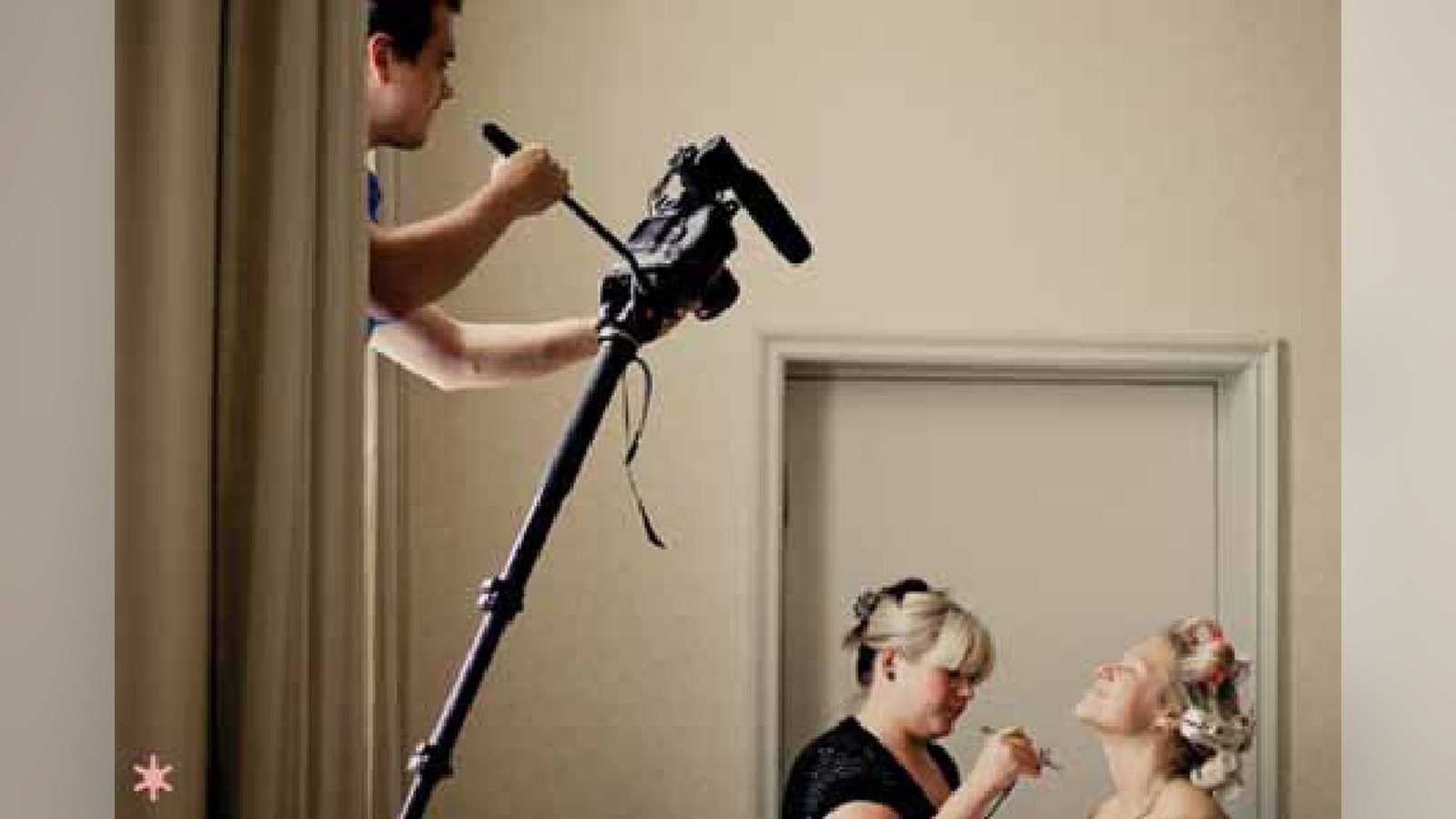
Probably the biggest tip we can suggest is to really follow the story you want to tell. When you only have one person to shoot that leaves less room for the fluff. Hair and make-up are one of those things at a wedding that are often quite meaningless yet many people still cover. To be an effective shooter all alone, you need to be okay saying this is what I want, and I am okay missing everything else. Like the point above, this comes down to really planning things out and having an idea of what you want to cover. It always requires the trust in yourself, and the trust from your couples/clients, to follow what you believe and feel more than anything else. Put another way, would you rather have a lot of average coverage with little story, or a much footage that has really strong story? Put yet another way, if you look at a film like JC and Esther or Veronica and Dan, dissect it shot by shot and see just how many have no purpose for the story. If every single shot in your story has a purpose, which it should, then there is no need to get coverage that doesn’t add to your story. It takes time to be okay with that, but the sooner you are, the more you can really get down to telling stories and not just covering everything around you.
Safe Doesn’t Work Here
If you have an excess of resources you have the ability to play it safe, get extra coverage, hold your shots longer, and cover things you may not need. If you have few resources, such as shooting by yourself, you need to resist the pull to play things safe and really push extra hard to make something more. Your first instinct is often to shoot wide, hold shots longer, and really get a lot of coverage. We can get so worried about getting so little because we are by ourselves that we then play it safe for anything we do get. The only problem with this approach is that playing too safe doesn’t make a good film or a strong story. Get in there, make effective lens choices, and push yourself to catch things before they happen. It won’t always work, you will miss things, there will be times you will probably wished you had played it safe, but the more you put yourself out there the further you can push what you can do with one person. If you find yourself often shooting with one person, you already have a limitation of resources and that likely isn’t your fault, but it is all on you if you allow this limitation of resources to also hold you back from telling strong stories. Patrick Moreau is one of cinema team leaders at StillMotion (www.stillmotion.ca). Over the years they have shot weddings from Japan to London, as well as work for commercial clients such as Canon and IBM. “A Game of Honor” is StillMotion’s three-time Emmy winning documentary for Showtime, including best sports documentary for 2012. Patrick will be on the road as an instructor for KNOW. Visit knowbystillmotion.com.
Related filmmaking guides
- What does a cinematographer do?
- How to become a cinematographer
- Camera angles in film: a beginner’s guide
Keep learning filmmaking
Want more lessons like this? Join StudentFilmmakers free for live webinars with working pros, and stream on-demand filmmaking classes in cinematography, directing, screenwriting, sound and post.