By Scott Essman
Editors Alan Edward Bell, Michael McCusker and Pietro Scalia explain how they cut The Amazing Spider-Man, Sony’s 2012 reboot of the franchise.
Though the three Spider-Man films helmed by Sam Raimi are all less than a decade old, Sony Pictures is reinventing the franchise with an all new 2012 film, The Amazing Spider-Man which features and entirely new cast and crew, plus a fresh approach to the comic book legend. Given its massive scale, the production required the services of three top-flight editors to realize its many scenes and action aspects.
Pietro Scalia was involved as an editor on The Amazing SpiderMan from the beginning of production through principal photography up until the main unit went to New York for location shooting. At that point, he left Spider-Man to move onto Prometheus which he edited for longtime collaborating director Ridley Scott. Of note, when Scalia came onto SpiderMan, Prometheus had not yet been green lit. Since that time, Scalia has been involved in Spider-Man on and off, seeing cuts and screenings, consulting and assisting. “It’s really exciting at the beginning of a film such as Spider-Man with its franchise,” he said. “For me, it was the approach in looking at the film and discovering these characters for the first time. That was my main priority, and to have young new actors Andrew Garfield and Emma Stone [involved].”
For Scalia, especially with his being involved at the outset of footage coming into the editing room, Spider-Man was a discovery on many levels. “As the material comes in, building the scenes is a very exciting part,” he explained. “I loved being able to discover the characters for myself and shape them. That was my guiding principle at the beginning – deciding who this new Spider-Man was going to be. The character is an awkward kid, but there was a mischievous rascal in Andrew that I really liked.”
With Scalia involved as key editor at first, all of the incoming scenes were cut as they were shot during his tenure. “Two-thirds of the film was in an assembly form,” he stated. “A lot of the big scenes still needed to be shot including the finale and there were still exterior New York shots — still a lot of material needing to be picked up.”
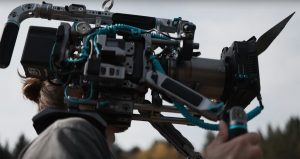
Due to the heavy amount of visual effects in the film, Scalia was given detailed previsualizations. “The reels were built with scenes that were cut, but it wasn’t a completed film,” he said of the early stages of editing. “There were different scenes with really early previz that would be revised and changed. We were shooting with the Red Epic camera in 3D, new cameras that haven’t been used before.”
Of note, the 3D process necessitated a learning curve of sorts for Scalia in terms of how the cutting room was going to be set up, organizing the digital workflow shooting on the lot at Sony Pictures, and getting the data via dailies which he would view in 3D with polarized glasses on. “Knowing that there were new cameras, there were technical problems, but with the new digital data management, we made it work,” Scalia described. “My assistant Bob Mead assisted in making a full digital cutting room going. Having had that experience, going onto Prometheus, it was an evolution of the format. By the time we set up Prometheus in London, [cinematographer] Dariusz Wolski had already done 3D shooting with the Epic on Pirates of the Caribbean. I took what we learned on Spider-Man and how we ran the cutting room, and implemented it on Prometheus.”
Cutting in 3D was beneficial to Scalia in a creative as well as technical sense. “3D affects your emotions of the shot, so it determines the selections and how you build the scene,” he said. “What I noticed early on was that some of these scenes, because your eye needs adjusting, it was cut at a slower pace. I was very aware of not cutting and straining the eye, but the eye settles in from one shot to the next. Looking back at certain scenes with the glasses off, you would feel that a scene should move slightly quicker. Some people will shoot by pulling convergence on the set but it very time consuming. With a somewhat fixed convergence, the subject is fixed in a temporary way, but that could later be adjusted in post-production.”
Scalia further elaborated on the 3D process as a tool which filmmakers can manipulate. “When I experienced the first 3D with these cameras, it has the same effect as color timing or camera movement,” he commented. “It was important to use it as a storytelling device. It only hurts if the 3D is off — I would send it back and try to get it fixed.“
When Prometheus finally got its green light, Scalia made the hard decision to leave Spider-Man and join the prequel to 1979’s Alien. “When you work on something and build characters, it was very hard for me [to leave],” he said. “You have to let it go, but it was in good hands. I was a whole year on Prometheus, but they [Webb and Bell] have been great with me, keeping me in the loop and inviting me to screenings and hearing my feedback.”
Though his time on The Amazing Spider-Man was cut short, Scalia relished the experience. “I went into it fresh and learned about the myth of Spider-Man and looked at it as a character piece – a teenage kid who has suffered a huge loss and how does he mature?” Scalia remarked. “That is what appealed to me — that transformation. At the same time, you make sure that the film is going to be special — looking at a new hero.”
Editor Michael McCusker came onto the film midway through the process. “I heard about it when it was announced,” he said. “I knew that Alan Bell would probably be involved in some way because he had worked with the director. I came on during the first week of June in 2011. Alan had been on a couple of months before me when Pietro left to do Prometheus. At that point, they had finished shooting and had a movie that they needed to get prepared for the studio.”
Joining the team came naturally to McCusker. “Alan asked me to help out for a couple of months, and I agreed to do that,” he said. “We had been trying to work together for years. We both respect each other’s work — it was a great situation.”
McCusker worked longer than anticipated as he remained with The Amazing Spider-Man until January of 2012, and he was glad to do so. “Alan is not only a great editor but a gracious guy,” said McCusker. “He treated me like an equal partner. My role on any movie of that size when you get into trying to get to the end, there are always sequences that are up for grabs, trying to figure out how it was going to fit together. I brought some cohesion to it.“
Explaining the division of work, McCusker noted that it came naturally to the two editors on the show during his time with the film. “Alan was perfectly capable, but there are so many other mandates for his time, I do the exploration job working out these complicated sections, hacking at it until you get something that people are happy with,” McCusker detailed. “I started getting scenes to rework, all in an effort to get the movie to a good place. The original intention was two-to-three months, but it grew from there.”
Just how does a two-three month job expand into one that lasts seven months? McCusker explained it democratically. “Editing is a funny gig – I love it, but everybody gets possessive of their work,” he said. “When I was showing my work to Marc and Alan, they were happy with what they were seeing and liked the progression, and started giving me more stuff to do. I realized it would be a bigger, longer job.”
As such, McCusker worked naturally and fluidly with both bell and director Webb. “They both liked the situation because I was able to go into my room, work stuff out, and present it to them,” McCusker stated. “It was decided for me what sequences I was going to edit. They had an initial mandate for me to work on certain sections. From there, it ballooned out into other scenes. As we screened stuff, we would start talking about stuff that needed work. I would rework stuff and show it to them.” Though the film represented McCusker’s first experience with Webb, it worked well for the film. “I like Marc a lot – he is a gracious guy and smart,” McCusker described of the relationship. “Nobody’s ego came into play. There was a free flow of critiques and ideas. I felt very lucky to be involved in that. I think it was a really great way to work.”
When McCusker got into the work and more was given to him to edit in summer and fall of 2011, new mandates came to fruition. “They felt like there was a chunk of the movie that was sagging a bit in terms of pacing,” he stated. “They wanted a sharper focus and more efficient edit. They had to concentrate on getting other scenes in shape for visual effects. They had a lot to do with CG and action- related scenes. They would have fallen behind on other scenes.”
Regarding an effects-laded film such as Spider-Man, McCusker explained his position logically. “I have worked on some large movies with a lot of previz,” he said. “You make the movie work with the footage you have. A lot of the process is developing story and visuals as you go along. For a character like Spider-Man who is doing these actions bits, previz plays a big role. You have to reset yourself for having a whole lot of tools at your disposal.”
He further denoted how an editor works with both previsualization and computer-generated imagery. “You can get some previz to fill in an idea to see if it works and progress from there,” McCusker said. “It’s only challenging to see how far your imagination can go. There are many ways to solve problems with the resources to do so. You might pitch an idea and go to the director. Marc would come in and like it or not and he makes the call. I might pitch an idea, but it might become a brainstorm session with me and Marc or Marc, myself and Alan. Somebody initiates an idea and comes up with a concept. It happens several times over the seven months I was there. Alan encouraged it — he was very gracious in allowing me to be part of that team in that communications circle.”
In the end, though Spider-Man is a huge project, McCusker stated that his job is essentially the same as one on a smaller film. ”When I’m an editor, whatever the size of the film is, I always maintain the position of the audience,” he said. “When you view moviemaking in those terms, it becomes very simple. I try not to overcomplicate it. I try to keep to the basics: how do I support the main character and the story through the main character — I make creative decisions that way. When you feel like you are stuck and painted into a scene, think of the character. Try to cut from that place. “
With Scalia leaving in February of 2011 to work on Prometheus, Alan Bell came in as the key editor on The Amazing Spider-Man, including a short overlap with Scalia. Though the picture was two-thirds assembled, Bell described the remaining job ahead as a “huge undertaking – an awful lot of work to be done.”
Of his work on Spider-Man, which will total some 16 months, Bell described the reimagining of the franchise as “definitely different than the previous style. It is more character driven. That’s the thing that I think people will take out of this.”
Significantly, Bell had edited 500 Days of Summer for director Marc Webb who has hired to direct The Amazing Spider-Man. Naturally, he brought in Bell when the editor’s schedule made him available. “Marc comes from a solid grounded way that his actors connect,” Bell said. “In The Amazing Spider-Man, there is a strong rapport between Peter Parker and the love interest. I personally think that a lot of the scenes resonate on an emotional level more than in the previous Spider-Man.”
In addition to the emotional ties among the actors, this SpiderMan has no lack of action beats. “We have huge sweeping action scenes that are definitely things that you haven’t seen before in Spider-Man,” said Bell. “He can’t spin his own webs — he has mechanical web-shooters; it’s more realistic. You have a different set of rules than if he can spin webs on his own.”
Of course, the film is entitled Spider-Man, so, as such, the story is focused on the title character. “Very much like Batman as a human, Spider-Man is everyman’s hero,” Bell claimed. “The thing that resonates with me is the idea that that could be me. What would I do in that situation? How would I behave? We try pretty hard to say what would happen if you put a kid into these extraordinary circumstances.”
To actuate a film that has been on screen thrice within the past ten years, the filmmakers were aware that certain aspects of the legend must remain intact, while others needed to be wholly apart from the previous films. “Everybody is cognizant of the fact that we are taking a story that people are familiar with,” Bell stated. “That story has been told already. There are certain things that have to happen in a Spider-Man story. Those things you have to find a fresh new way to tell them hopefully. I think that we have all been very aware that we have to attempt to do it differently and update the story and characterization of the various themes in the previous ones.”
Bell continued that as an editor, the film constantly went back to his focusing on the main character as its center. “It makes it a lot easier and more poignant as an editor to identify with the character more,” he stated. “You take the movie home with you. Some of my best work is done at night when I’m sleeping!”
With the widely disparate projects of 500 Days of Summer and The Amazing Spider-Man behind them, Bell spoke reverentially about his collaboration with Webb. “He allows me a level of creativity that I really appreciate,” Bell said. “I am an accomplished compositor, so that when I look at scenes, and need to fix something, I tend to look at footage differently than others. I don’t have to wait to send a shot out to a VFX company. I can do it right in the Avid or in a compositing app on another desktop.”
With his compositing background, Bell had input into every one of the 250 visual effects shots in the film, including opticals such as split screens. “There were many performance-enhancing elements,” he elaborated. “Face replacement and arm additions using Combustion and Nuke. Now I am using Fusion which is basically like Nuke. On a movie like this, I am doing shots that progress the story. If I have an idea and put it in the movie and it plays, Marc can see it, approve it, and it gets done. I’ll have the idea and be working on a scene and I’ll do it all at home. I simply do the temp and pass it down the chain and it gets done by a whole host of other people. I have been collaborating quite a bit with the visual effects supervisor on the show. He appreciates the give-and-take. Sony Pictures Imageworks is doing all of the critical character animation and the lion’s share of the VFX.
On a project as huge as Spider-Man, the post-production team, especially including SPI and other effects vendors, is substantial. “There is a whole team of people constantly following the cut,” said Bell. “Somebody has to go behind me and redo [my temp effects]. You do it and these people are scrambling to figure out what you did, and it is submitted and changed. There is a constant treadmill of shots coming and going. It’s such a big machine, there is an army of people doing things all around you.”
One memorable scene set in a New York subway was shot on a stage with a green screen background and involves a wide array of elements. “With this type of filmmaking there are so many layers, and you get the lot – one element shot against blue, one element shot against green, the clean pass, the CG character, the stunt guy,” Bell explained. “There may be eight elements in one shot. You are layering that together to make it work. That’s the biggest challenge.”
On a March day, Bell is getting very close to locking picture and finalizing visual effects. “Significant numbers of visual effects shots are done. As visual effects need to be cut in, there are tweaks that need to be made, and there is mixing, color timing, 3D conversions, and deciding where we want things placed in frame. Also, since the movie was shot in 3D, you have to smooth out the inter-ocular and convergence. They are very good at SPI knowing how much we need and what we are going to get.” Since the mid-1980s,
Scott Essman has been writing and producing projects about motion picture craftsmanship. He has published over 350 articles as a freelancer and has produced over twenty publicity projects for Universal Studios Home Entertainment where he made video documentaries and wrote publicity materials. He published his first book, “Freelance Writing for Hollywood,” for Michael Wiese in 2000, and has a new book about Tim Burton.
Related filmmaking guides
- Top video editing software for students
- ADR: automated dialogue replacement explained
- The power of sound in film
Keep learning filmmaking
Want more lessons like this? Join StudentFilmmakers free for live webinars with working pros, and stream on-demand filmmaking classes in cinematography, directing, screenwriting, sound and post.