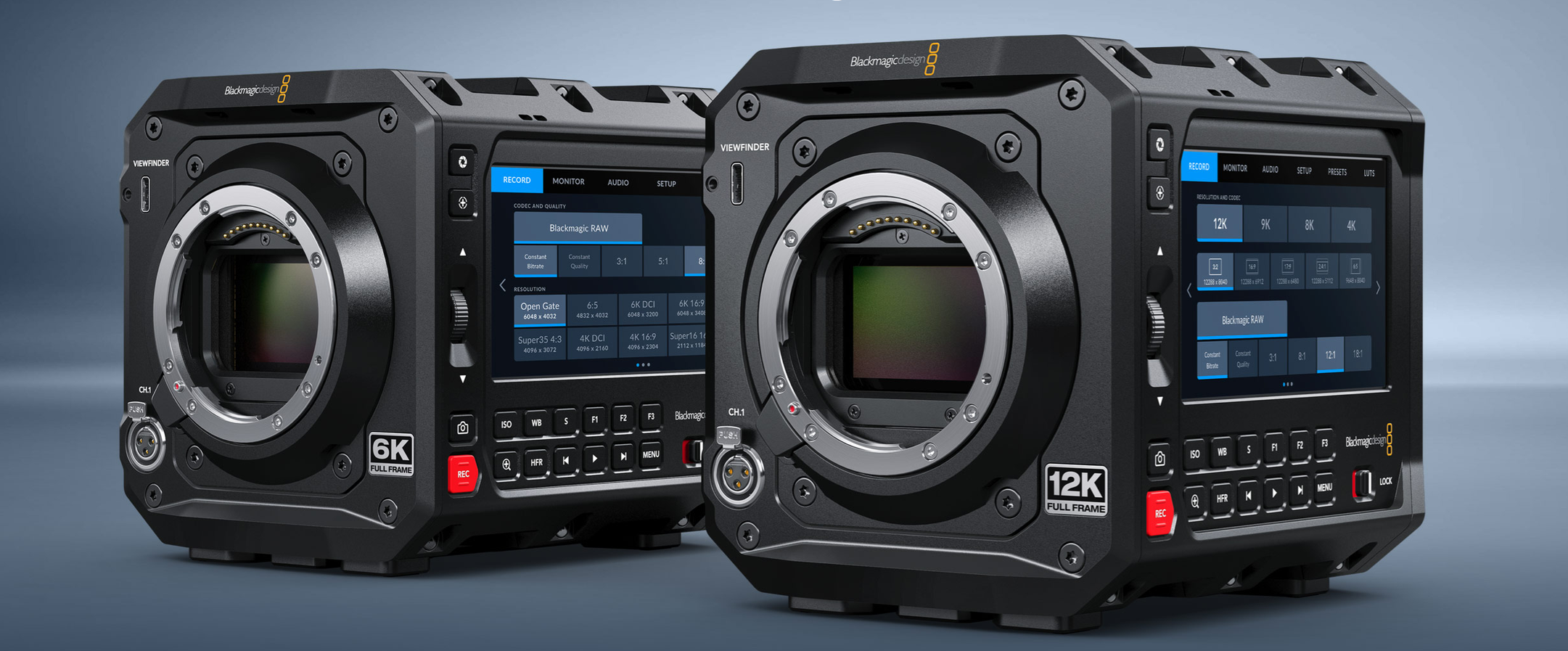
Top 10 Low Budget Filmmaking Cameras
Choosing the best camera for filmmaking is not simply a matter of buying the camera with the highest resolution or the biggest sensor. Filmmakers have to consider image quality, dynamic range, low-light performance, lenses, recording formats, autofocus, stabilization, workflow, audio, media costs, reliability, and — perhaps most importantly — how much camera they can realistically afford.
StudentFilmmakers has been having this conversation for a long time. In a forum discussion that began in 2006, an aspiring filmmaker asked which camera would be the best investment for making short films and eventually a feature. One of the smartest responses was essentially that there is no single best camera: filmmakers should match the camera to what they actually need.
That advice still holds.
Before buying anything, read 8 Things to Think About When Choosing a Camera and Buying Your First Filmmaking Camera? Start Here: 7 Key Tips. Our goal with this list is not to crown the most expensive camera the winner. It is to identify cameras that give filmmakers serious creative tools at progressively higher budget levels.
For this list, we considered sensor performance, dynamic range, codecs, bit depth, frame rates, RAW and Log capabilities, lens options, autofocus where appropriate, professional connections, stabilization, audio, production workflow, and overall filmmaking value.
Prices were checked in August 2026. The list is ordered from lower to higher regular U.S. manufacturer price or MSRP rather than temporary sale prices. Camera prices change frequently, and lenses, media, batteries, cages, monitors, audio equipment, and other accessories can substantially increase the cost of a complete filmmaking package.
Here is our Top 10 Low Budget Filmmaking Camera List.
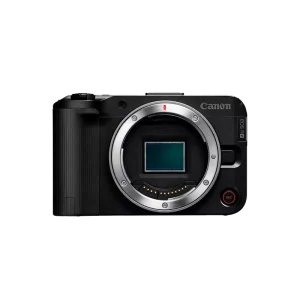
#1. Canon EOS R50 V
Website: https://www.usa.canon.com/shop/p/eos-r50-v-body
Address: Canon U.S.A., Inc., One Canon Park, Melville, NY 11747
Contact: 800-385-2155 | Canon Contact & Support
Approx. Body-Only Price: $719.99 regular price
The Canon EOS R50 V earns the first position because it lowers the financial barrier to interchangeable-lens filmmaking without limiting a new filmmaker to a basic point-and-shoot camera.
Canon designed the R50 V specifically around video creation. It uses a 24.2-megapixel APS-C CMOS sensor and offers full-width 4K recording up to approximately 30p, with 4K 60p available using a crop. It also provides high-frame-rate Full HD recording and Canon’s RF lens mount.
Why It Makes the Top 10
The R50 V is not trying to compete directly with an ARRI ALEXA, Sony VENICE, or even a $4,000 cinema camera. Its strength is that it gives students, beginning filmmakers, documentary creators, and very small productions an affordable way to learn interchangeable lenses, manual exposure, depth of field, camera movement, lighting, and visual storytelling.
That matters more than specifications alone.
StudentFilmmakers contributor Bridget Barbara demonstrated the same principle in You CAN Make a Movie with One Camera and a Small Group of Friends, describing a short film created for under $1,000 with a two-person crew.
If your budget is extremely limited, putting money into a modest camera plus good sound, lighting, lenses, and actual productions can make more sense than spending everything on the camera body.
#2. FUJIFILM X-M5
Website: https://www.fujifilm-x.com/en-us/products/cameras/x-m5/
Address: FUJIFILM North America Corporation, 200 Summit Lake Drive, Valhalla, NY 10595
Contact: 800-800-3854 | [email protected]
Approx. Body-Only Price: $799.95 MSRP
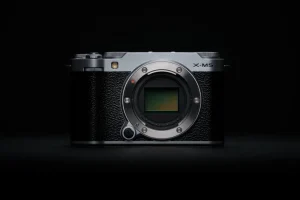
The FUJIFILM X-M5 packs an unusual amount of video capability into a camera originally introduced at under $800.
The X-M5 uses a 26.1-megapixel APS-C X-Trans CMOS 4 sensor and can record 6.2K/30p 4:2:2 10-bit open-gate video, along with 4K/60p and Full HD high-frame-rate recording. Open-gate recording uses a taller portion of the sensor, giving filmmakers additional flexibility when reframing for widescreen, vertical, and other delivery formats.
Why It Makes the Top 10
The X-M5 is an interesting low-budget filmmaking camera because it gives emerging filmmakers access to capabilities that were once associated with substantially more expensive equipment.
Its small size makes it useful for documentary work, travel filmmaking, guerrilla production, gimbals, and locations where a larger cinema-camera package would attract too much attention.
There are compromises. It is not a full production-ready cinema body, and filmmakers who need extensive rigging, large batteries, internal ND filters, professional audio connections, or heavy-duty production ergonomics will eventually want more.
But the fundamental image-making tools are there.
Before comparing cameras only by resolution, read 5 Must-Have Camera Features for New Filmmakers. A camera needs to work for the conditions in which you actually shoot.
Fujifilm publishes both a camera-support telephone number and the [email protected] address for product-related questions, making its contact information unusually straightforward.
#3. Sony FX30
Website: Sony FX30
Address: Sony Electronics Inc., 16535 Via Esprillo, San Diego, CA 92127
Contact: 239-245-6360 | Sony Electronics Support
Approx. Body-Only Price: $2,099.99 regular price
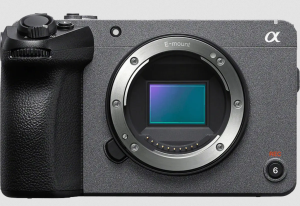
The Sony FX30 represents one of the most accessible entry points into Sony’s Cinema Line.
Its Super 35/APS-C format is hardly a disadvantage for filmmaking — Super 35 has been one of the dominant motion-picture formats for decades. The FX30 uses oversampling from a higher-resolution sensor to produce detailed 4K imagery and offers professional video features including 10-bit recording, high-frame-rate options, Log workflows, interchangeable Sony E-mount lenses, and a body designed primarily around motion rather than still photography.
Why It Makes the Top 10
The FX30 is where this list begins moving from inexpensive hybrid cameras toward cameras designed specifically for serious filmmaking.
Sony’s E-mount also gives filmmakers access to a huge range of Sony and third-party lenses. The compact body works on gimbals, shoulder rigs, drones, car mounts, and small crews while still fitting into a broader professional Sony production ecosystem.
But owning a cinema-oriented camera does not automatically make someone a cinematographer.
Read What Does a Cinematographer Do?. Camera placement, movement, lens choice, exposure, composition, color, and lighting are creative decisions. The camera is the instrument through which those decisions become images.
For filmmakers who want to grow into professional production without immediately spending several thousand dollars on a body, the FX30 is one of the strongest values in the current market.
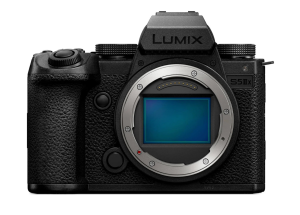
#4. Panasonic LUMIX S5IIX
Website: Panasonic LUMIX S5IIX
Address: Panasonic Corporation of North America, Two Riverfront Plaza, Newark, NJ 07102-5490
Contact: 201-348-7000 | Panasonic LUMIX Support
Approx. Body-Only Price: $2,197.99 regular price
The Panasonic LUMIX S5IIX is one of the strongest arguments for how far affordable full-frame filmmaking cameras have come.
It uses a 24.2-megapixel full-frame sensor and provides phase-hybrid autofocus, stabilization, 6K open-gate recording, 14+ stop V-Log/V-Gamut capture, ProRes options, RAW output over HDMI, external SSD recording, and a heat-dissipation system designed for long recording sessions. Panasonic also supports ProRes 422 HQ and high-bitrate All-Intra recording directly to compatible external SSDs.
Why It Makes the Top 10
The S5IIX is an unusually complete filmmaking tool for its price.
Full-frame recording gives filmmakers significant control over field of view, depth of field, lens choice, and low-light shooting while open-gate recording provides flexibility for multiple delivery formats.
StudentFilmmakers has explored these creative differences in Expanding Your Vision with Full Frame Cinematography. Full frame should not be treated as automatically superior to Super 35 or Micro Four Thirds, but it gives cinematographers another visual vocabulary to work with.
The S5IIX is particularly attractive to independent filmmakers who need one camera that can move among narrative filmmaking, documentary work, interviews, commercial production, live streaming, and smaller crews.
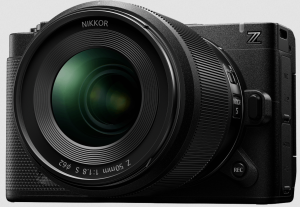
#5. Nikon ZR
Website: Nikon ZR
Address: Nikon Inc., 1300 Walt Whitman Road, Melville, NY 11747
Contact: 800-645-6687 | Nikon Email Support
Approx. Body-Only Price: $2,199.95
The Nikon ZR is one of the most interesting developments in affordable cinema cameras because it brings together Nikon and RED technology in a compact body.
The ZR is a full-frame 6K cinema camera offering REDCODE RAW (R3D NE) recording, 32-bit float audio, and a large 4-inch DCI-P3 display. Nikon describes the camera as a compact cinema solution intended for filmmakers at multiple experience levels.
Why It Makes the Top 10
At roughly $2,200 body-only, the ZR changes expectations about what an entry-level cinema camera can include.
Internal RAW recording can provide far greater flexibility in color correction, exposure adjustment, and post-production than highly compressed delivery codecs. Its 32-bit float audio capability is also particularly interesting for small crews that may not always have a dedicated production sound mixer watching levels.
But RAW is not magic.
A badly exposed, poorly lit, or badly composed image is still a badly made image.
StudentFilmmakers’ Get Your 6 Tips Now for Good Camera Exposure is a useful reminder that ISO, shutter, zebras, gain, and exposure decisions still matter regardless of how sophisticated the recording format becomes.
For filmmakers who want a small full-frame cinema camera and are intrigued by RED-influenced workflow without RED-level camera-body pricing, the Nikon ZR deserves serious consideration.
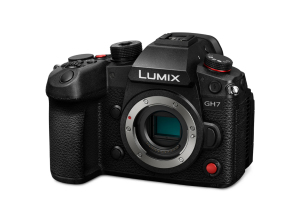
#6. Panasonic LUMIX GH7
Website: Panasonic LUMIX GH7
Address: Panasonic Corporation of North America, Two Riverfront Plaza, Newark, NJ 07102-5490
Contact: 201-348-7000 | Panasonic LUMIX Support
Approx. Body-Only Price: $2,199.99 regular price
The LUMIX GH series has a long history among independent filmmakers, and the GH7 pushes the Micro Four Thirds format surprisingly far.
The GH7 uses a 25.2-megapixel BSI CMOS sensor and offers phase-detection autofocus, open-gate recording, internal Apple ProRes RAW recording, 13+ stop V-Log/V-Gamut capture with Dynamic Range Boost, and extended recording through an active heat-dissipation design. When paired with Panasonic’s optional DMW-XLR2 adapter, it can also record 32-bit float audio.
Why It Makes the Top 10
The GH7 demonstrates why sensor size alone is a poor way to judge a filmmaking camera.
Micro Four Thirds lenses can be compact, relatively affordable, and easy to rig. The smaller sensor can also provide useful depth-of-field characteristics for documentary, event, wildlife, handheld, and solo productions where keeping subjects in focus matters.
Lens choice ultimately has a much greater creative impact than simply asking whether a sensor is “full frame.”
Read Why Focal Lengths Matter in Cinematography. Different focal lengths change magnification, depth relationships, field of view, and the audience’s visual relationship with the subject.
The GH7 also offers something unusual in this price range: Panasonic supports an optional ARRI LogC3 workflow designed to help match GH7 material with ARRI digital cinema cameras.
For filmmakers who value codecs, workflow, long recording times, stabilization, manageable lenses, and production versatility more than having the largest possible sensor, the GH7 remains a formidable filmmaking camera.
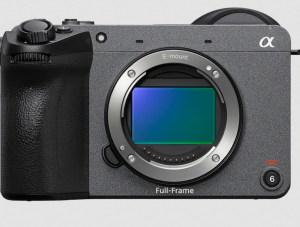
#7. Sony FX2
Website: Sony FX2
Address: Sony Electronics Inc., 16535 Via Esprillo, San Diego, CA 92127
Contact: 239-245-6360 | Sony Electronics Support
Approx. Body-Only Price: $2,699.99 MSRP
The Sony FX2 brings full-frame capture into Sony’s Cinema Line at a price well below traditional professional cinema-camera systems.
It combines a 33-megapixel full-frame Exmor R CMOS sensor with Sony’s BIONZ XR processor and offers Log shooting, dual base ISO settings of 800 and 4000, and a manufacturer-rated dynamic range exceeding 15 stops in Log mode.
Why It Makes the Top 10
The FX2 is particularly attractive for filmmakers who work alone or in very small crews and need one compact body to cross between motion-picture production and still photography.
Its value also comes from the larger Sony ecosystem. A filmmaker can begin with an FX2 or FX30 and work with lenses, accessories, color workflows, and production practices that can carry forward into higher-level Sony Cinema Line cameras.
But cameras do not create a visual style by themselves.
In StudentFilmmakers’ interview Matthew Libatique, ASC: Award-Winning DP Discusses Lighting, Camera and Color, Libatique discusses projects in terms of story, creative purpose, camera movement, lighting, and color rather than simply camera specifications.
That is an important lesson when shopping for gear: the goal isn’t to own cinematic specifications. The goal is to create cinematic images.
#8. Blackmagic Cinema Camera 6K
Website: Blackmagic Cinema Camera 6K
Address: Blackmagic Design, 2875 Bayview Drive, Fremont, CA 94538
Contact: 408-954-0500 | [email protected]
Approx. Body-Only Price: $2,989
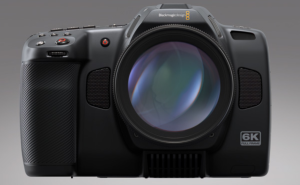
The Blackmagic Cinema Camera 6K is aimed much more directly at traditional digital cinematography than at hybrid photography.
It uses a full-frame 36mm × 24mm 6K sensor, supports 6048 × 4032 3:2 open-gate recording, offers dual native ISO, records 12-bit Blackmagic RAW, uses the L-Mount, records to CFexpress media, and can record directly to compatible USB-C disks.
Why It Makes the Top 10
The reason to buy the Blackmagic Cinema Camera 6K is not sophisticated autofocus or a still-photography feature set.
It is about image acquisition and post-production workflow.
Blackmagic RAW gives filmmakers substantial flexibility in DaVinci Resolve, and the camera is designed for people who are comfortable making deliberate choices about lenses, exposure, focus, lighting, and camera support.
That makes it less forgiving for someone who expects the camera to make every decision automatically — but potentially more educational for filmmakers who actually want to learn cinematography.
Read Lighting Practically for a good example of how cinematographers think beyond the camera body itself. Lighting, lenses, exposure, location, and visual intent all interact to create the final image.
Blackmagic also provides unusually clear U.S. company contact information, including its Fremont office, telephone number, and [email protected] email address.
#9. Blackmagic PYXIS 6K
Website: Blackmagic PYXIS 6K
Address: Blackmagic Design, 2875 Bayview Drive, Fremont, CA 94538
Contact: 408-954-0500 | [email protected]
Approx. Body-Only Price: From $3,455
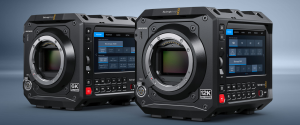
The Blackmagic PYXIS 6K takes the full-frame 6K Blackmagic concept and puts it into a much more modular, production-oriented box-camera design.
The PYXIS 6K uses a full-frame 36mm × 24mm sensor and records Blackmagic RAW with proxy files to CFexpress media. Blackmagic offers versions with L-Mount, locking EF mount, and PL mount, allowing filmmakers to build the camera around very different lens ecosystems.
Why It Makes the Top 10
The word that matters with PYXIS is riggable.
This is a camera intended to become part of a system. A filmmaker can configure it for a tripod, shoulder rig, gimbal, vehicle mount, studio setup, cinema lenses, external monitoring, wireless video, professional audio, and other production requirements.
That makes it particularly appealing to independent filmmakers who have moved beyond simply holding a mirrorless camera in their hands and are beginning to build complete camera packages.
The choice between L-Mount, EF, and PL also reinforces something StudentFilmmakers has emphasized repeatedly: lenses are part of the visual decision, not merely accessories.
Read Lens Selection: Maximize Your Aesthetic by Knowing Your Lenses before choosing a mount simply because a particular camera body is inexpensive.
A camera body may stay with you for several years.
A good lens collection may stay with you for decades.
#10. Sony FX3
Website: Sony FX3
Address: Sony Electronics Inc., 16535 Via Esprillo, San Diego, CA 92127
Contact: 239-245-6360 | Sony Electronics Support
Approx. Body-Only Price: $4,299.99
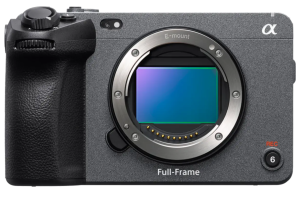
At the upper end of what we consider a low-budget personal filmmaking-camera list, the Sony FX3 has established itself as a compact professional tool capable of working on serious productions.
The FX3 combines a full-frame sensor with high sensitivity, wide dynamic range, 4K high-frame-rate recording up to 120 fps, Sony’s Cinema Line color and Log workflows, professional audio capability, active cooling, and an unusually compact body.
Why It Makes the Top 10
The FX3 is expensive compared with the Canon R50 V or Fujifilm X-M5, but it is still inexpensive relative to traditional cinema-camera systems once professional production enters the equation.
Its strengths are low-light capability, mobility, autofocus, compact rigging, E-mount lens availability, and the ability to work within Sony’s larger professional production ecosystem.
It is equally comfortable on a gimbal, car rig, handheld setup, small documentary crew, commercial shoot, or narrative production.
But mobility should have a reason.
M. David Mullen, ASC discusses this beautifully in Notes on Camera Movement: When to Move the Camera and Why. Camera movement can add energy, but an unnecessary move can weaken composition, lighting, and visual tension.
That distinction captures the larger point of this entire list.
Buying a camera that can move anywhere is not the same thing as knowing where the camera should be.
What Should You Look for in a Low Budget Filmmaking Camera?
Start with the films you intend to make.
A student shooting narrative shorts has different needs from a documentary filmmaker, wedding filmmaker, cinematographer, YouTube creator, commercial production company, wildlife filmmaker, or one-person interview crew.
Don’t begin with resolution.
Begin with workflow.
Ask what lenses you can afford. Find out how expensive the recording media is. Determine whether the camera needs additional batteries, a cage, external monitor, ND filters, XLR adapter, recorder, shoulder rig, or external storage before it becomes usable for your work.
A $2,000 camera body can easily become a $5,000 camera package.
Also consider dynamic range and low-light performance, but don’t treat manufacturer numbers as substitutes for testing. StudentFilmmakers’ 8 Things to Think About When Choosing a Camera recommends testing the camera under the kinds of lighting conditions in which you actually intend to shoot.
Lens mount matters.
Recording format matters.
Bit depth matters.
Audio matters.
Ergonomics matter.
Reliability matters.
And knowing how to operate the equipment matters. In Camera Operator Tips from Gustavo Mercado, Mercado recommends learning the camera and complete rig thoroughly before production rather than figuring it out while the crew waits.
The best low-budget filmmaking camera is ultimately the one that lets you spend more time making films and less time fighting your equipment.
FAQ
Q: What is the best low budget camera for filmmaking?
There is no single best camera for every filmmaker.
For filmmakers with very small budgets, the Canon EOS R50 V and Fujifilm X-M5 provide remarkable capabilities for their price.
The Sony FX30 moves into a more dedicated cinema-camera design, while the Panasonic S5IIX, Nikon ZR, and GH7 offer increasingly sophisticated recording and workflow options around the $2,000 level.
The best choice depends on what you shoot, the lenses you already own, how much post-production you want to do, and the total amount you can spend on a complete camera package.
Q: What is the best filmmaking camera under $1,000?
The Canon EOS R50 V and FUJIFILM X-M5 are two particularly strong options on this list.
The X-M5 stands out for offering 6.2K open-gate 10-bit recording at a remarkably low MSRP, while the R50 V provides an affordable entry into Canon’s RF interchangeable-lens system with a camera designed around video creation.
StudentFilmmakers readers have been discussing affordable cameras for years. The forum also has a dedicated discussion on What Is the Best Camera Under $2000?.
Q: Do I need a full-frame camera to make professional films?
No.
Professional motion pictures have been photographed on many image formats.
Super 35 remains enormously important to cinema, and Micro Four Thirds cameras can produce excellent professional imagery.
Sensor size changes field of view, depth-of-field behavior, lens choices, camera size, and other characteristics. It does not determine whether the cinematography is good.
Read Why Focal Lengths Matter in Cinematography and Expanding Your Vision with Full Frame Cinematography to understand the creative implications more deeply.
Q: Is 6K better than 4K for filmmaking?
Not automatically.
Higher resolution can give filmmakers more room for reframing, stabilization, visual effects, downsampling, and different delivery formats.
But dynamic range, color reproduction, bit depth, compression, noise, lenses, lighting, exposure, production design, and camera placement may have a much greater effect on how cinematic an image feels.
A well-shot 4K image can easily look better than badly shot 6K or 8K footage.
Q: Do I need RAW recording?
No, but RAW can be extremely useful.
RAW recording retains a large amount of sensor information and gives filmmakers more flexibility during color grading and post-production.
The Nikon ZR, Blackmagic Cinema Camera 6K, Blackmagic PYXIS 6K, and Panasonic GH7 are particularly interesting on this list for filmmakers who want advanced RAW workflows.
RAW also creates larger files and increases storage and post-production requirements.
Don’t choose RAW merely because it sounds professional.
Choose it because your production and post-production workflow benefits from it.
Q: Is autofocus important for filmmaking?
It depends on how you work.
A narrative production with a dedicated first assistant camera may rely heavily on manual focus.
A documentary filmmaker, event shooter, solo operator, gimbal operator, or creator following unpredictable subjects may consider reliable autofocus extremely valuable.
Cameras such as the Sony FX30, Sony FX2, Sony FX3, Panasonic S5IIX, GH7, Nikon ZR, Canon R50 V, and Fujifilm X-M5 offer varying degrees of autofocus assistance.
The correct question is not whether autofocus is professional.
The question is whether it helps you get the shot.
Q: How important is low-light performance?
Low-light capability matters when shooting night exteriors, available-light documentary work, interiors where large lighting packages are impossible, and other difficult conditions.
But high ISO should not become a substitute for understanding lighting.
Read Lighting Practically and Get Your 6 Tips Now for Good Camera Exposure.
Learning to control light will improve the images from every camera you own.
Q: Should I spend more money on the camera or the lenses?
For many filmmakers, investing thoughtfully in lenses is at least as important as investing in the camera body.
Camera technology changes rapidly.
Good lenses can remain useful through multiple generations of camera bodies.
Lens mount, focal length, aperture, optical character, focus behavior, breathing, flare, contrast, and close-focus ability can all affect cinematography.
Read Lens Selection: Maximize Your Aesthetic by Knowing Your Lenses before putting your entire equipment budget into the camera body.
Q: What else do I need besides the camera?
At minimum, most filmmakers should budget for lenses, batteries, media, sound, support, and some form of lighting.
Depending on the camera and production, you may also need ND filters, a cage, rods, matte box, follow focus, tripod, monopod, shoulder support, gimbal, external monitor, XLR adapter, recorder, external SSD, wireless video, timecode equipment, or additional power.
This is why the cheapest camera body is not always the least expensive camera system.
Calculate the cost of the working package, not just the box containing the camera.
Q: Can I make a feature film with one of these cameras?
Absolutely.
The technical capability to produce a feature film exists in every part of this list.
The much larger challenges are screenplay, directing, actors, production design, lighting, sound, locations, scheduling, editing, color, music, financing, and distribution.
StudentFilmmakers contributor Bridget Barbara describes creating a short film for under $1,000 in You CAN Make a Movie with One Camera and a Small Group of Friends.
A better camera can make certain shots easier.
It cannot replace filmmaking.
Q: Should a beginner buy the most expensive camera they can afford?
Usually not.
A beginner who spends every available dollar on a camera body may discover there is no money left for a lens, microphone, tripod, lights, batteries, media, actors, locations, transportation, or the actual production.
That same argument appeared in the StudentFilmmakers community nearly two decades ago when filmmakers debated whether an aspiring filmmaker really needed an expensive Panasonic HVX200. One participant pointed out that very good films could be made with less expensive equipment and that the newest technology did not automatically produce the best film.
That lesson has aged extremely well.
Q: What camera should an aspiring cinematographer buy?
Choose a camera that lets you practice cinematography frequently.
You need to learn exposure, lighting, lenses, composition, camera placement, movement, filtration, color, and collaboration.
A camera sitting safely in its case because it was too expensive to risk on a student production will teach you less than a modest camera you shoot with every week.
Read How to Become a Cinematographer and then go make images.
In Conclusion
The best low-budget filmmaking camera is not automatically the newest camera, the camera with the largest sensor, the camera with the highest resolution, or the most expensive camera you can finance.
The Canon EOS R50 V and Fujifilm X-M5 prove that filmmakers can now begin working with interchangeable lenses and serious video capabilities for well under $1,000.
The Sony FX30 represents an affordable step into a dedicated cinema-camera ecosystem.
The Panasonic S5IIX brings full-frame capture, open gate, Log, advanced recording formats, stabilization, and strong production features into a remarkably affordable package.
The Nikon ZR brings Nikon and RED technology together at a price that would have sounded impossible only a few years ago.
The Panasonic GH7 demonstrates just how far Micro Four Thirds can be pushed for professional video production.
The Sony FX2 offers another compact full-frame path into Sony’s Cinema Line.
The Blackmagic Cinema Camera 6K puts the emphasis on image quality, RAW capture, and deliberate cinematography.
The modular Blackmagic PYXIS 6K begins to resemble a traditional production camera system.
And the Sony FX3 sits at the top of this low-budget range as a compact camera capable of moving comfortably into serious professional production.
But don’t let the list distract you from what matters.
The camera does not decide where to place itself.
It doesn’t decide whether the actor should be photographed with a 24mm lens or an 85mm.
It doesn’t know whether the scene should be soft and low contrast or sharp and hard.
It doesn’t know when to move.
It doesn’t understand the screenplay.
It doesn’t know what the character is feeling.
That is the cinematographer’s job.
Read interviews with working cinematographers. Study movies. Study paintings and photography. Learn lenses. Learn light. Learn exposure. Learn composition. Learn how to work with directors, actors, gaffers, grips, camera assistants, production designers, and colorists.
Then take whichever camera you can afford and shoot.
Because the best filmmaking camera is ultimately the camera that helps you turn the story in your head into images an audience can feel.
Additional Resources
8 Things to Think About When Choosing a Camera
Buying Your First Filmmaking Camera? Start Here: 7 Key Tips
5 Must-Have Camera Features for New Filmmakers
What Does a Cinematographer Do?
How to Become a Cinematographer
Why Focal Lengths Matter in Cinematography
Lens Selection: Maximize Your Aesthetic by Knowing Your Lenses
Expanding Your Vision with Full Frame Cinematography
Get Your 6 Tips Now for Good Camera Exposure
M. David Mullen, ASC’s Notes on Camera Movement
Matthew Libatique, ASC: Lighting, Camera and Color
Camera Operator Tips from Gustavo Mercado
You CAN Make a Movie with One Camera and a Small Group of Friends
Best Camera for an Aspiring Filmmaker — StudentFilmmakers Forum
What Is the Best Camera Under $2000? — StudentFilmmakers Forum