Top 10 West Coast Film Schools
Are you ready to turn your passion for filmmaking into the skills, experience, and connections needed to tell stories on the screen? The West Coast is home to some of the most respected film schools in the world, with programs covering directing, cinematography, screenwriting, producing, editing, animation, documentary filmmaking, television, and emerging media.
From Los Angeles and Hollywood to Orange County, Pasadena, the San Fernando Valley, and Northern California, these schools place aspiring filmmakers in some of the most active creative communities in the country. Students can learn from working professionals, collaborate with other emerging filmmakers, gain access to professional production facilities, and begin building the relationships that can continue throughout their careers.
Whether your goal is directing feature films, shooting cinematography, writing television, producing independent projects, creating animation, working in documentary, or exploring new forms of visual storytelling, these West Coast film schools offer distinctive paths into the craft and business of filmmaking.
Here is my Top 10 West Coast Film School List.
#1. University of Southern California (USC) School of Cinematic Arts
Website: https://cinema.usc.edu
Address: 930 W. 34th St., SCB-105, Los Angeles, CA 90089-2211
Contact: 213-740-8358 | [email protected]
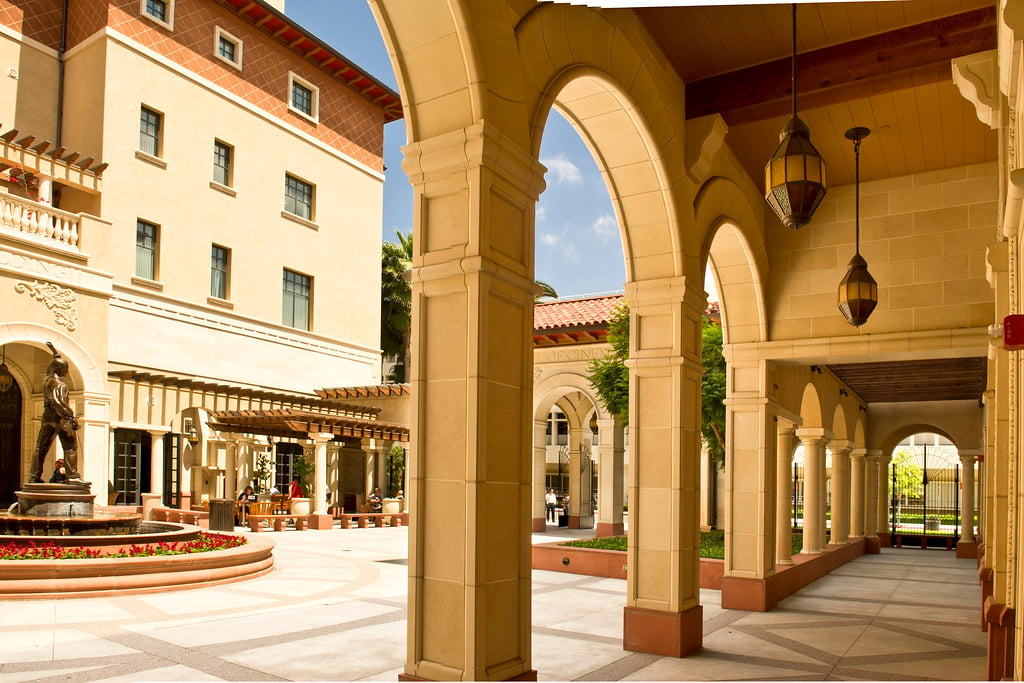
The University of Southern California School of Cinematic Arts sits in one of the most important filmmaking centers in the world and has built one of the industry’s most recognizable film-school networks. USC offers programs spanning film and television production, screenwriting, producing, animation and digital arts, cinema and media studies, games, and media arts.
Its location in Los Angeles gives students proximity to studios, production companies, agencies, working filmmakers, and a vast alumni community. USC has continued investing heavily in areas such as virtual production, cinematography, student showcases, and industry mentorship. For aspiring filmmakers who want a broad production education combined with deep Hollywood connections, USC remains one of the schools against which other film programs are measured.
#2. American Film Institute (AFI) Conservatory

Website: https://conservatory.afi.com
Address: 2021 N. Western Avenue, Los Angeles, CA 90027-1657
Contact: 323-856-7600 | [email protected]
The AFI Conservatory offers a different experience from a traditional university film program. AFI is a graduate conservatory built around intensive professional filmmaking and collaboration. Fellows specialize in disciplines including cinematography, directing, editing, producing, production design, and screenwriting.
AFI’s approach is strongly centered on learning by doing. Students work together in filmmaking teams and devote a substantial portion of the curriculum to production under the guidance of working professionals. The conservatory has a long history of alumni who have moved into influential positions throughout film and television. For filmmakers who already have undergraduate experience and are ready for a concentrated graduate filmmaking environment, AFI is one of the most compelling options on the West Coast.
#3. Chapman University Dodge College of Film and Media Arts
Website: https://www.chapman.edu/dodge
Address: 283 N. Cypress St., Orange, CA 92866
Contact: 714-997-6765 | [email protected]
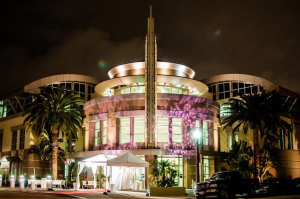
Chapman University’s Dodge College of Film and Media Arts has established itself as one of the country’s major filmmaking schools, with an emphasis on giving students practical production experience while they develop their individual voices as storytellers.
Located in Orange, California, Dodge College is close enough to Los Angeles for students to connect with the entertainment industry while maintaining its own dedicated filmmaking community. Chapman has invested in virtual production and emerging production technologies and offers programs across film production, screenwriting, producing, animation and visual effects, documentary, television, acting, film studies, and entertainment-related disciplines.
The school also emphasizes mentorship, internships, career preparation, and opportunities for students to put professional practices to work before graduation.
#4. Loyola Marymount University School of Film and Television

Website: https://sftv.lmu.edu
Address: One LMU Drive, Los Angeles, CA 90045
Contact: 310-338-2700
Loyola Marymount University’s School of Film and Television combines hands-on filmmaking education with one of the most valuable advantages a film student can have: location in Los Angeles.
LMU offers programs in areas such as film and television production, screenwriting, animation, recording arts, and film and media studies. The school has also expanded its engagement with new filmmaking technologies and the ways artificial intelligence and other emerging tools may affect writing, producing, and production.
In addition to its main Westchester campus, LMU operates a Playa Vista campus in the heart of Los Angeles’ growing technology and media corridor. Students benefit from access to guest filmmakers, internships, professional networking, and an alumni community working throughout entertainment and media.
#5. UCLA School of Theater, Film and Television
Website: https://www.tft.ucla.edu
Address: 225 Charles E. Young Dr. East, Los Angeles, CA 90095
Contact: 310-206-8441 | [email protected]
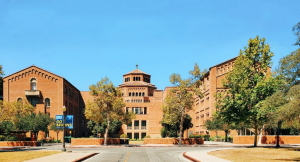
The UCLA School of Theater, Film and Television combines the resources of a major public research university with a highly selective film, television, and digital media program located only minutes from the center of the entertainment industry.
Students can study production, screenwriting, producing, animation, documentary, cinematography, and cinema and media studies while also taking advantage of the wider academic resources available at UCLA. The program combines creative practice with a strong understanding of film history, theory, storytelling, and the evolving media landscape.
UCLA’s location creates opportunities for internships and interaction with working professionals, while its alumni include filmmakers, executives, writers, and other creative leaders throughout the industry. For California students in particular, UCLA offers an unusual combination of public-university education and elite film-school reputation.
#6. California Institute of the Arts (CalArts) School of Film/Video
Website: https://calarts.edu
Address: 24700 McBean Parkway, Valencia, CA 91355
Contact: 661-255-1050 | [email protected]
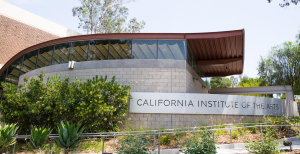
California Institute of the Arts is especially appealing to filmmakers interested in developing a distinctive artistic voice. Rather than approaching filmmaking only as preparation for conventional studio production, CalArts encourages experimentation, personal expression, animation, independent filmmaking, and new approaches to moving-image art.
The School of Film/Video includes programs in film and video, film directing, character animation, and experimental animation. That combination has helped create an environment where filmmakers, animators, artists, designers, performers, and musicians regularly influence one another.
CalArts has an extraordinary history in animation and experimental filmmaking, while its film alumni have also moved into independent and mainstream cinema. For students who want to push the visual and conceptual boundaries of filmmaking rather than simply reproduce existing industry formulas, CalArts remains a distinctive West Coast choice.
#7. Biola University Snyder School of Cinema & Media Arts
Website: https://www.biola.edu/film
Address: 13800 Biola Avenue, La Mirada, CA 90639
Contact: 562-777-4052 | [email protected]
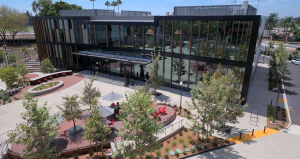
Biola University’s Snyder School of Cinema & Media Arts has been expanding rapidly as a production-oriented program located approximately 25 miles from Hollywood. Students are introduced to industry-standard equipment, studios, editing facilities, and hands-on production work early in their education.
The school takes a broader view of modern screen storytelling, preparing students to create for film, television, computers, mobile platforms, games, and digital media. Programs include cinema and media arts, writing for film and television, game design and interactive media, and specialized concentrations within production.
Biola has also made major investments in new production facilities and emerging technologies. As a Christian university, its educational philosophy includes an explicit faith-based component, which makes it a particularly distinctive option among Southern California film schools.
#8. ArtCenter College of Design — Film
Website: https://www.artcenter.edu
Address: 1700 Lida Street, Pasadena, CA 91103
Contact: 626-396-2373 | [email protected]
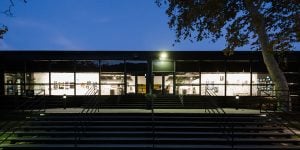
ArtCenter College of Design in Pasadena offers an intimate and strongly production-oriented film education within a college internationally known for visual arts and design.
Film students work alongside people studying disciplines such as photography, illustration, graphic design, entertainment design, and fine art, creating opportunities for collaboration that can influence cinematography, production design, visual development, and directing. The film curriculum places a particularly strong emphasis on practical work rather than treating production as a small component of a primarily theoretical degree.
ArtCenter’s relatively small film program can appeal to filmmakers who want close interaction with faculty, significant hands-on production experience, and an education rooted heavily in visual storytelling and professional creative practice.
#9. California State University, Northridge (CSUN) Department of Cinema and Television Arts
Website: https://www.csun.edu/mike-curb-arts-media-communication/cinema-television-arts
Address: 18111 Nordhoff Street, Northridge, CA 91330
Contact: 818-677-3192
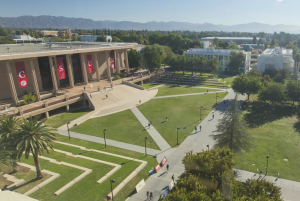
California State University, Northridge offers something particularly valuable in Southern California: an industry-connected cinema and television education within the public California State University system.
The Department of Cinema and Television Arts offers options that include film production, television production, screenwriting, entertainment media management, and media theory and criticism. Its San Fernando Valley location places students near a large concentration of studios, production companies, post-production operations, and entertainment professionals.
CSUN has built strong connections between students and the working industry through internships, professional development, visiting filmmakers, and the California State University Entertainment Alliance. For students seeking hands-on filmmaking opportunities while carefully considering the cost of film school, CSUN deserves serious attention.
#10. Stanford University — Documentary Film and Video / Film and Media Studies
Website: https://art.stanford.edu
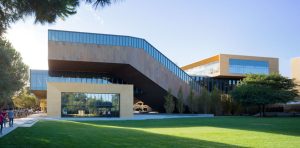
Address: McMurtry Building, 355 Roth Way, Stanford, CA 94305
Contact: 650-723-3404 | [email protected]
Stanford is different from most of the schools on this list and should be considered primarily by filmmakers whose interests match its specialized programs. Undergraduate students can pursue Film and Media Studies with opportunities for production coursework, while Stanford’s best-known production-focused filmmaking program is its MFA in Documentary Film and Video.
The documentary MFA is exceptionally small, admitting only a handful of students each year. Students produce short documentary work and ultimately complete a thesis film while developing research, critical, and production skills. The program also provides substantial fellowship support to its documentary graduate students.
For an aspiring documentary filmmaker interested in an intensive, highly selective graduate program, Stanford offers a very different path from the Hollywood-centered production schools farther south.
School programs, admissions information, contact details, tuition, faculty, and facilities can change. Prospective students should always confirm current information directly with each school’s official website and admissions office.
FAQ
Q: What are the benefits of attending a West Coast film school?
A: West Coast film schools can offer hands-on production training, access to filmmaking equipment and facilities, collaboration with other emerging filmmakers, experienced faculty, internships, guest speakers, and professional networking. Schools in and around Los Angeles have the additional advantage of being located near one of the world’s largest concentrations of film, television, streaming, commercial, post-production, and entertainment businesses.
Q: What should I consider when choosing a film school?
A: Start with the kind of filmmaker you want to become. Examine the curriculum, faculty, production opportunities, equipment access, student-film requirements, internships, alumni network, class sizes, facilities, location, tuition, and financial aid. A highly ranked school is not automatically the right school for every student. The best film school is one that matches your creative interests, finances, preferred learning environment, and career goals.
Q: Can I specialize in directing, cinematography, screenwriting, producing, or editing?
A: Yes. Many West Coast film schools offer specialized programs, tracks, concentrations, or graduate disciplines in directing, cinematography, screenwriting, producing, editing, animation, documentary filmmaking, production design, television, sound, and emerging media. Some schools encourage students to explore several disciplines before specializing, while conservatories such as AFI require applicants to enter a specific filmmaking discipline.
Q: Do I need to attend film school in Los Angeles to work in Hollywood?
A: No. Successful filmmakers come from universities, conservatories, community colleges, independent training programs, other industries, and sometimes no formal film program at all. However, studying in Los Angeles can make it easier to attend industry events, pursue internships, meet working professionals, and develop relationships with classmates who may enter the entertainment business alongside you. Location is an advantage, but it is not a substitute for talent, persistence, skill, and strong work.
Q: Is prior filmmaking experience required before applying?
A: Requirements differ greatly by school and degree. Undergraduate programs may admit students with limited formal production experience, although portfolios and creative materials can still be important. Competitive graduate programs generally expect applicants to demonstrate a developed creative voice, strong storytelling ability, previous work, or professional potential. Always review the portfolio and application requirements for the particular program rather than assuming all film schools use the same admissions standards.
Q: What opportunities are available for internships and industry connections?
A: Many West Coast film schools maintain relationships with studios, production companies, agencies, filmmakers, alumni, and other entertainment organizations. Opportunities can include internships, mentorship programs, career centers, visiting-artist programs, festivals, screenings, pitch events, alumni networking, and industry workshops. Location can help, but students still need to actively pursue these opportunities and build genuine professional relationships.
Q: How can I finance film school?
A: Film-school costs vary tremendously. Students should compare tuition together with housing, equipment expenses, production costs, transportation, and the amount of financial aid actually available. Scholarships, grants, fellowships, federal aid, work opportunities, and school-specific production funding may help. Public universities such as UCLA and CSUN may present significantly different financial considerations from private universities and conservatories. Graduate applicants should also investigate whether programs provide fellowships, assistantships, or production funding.
Q: Can returning adult students attend film school?
A: Absolutely. Film programs include students arriving from many different educational and professional backgrounds. A returning student may bring years of experience in business, photography, writing, theater, music, journalism, technology, advertising, or another profession that can become an asset in filmmaking. Adult applicants should pay particular attention to scheduling, program intensity, financial requirements, degree prerequisites, and whether they want a complete degree or more targeted professional training.
Q: Is film school worth the cost?
A: The answer depends on what you expect to receive from the experience. Film school can provide structured training, equipment, collaborators, mentorship, deadlines, production experience, and a professional network, but a degree alone does not guarantee employment in the film industry. Compare the total cost with the opportunities the specific program provides. Look at the work students are actually making, talk to graduates when possible, investigate financial aid, and determine whether the school’s resources align with your goals.
Q: How can I make the most of film school?
A: Make films. Work on other students’ films. Learn jobs outside your preferred specialty. Volunteer for crews. Attend screenings and guest lectures. Build relationships with students in other disciplines. Seek feedback from faculty. Apply for internships. Experiment while you still have an environment where experimentation is encouraged. Most importantly, leave school with more than a degree: build a body of work, a reputation for being dependable, and a community of collaborators who know what you can do.
In Conclusion
Choosing among the top West Coast film schools is not simply a matter of finding the most famous name. USC, AFI, Chapman, LMU, UCLA, CalArts, Biola, ArtCenter, CSUN, and Stanford offer very different filmmaking environments, and those differences matter.
A student focused on Hollywood narrative filmmaking may reach a different decision from an experimental animator, independent filmmaker, documentary director, television writer, cinematographer, producer, or filmmaker seeking an affordable public-university path. Study the actual curriculum. Look at student films. Research the faculty. Tour the facilities when possible. Find out how easily students can access equipment and how frequently they actually make films.
Pay attention to the community as well. The students sitting beside you in film school may become the directors, producers, cinematographers, editors, writers, executives, sound designers, actors, and collaborators you work with years later. Film is a collaborative art form, and one of the most enduring benefits of a strong film program can be the relationships formed while everyone is still learning.
Ultimately, no film school can create a filmmaking career for you. A school can provide tools, knowledge, mentors, collaborators, facilities, opportunities, and access. What you create with those opportunities is up to you.
Research the schools that interest you, visit their campuses or attend virtual information sessions, watch the work being produced by current students, talk with admissions representatives, compare costs and financial aid, and find the filmmaking environment that makes you want to pick up a camera and create.
Your filmmaking education should not simply teach you how movies are made. It should help you discover what you want to say and give you the skills, collaborators, and confidence to put that vision on the screen.
Additional Resources
Top Ten East Coast Film Schools
Professional Filmmaking Resources – Aspiring Filmmaker Websites