Bethany Rooney has directed episodes of NCIS, Chicago Med and Law & Order: Special Victims Unit, and co-wrote the directing book Directors Tell the Story. Talking shop with cinematographer and director Patrick Cady, ASC, who once shot for her, she made one idea stick: a good note to an actor is short, starts with something true and specific, and never says how to do it. Their hour together, recorded live for StudentFilmmakers, is a working conversation between two TV directors about prep, notes, blocking and the mood a director brings onto a set.
What does a director do before saying a word?
Both of them start with prep, and a lot of it. Rooney wants to be so ready that any question an actor asks already has an answer. When it does, she said, the actor thinks “I’m safe with this director” and relaxes into the work.
Cady found the same thing from the other side. He carries his shot list on a nurse’s clipboard and makes sure it is in his hands at the first rehearsal. One day Jamie Hector saw it and teased him about having a plan, and that was all the actor needed to trust him. Rooney added that crew notice too. The only time anyone sees her look at her prep is on the tech scout, where the gaffer and key grip see how ready she is and pass the word along before day one.
Cady pokes fun at the director who skips prep because “I’m a genius,” and asks:
“If you were, wouldn’t it be better if we had your fourth idea, your fourth genius idea instead of your first genius idea?”
Rooney blocks her whole episode in one weekend of prep, alone with the script. Her husband knows she will be “lost” until Monday.
How is episodic directing different from directing a feature?
On a TV series, the show already has a look, a cast and a voice. Rooney’s job is to give the writers and showrunner their best episode, not a new show:
“If someone is looking to be an auteur, then episodic directing is not the place to go. You’re going to be pretty miserable.”
She studies the existing episodes first. Is it a Steadicam show or a handheld show? Does every scene open wide, or does nobody care about anything but the close-up? Cady’s version: on his first Bosch episode he asked the editor with the most episodes what everyone shoots that gets cut out anyway, and asked creator Eric Overmyer what he should keep in mind.
Both said to ignore set gossip. Someone will always pull you aside to say an actor is difficult. Rooney walks in without that idea and usually finds the person is wonderful.
How do you give an actor a note?
This was the heart of the class. Rooney’s steps are simple:
- Start with something positive and specific. “That was great” is useless. “I loved when you…” proves you were watching.
- Offer the thought: “I just had a thought about this other line.”
- Ask them to try it, in one sentence with an actable verb. Five words or fewer is better.
The phrase she wants every director to drop is “I’m going to have you do this.” In her words, “that phrase, I’m going to have you, is treating them like a chess piece.” Say “I’d like you to try” instead.
Never ask for a result. Telling an actor to fold their arms so they look defiant “won’t be real,” she said. Say what the moment is about, and let them find how. Cady put the same rule in terms that work with crew too:
“Don’t describe your solution, describe your problem.”
So “I want to feel connected to this person more” beats “what’s up with the headroom?” He also likes to praise a small thing an actor is doing, such as listening, because the next take they will do more of it.
Start with notes that change blocking or overall tone, then refine as the shots get tighter. Rooney compares it to shaping pottery. And do not shout direction over a rolling take, she said, unless an actor has finally reached the place they need to be and you don’t want them to start over. Everyone on set does not need to hear the note.
What happens when an actor wants to steer the scene?
Cady once watched a well-known actor describe, in detail, the blocking he wanted for his office set. Rooney put a hand on his forearm and said they would do it another way, and he simply agreed. Cady, who studied aikido, said there was no ego in it, so there was nothing to push against.
Rooney explained her rule:
“The expression that I always use is I give a little to get a lot.”
The “give a little” is a win for the actor, saying yes to an idea. The “get a lot” is her duty to tell the story the script intends. She makes it an “and” instead of a “but,” and compared herself to a tugboat nudging a giant tanker away from the harbor wall. By the end of the hour, “tugboat” had become a verb.
On changed dialogue, she checks that the intent of the line survives, and calls the writer or showrunner if it does not. Often, talking it through brings the actor all the way around to the line as written.
Why should blocking come before the shot list?
Asked about her weekend of prep, Rooney laid out three separate passes:
| Pass | The question it answers |
|---|---|
| 1. Blocking | Where are the actors? Do they cross the room, pick something up, confront someone, walk away? |
| 2. Shot list | Where does the camera go to show that blocking best? |
| 3. The extra | Is there a special shot: low, high, wide, eyes only? And are we keeping the line for the editor? |
“Blocking comes first. Shot listing comes after,” she said. Before any of it, she builds what her book calls a director’s diagram: one column for each storyline. She created it on a show called Brothers & Sisters, where one script had seven storylines. Only after she pulls the stories apart can she see the episode’s theme. She also looks for each character’s intention and the inner obstacle that makes the scene more than a straight line.
How do you stay with the actors and not the monitor?
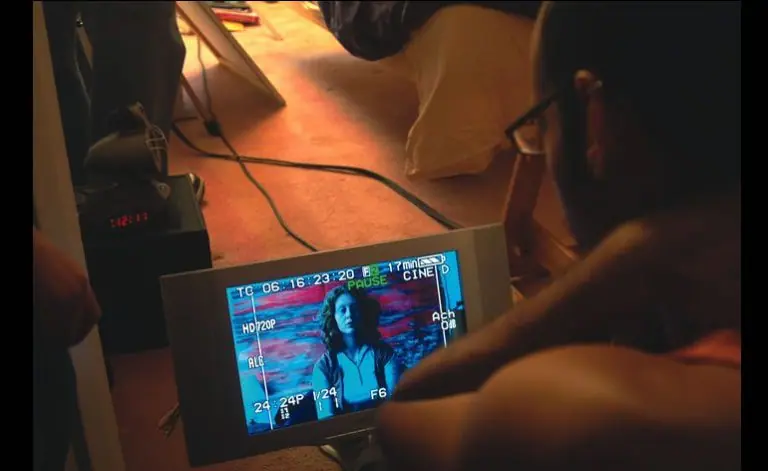
Both directors are firm: be in the room. Rooney checks the frame on a rehearsal with second team, then watches people, not screens. Cady said he can feel when an actor is ready for a close-up, and will ask his cinematographer to jump ahead to it before the moment passes. He remembered a local guest actor freezing in a doorway scene with Peter Sarsgaard on Interrogation. Cady gave Sarsgaard a note first, the guest actor saw the star was still working on his performance too, and relaxed.
He also spoke about the late Lance Reddick on Bosch, a sensitive actor who wanted detailed notes, though he played a stern character. And leads, who rarely hear “great job,” often need it most.
Rooney calls the mood a director brings “floating”: confident, calm, never showing fear. It cannot be fake cheerleading, she said. You have to truly believe the day will go well. For more on that, see building the set environment actors need and Result Directing: Working with Your Actors.
Questions from directors in the room
Michael Goi, ASC, who said Rooney taught him how to direct episodic TV, asked how a director who got an episode on their home show lands a second show. Her answer: ask everyone you know to watch your episode and give notes, and congratulate people on their wins without asking for anything. Cady added advice he got from Tara Nicole Weyr about general meetings: let them start the meeting, and they will tell you what they want to hear. Those meetings often pay off two years later. Goi shared his own three tips for directing actors with us earlier.
The recording also covers second cameras and operators who push in tight, and working with intimacy coordinators, which Cady treats as a line item to raise on the first day of prep.