By David Kaminski
Film teacher David Kaminski explains how a school moved to HD cameras: choosing gear, budgeting, and changing the shooting and editing workflow.
You have probably been reading magazines, searching online, estimating your budget, and wondering when to buy a camera, a deck, or a new studio equipped for HD. The truth is that with all electronics, you will always regret not having some new feature on the latest piece of gear. It never ends.
However, the (slight) difference with HD cameras and camera equipment is that the standards for HD have been mostly settled and in print for more than a decade. That great effort at democracy helped create opportunity for many manufacturers to pursue their own separate visions and technologies (23.98fps, 29.97fps, 59.97fps, 1080i, 720p, and the list goes on) while at the same time opening up the field for newcomers.
What has changed is that new (and old) ideas, technologies, materials, protocols, and test equipment have come into play. There has also been great attention given to the minutiae, so that buyers are scrutinizing every detail and option. This, combined with much lower prices and the rush to bring equipment to the market has created a blizzard of equipment.
The History of How We Got Here
You might be old enough to have made the great transition from black and white to color. Maybe you wish that you could retire this year before HD is mandatory so you could avoid having to go through any aggravation. Maybe you are glad that you are still in the profession, and are embracing the change. Let’s hope that whatever your circumstances, new or experienced, you are flexible, fast on your feet, and interested in the details. And that you are practical, a good problem-solver, and have the patience to see this new technology through its infancy and into its adulthood.
A decade ago, it used to be the wisdom that digital was going to be easier than analog. Non-linear easier than linear. Pick up an old magazine, and you will read people extolling the virtues of the new technology. That remains true, to a degree, but if you look at the faces of people who have been weathering the storm, you will see that it is not as easy as everyone hoped. Or let’s just say that parts of it are much easier, but there are so many different fragmentary pieces and details now that they are almost impossible to keep track of.
Walk into a classic studio and you will see distinct pieces of legacy equipment each with its own function and limitations. Each has its own engineering specs that are clearly defined, and you might have a few rows of DIP switches to toggle a function on or off. Or maybe a knob with clearly marked increments. Those days are over.
Now, nearly every piece of equipment has become an electronic contraption with a deeper and much more complicated electronic menu (and submenus!) that you can get lost in. The marriage between computers and broadcast equipment has brought more functionality than you might ever need, and certainly more than you can remember—unless you use the equipment several times a week.
The most important menu item you will want to find is “factory re-set” because you have forgotten all of the changes you have made to your camera or deck, and you want to start from scratch again. If you are lucky, you have set up different user menus, but even then, you will find yourself forgetting what you have done.
Let’s back up a bit and assume that you have only gotten your feet wet, and are still looking to go out and buy some new equipment, or you have it in your budget for next year or the year after. You are looking at cameras, and you are excited about the technology. Hold that thought. Let’s ask some practical questions that will save you a lot of trouble.
Ask yourself the following questions:
(1) What will this equipment be used for?
(2) Who will be using it? How many people total?
(3) Does your program or work need to be broadcasted or archived in HD, or in SD, or in SD but 16:9?
(4) Will this programming or work be used once only, and dubbed to a lesser format, or will you need to keep hours upon hours of footage for later use and editing?
(5) How many weeks or months will you be shooting footage or will your projects take?
(6) Do you have a good system in place to organize and archive existing footage and programs?
(7) Do you ever access old material, or do you re-use it at a later date?
You will find that if you have specific needs you are addressing, it will be easier to get the right equipment. That equipment needs to be the right price, serve your purposes, and have a media type and workflow for you and the users that is sustainable, affordable, and reliable. And it needs to live up to the hype of HD and help you produce better work, or it is simply not worth the effort. Be prepared to buy different equipment than you thought you needed, and more new devices, programs, cables, monitors, and peripherals than you expected. Think the whole process through, and take six months to a year looking at all the factors, if you have the time. You want to move into the future, and you should. Just think it through, and don’t rush.
Look at what you can now buy for $700-$1000, and you will discover that these cameras have specs that suggest they may well outperform your old studio cameras and the best equipment you could afford even several years ago. True, but look again at the functionality, and you will see that your studio cameras are serving a particular purpose. That purpose is separate from that of a small handheld camera.
Perhaps you want a camera that can cross over between work outside the studio and inside the studio. It is true that more and more manufacturers are helping make that a reality. New protocols such as HDMI and even the introduction of HD-SDI outputs on prosumer and pro cameras make a cross-over option more attractive.
Buying Strategies
As another option, do the math on getting an array of equipment. Maybe you should not buy 30 cameras of one type or Teaching Technology and Teaching HD
I have spoken to countless people who insist that they do not need new equipment to make a good program, film, or video. Others have said that a story can be told with basic equipment. All of this is true. But we still expect our learning institutions to be part of the future, and for our students to learn not only the art form, the substance, and the meaning, but also the technology.
Teaching technology is one of the most important things that can be done to further the education of your students. Students need to know that technology is ever-changing, and they need to be a part of that process. Let them learn, struggle, make decisions about equipment and workflow, and let them make mistakes. Nothing is a better lesson than a video that has been compressed and decompressed through so many formats that it is nearly unwatchable. Let them stare at the end of a cable, and wonder what it is. Give them an equipment manual, and ask them to look for the solution themselves. Have them find something in the manual that you don’t know.
Teaching students about using HD is teaching the future. It is teaching students how to manage a tide of information, evolving standards, and changing media types. It is teaching, problem-solving, flexibility, and enduring patience. The students who can learn and thrive in this environment will be students who will get jobs in the industry, enjoy the personal satisfaction of mastering something difficult, and be prepared when it is their turn to spearhead new technologies. brand. And maybe they should not be for the same purpose. Consider spreading your money across the spectrum of choices. Buy a majority of equipment for the majority of people and projects you need to serve. But buy other, specialized equipment for other projects and for other uses. A diagram of your purchases might look like a pyramid: you have a large base of everyday gear; fewer specialty items; and some very special gear that you only have one piece of.
Rather than thinking that you are making one change, that is, from SD to HD, you may actually have to make dozens of changes, not only in your purchasing habits, but also in technology. Consider the different formats, recording media, and details you are contending with when you jump into HD.
First, let’s talk about where you have come from:
In the old, analog tape world you might have had a number of formats: VHS, S-VHS, Hi-8, ¾”, BetaSP. Even the digital realm of Mini-DV vs. DVCPRO50 vs. Digibeta is just a small bump in the road compared to what we have now. Regardless of what you have come from, you likely had one format you adhered to, and you mixed some of the others into it. It made sense, and could buy one set of equipment and use it for 15 years. Maybe it still works well today.
And here is where you are going…
The HD camera, deck, and storage device you will buy now is not simply a fixed device; it is subject to maintenance to keep it current. You will probably have the ability or need for either software or firmware upgrades.
Imagine buying a camera, and then, six months later, buying media for it only to discover that your camera will not recognize the media without a firmware upgrade from the manufacturer’s website. And it might turn out that the media, once recorded, cannot be edited on your computer because you forgot to upgrade your software. But you can’t upgrade your software because you didn’t have time to upgrade your operating system yet. These realities can overtake you in one afternoon. And that is just the beginning.
Tape Cameras
Your choices begin with Mini-DV tape recording HDV (note different data rates and variables by size of image and manufacturer, some of which you may not be able to use together) to higher end pro formats of tape. If in fact you stay with tape, which is a linear medium, you will have fewer problems with workflow because it will make sense to you. And the stock is fairly cheap, unless you invest in higher grade tapes.
Removable Flash Media Cameras
Flash media is used not only in HD cameras, but also by consumer products like cell phones, music players, and for military applications. It can withstand heat, vibration, and abuse.
This technology is being pushed forward by other industries, and it will certainly become cheaper and cheaper as time goes on. Don’t forget some of the inherent issues, though. You will – you must, in fact – delete the media off of it at some point. Detractors of this technology say that it is “destructive media” because you must erase your original copy.
That takes faith in the technology, and the first time you try it your heart might skip a beat. However, with practice, training in the medium and equipment, and over time, that anxiety will fade. You must, however, move forward with a proper means of archiving the files.
…Backing Up Media Files
Whether you will burn back-up copies or data files on optical media like DVD-R or BD-R (Blu-ray Disc), or whether you will decide to save it on one or more hard drives or RAID arrays, you will need to come up with a protocol that is manageable, and that you can act on with robot-like regularity and efficiency. You cannot just hope your files will be there later. (If you were lucky enough to have a computer with no hard drive whatsoever when you were younger, and you understand having three sets of back-up floppy disks, then you will have the patience and the organizational skills required to keep your media in order.) Assuming that you are teaching anywhere from 15 to 1,000 students, depending on your program, that is a lot of remembering for them, and a lot of room for error. Backing up files is something that a technician or another person in charge must take responsibility for doing; otherwise, you can be sure it will not be done properly. And although you may not have had a hard drive fail yet, it is inevitable that it will happen, too.
Back-up external hard drives also need to be turned on and spun up to speed about once a month since the lubrication can thicken and the drive can seize if you just leave it on a shelf without powering it up regularly.
Transferring files from flash media should be easy, but it may not be. You will have to dedicate a camera, a device that is likely proprietary, or a laptop computer with the right data port to the task of transferring files. You will be using this device instead of your deck, so it might result in great savings, but keep in mind that you will still want to pay attention to what you transfer. Copying every file onto your computer or hard drive without any forethought is like capturing an entire tape without logging it. Depending on whether you are shooting concerts, interviews, a documentary, or a film with dozens of bad takes, you might be in for a surprise at how fast even a 1TB drive can fill up. Note that your operating system and editing software will need to have current upgrades. Check each data type with each kind of software ahead of time, and that will help you avoid mistakes.
In some cases, you may find that your old operating system and old software are incompatible with the new upgrades required for the new camera and new media type.
…Multiple Ingest Stations
When this occurs, you may have to dedicate one computer to each camera and media type, in the event you are juggling more than one format within your studio.
Having multiple dedicated ingest stations is highly advisable. Plan carefully before you roll-over to new operating systems since you may not be able to go backwards once you make the leap into the future …Proxy Files
Regarding editing: look for cameras and formats that have proxy files, since these are smaller, leaner versions of the original file. They can be edited and then later linked to your full resolution HD files when you are ready for your final output. This will save you hard drive space and time. It is like using a low-res file from years ago, but these new proxy files will afford you much better images than you ever saw with this workflow in the past.
Internal Disk Drives and Permanent Flash Media Cameras, Consumer/ Prosumer
Many small consumer HD cameras are now shipping with fixed hard drives or flash media. The trend began a little over a year ago, and they have come into the market and taken hold of the public’s imagination and pocketbooks. While these might be attractive to a family or a single person on a vacation, they are less likely choices for professionals. Any camera that has a fixed and relatively small amount of data, whether a hard drive or flash media, will likely be too small in the end for most prosumer users.
However, you might find this option attractive for a second camera, and with no data cards to lose. For limited shooting, it may eliminate some headaches. The issues of transferring files and compatibility can be as daunting as the cameras with removable flash media. Make sure you have read all the fine print and specifications, and make sure you understand your workflow before you purchase.
The small HD cameras that shoot onto optical media MiniDVD seem attractive and familiar. These discs recorded in HD may challenge you with a difficulty in playing them back in other devices. Check every detail if you are buying one. The inevitable damage of the disc is almost guaranteed. Just as we were promised a badly scratched DVD would always play, and that it was a better value than an old VHS tape, you will find these discs to be fragile, and no matter how careful you are, they will not hold up to casual or heavy use.
Optical Discs, XDCAM, Professional
A professional option for optical disc HD cameras is the XDCAM format. These discs are encased in a sturdy plastic that is Did you know…
- Ethernet is now used in HD equipment.
- Your HD camera might need a firmware upgrade.
- CMOS has nearly replaced CCD
- Dual HD-SDI is 2.97Gbit/s.
- The most important menu item you will want to find on your equipment is “factory re-set.”
- You may actually have to make dozens of changes, not just a few.
durable and waterproof. They have all of the benefits of optical media, with none of the problems of being damaged by casual or medium use. They can be dropped, stacked, and used in the field without any worry. The older model cameras record a single layer, and the newer models record a dual layer onto Blu-ray discs. While these cameras are expensive, the workflow of shooting and stacking up your discs as if they were tapes is familiar. The cost of the discs is comparable to tape, so you can shoot a lot of footage without erasing your originals. If you choose to reuse your discs, or to delete unwanted clips off of them, you can record new material the way you would on any data disc.
An attractive extra are the proxy files available in this format. Small files that can be transferred via the internet can be edited while the originals are shipped back to the editor. Or, the proxy files can be used as a file to edit before you decide to load the full resolution clips. For longer projects, and for limited drive space, this is an old idea that seems perfect for HD editors.
External Drives, Professional Cameras
It is likely that you have been drooling over the latest HD cameras with external drives and drive arrays. These high-end cameras output more data than the average user can manage. If you are a trend-setter who has looked at them already, and are planning to get one, you don’t need any advice. For others who are window shopping, these cameras are an excellent glimpse into the future, and you should look at the specs on them. They represent a versatility of cameras to come. Knowing where the industry is going will help you understand what you need to buy.
Be a Connoisseur
It will serve you well to love camera technology the same way you obsess over your coffee or chocolate. You should savor every nuance and detail. Know the specifics of the bean and grower. Understand the roasting process. Be a connoisseur. If only it were that easy.
In the last few years, you can be grateful that every manufacturer has improved the specs on their cameras, and in every area there is improvement. They have begun to move from the reliable CCD (charge-coupled device) to CMOS (complementary metal oxide semiconductor) partly because of the inherent limitations of the cycles per second of the CCD. And they have been able to increase the imaging quality in many of their less expensive cameras, regardless of whether it is a CCD or CMOS. Knowledge of and concern about the chips is important, but do not find yourself buying a camera for the sole reason it has three chips. No more should you do that than go to the mall and buy a ring with three diamonds. Ask yourself how big they are. What is the quality? Are you getting what you pay for? Look at the most expensive cameras and see what they offer. Work your way backwards to cheaper equipment, and see if it will suit your purpose. You probably do need a three chip camera, but get a good one.
Lenses on smaller cameras are fixed (and so is the quality), but on more professional equipment, they are not. Being able to mount professional lenses on your new camera is a great advantage. Look at the options available. Wonderful lenses will give you details that will surprise you when you see them on a true HD monitor. It is worth acknowledging, however, that many mid-range cameras in the $3,000-7,000 range have fixed lenses, and they can be very good. But look at a step up from that, and you will see other options that might make you reconsider your choices. And if you do get a better camera with a separate lens, make sure you know how to back-focus it properly. Look for the latest advances in charts. Excellent critical focus will make your work stand out. Even professionals have trouble with focus in HD, and you will see bad examples everywhere you go.
You will find again and again that knowing your lens, having an excellent monitor in the field, and using a true HD monitor in the studio are imperative.
Specs and Connectors
It is probable that entire books have been written on this subject. Certainly entire symposiums have been devoted to camera specs. Years of unending discussions continue, and they will continue for as long as we have technology. For the average teacher or college professor, or technician, the specs may prove to be daunting beyond all hope. Even worse, they continue to change.
HDMI is now becoming mainstream for some cameras. And SDI, HD-SDI, and dual HD-SDI (at a whopping 2.97Gbit/ s) continue to march on. And it is true, if you haven’t heard it yet, that Ethernet will be used for file transfer. Yes, Ethernet has migrated to professional HD decks, and if you want to be part of the future, look for that in equipment you buy.
Probably one of the most important decisions you will make is how you will connect your equipment, and what protocols you will use. Sure, there are converters to help you bridge between equipment, but you will have to look into the future a bit if you want to have the maximum interoperability and flexibility.
For cameras and decks in particular, you have seen the improvements on color sampling—from 4:2:0 to 4:2:2 to 4:4:4. Again, books are written on this. Get informed, look at what your needs are, and buy the best equipment with the best output. Notice that whether through an HDMI connector on the side of the camera, or out the back of the camera via HD-SDI, you may be able to get a better quality signal that can be recorded onto tape or disc. Think about maximizing the potential of the camera, and ask yourself how to make that signal part of your workflow. Author’s note: For readers wanting more technical information with greater detail, or more specifics, you can look to any number of books, websites, and manufacturers’ literature. This article is not intended to address those particulars, though they are very important ñ even critical ñ to understanding HDV and HD.
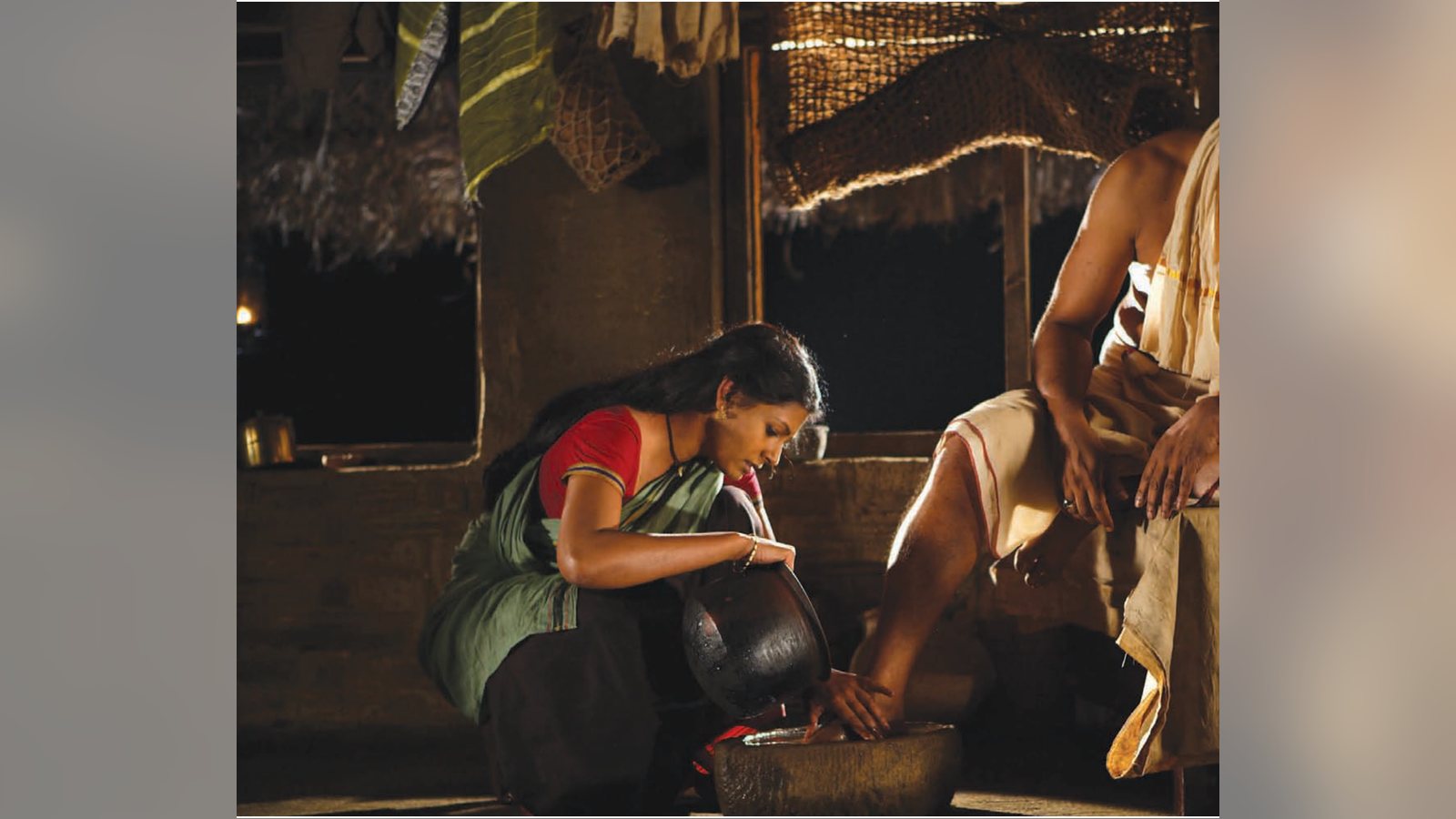
David Kaminski teaches TV Production/ Media at Clarkstown HS North in New City, NY—about 25 miles north of New York City. His students have earned five Telly Awards and over 50 national awards for their work. They also have screened their films more than 200 times in festivals across the country and internationally. Set in the steamy jungles of southern India during the turbulent nationalist era of the 1930’s, Before the Rains floods the viewer with a visual imagery that powerfully tells the story of an idealist young man (Rahul Bose) torn between two worlds – the desire for a modern future and the tribal beliefs of his past. After the village people discover the illicit affair between his ambitious British boss, a spice plantation owner (Linus Roache), and a household servant, a married village woman (Nandita Das), the characters are plunged deeper and deeper into self-made dilemmas, compounding the sensual liaison into a tragedy that forever changes all their lives.
Related filmmaking guides
Keep learning filmmaking
Want more lessons like this? Join StudentFilmmakers free for live webinars with working pros, and stream on-demand filmmaking classes in cinematography, directing, screenwriting, sound and post.