By Dean Goldberg
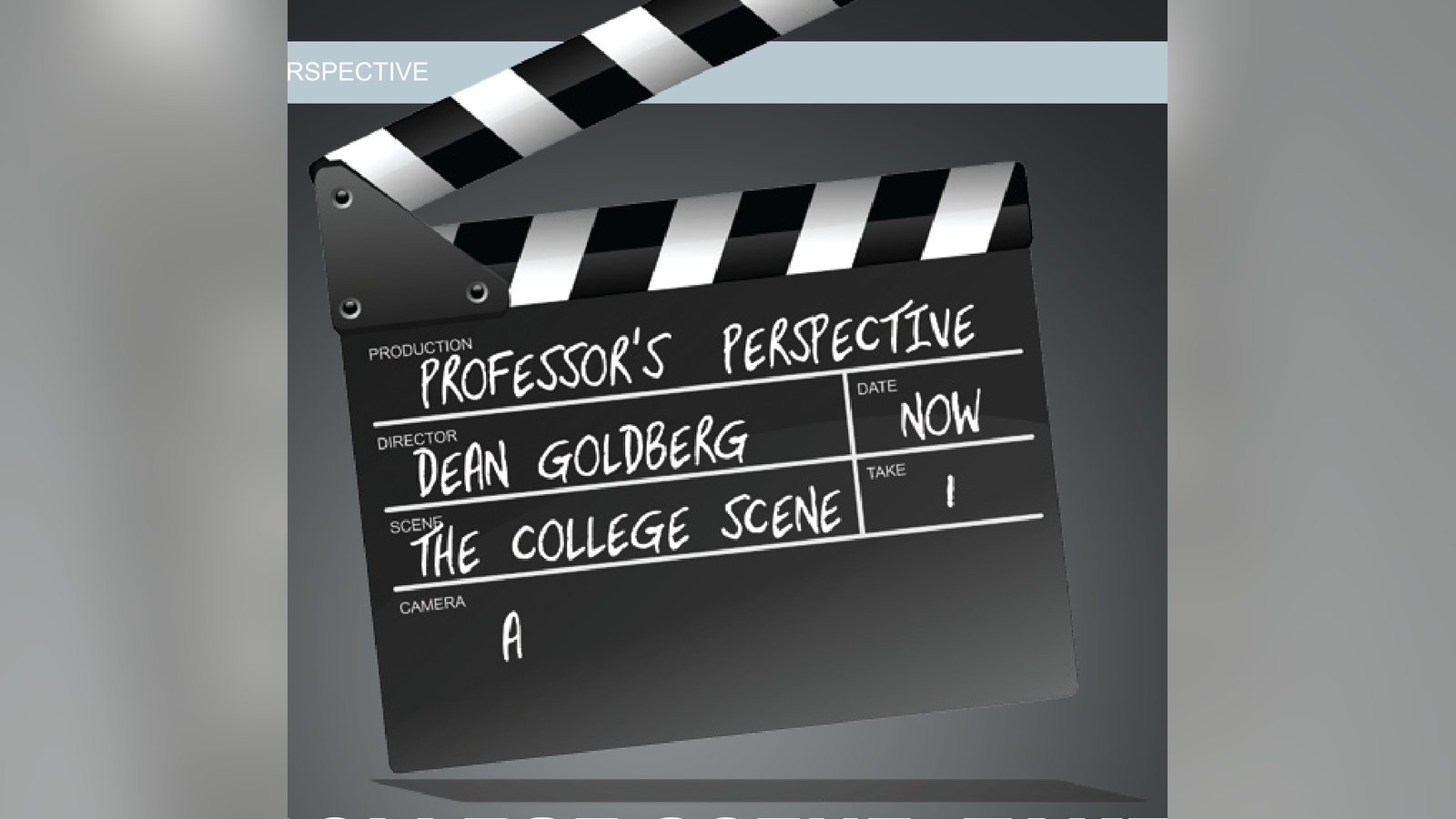
Dean Goldberg looks back at syncing dailies with grease pencils and real bins, and at how editing, production and careers changed on the college scene.
When Jody Michelle Solis, the brilliant and very cool editor of this magazine asked me to write a column that centered around current production and media studies topics on the college scene, I jumped at the chance. There’s so much to talk about, I thought, all those fabulous toys, methods and creative ideas, all that new equipment. Then came the moment of terror, what do I talk about first? Thankfully, it didn’t me take to long to realize that I should start this column with the age-old question that as been debated since the birth of the film school—Can you really teach film production without being a professional filmmaker? There are lots of arguments for both sides. Here’s one:
In the summer of 1993, I was invited
Dean Silver (Wigstock: The Movie) to spend a couple of hours at their post production house on the east side of Manhattan and play around with their newly purchased Avid, a non linear editing system. At that time I hadn’t had my hands on any kind of editing controls for a good five years. I’d begun my working life as a film editor but by the mid-eighties had drifted into writing and directing, and for the type of reality re-enactment television I was doing, as well as my corporate work, film was slow and expensive, and video was the format of choice.
But once I began tooling around with the system I was pretty damn impressed. Of course Avid was built for old film guys like me, with bins and so forth. But a mouse is not a splicer and all those ones and zeros might do amazing feats of calculation and rendering, but you can’t see, hear or touch them. I even missed that soothing clunkety clunk sound each time you rolled back and forth for an edit on an off-line video editing system. Still, I felt that I had entered a new realm—one that only real professionals were allowed to enter.
Meanwhile, back at Pratt Institute and at Hunter College, where I was teaching film and video courses, it was still Steenbeck city—or that workhorse ¾ inch Sony U-Matic tape system. So while I may have been working with new platforms, many of the tenured folk in colleges were still re-cutting out of focus work-prints of Citizen Kane.
One point for the pros, I guess.
Flash-forward to the mid-nineties when most film schools had embraced digital editing in one form or another, never mind the disappearance of actual film editing.
In fact, the last time I was in an actual film editing room—I mean those little rooms with long tables and synchronizers and split reels and grease pencils and real bins and real trims—was in 1998, when I was teaching my daughter how to sync dailies. By the next year or two, digital editing systems and NLE classes were ubiquitous. And not just in the super star film schools like NYU, UCLA or USC, but at hundreds of liberal arts colleges that heralded the coming of age in Media Production. Things began to change awfully fast after digital busted through the academic front door. Suddenly it really wasn’t all that important to have spent half a lifetime shouting at teamsters or sleeping in moldy motels in some god-forsaken location where the local 7-Eleven was the center of cultural activity.
Instead of departments looking for experienced filmmakers, the new search included questions like, “Do you know Avid? Are you proficient in Final Cut? Any Adobe Suite experts out there?”
In fact in those days most of the old pros wouldn’t have known a NLE system if they banged into it with a grip stand. What “production” programs said they needed now were teachers who knew how to download and convert an MPG file to a MOV file or how to create chapters when burning a DVD. These new skills came with a new look as well. Instead of being stuck on the top floor of some dusty old edit room, the software editing packages could be practiced in a messy dorm room with digital tools small enough to be carried in a backpack.
Don’t get me wrong, on set experience is still essential in understanding the production process. One does have to walk the walk to talk the talk after all. I strongly believe it takes production to appreciate the agony of a client deadline that comes looming down to the wire, or for that matter a disastrous screening in a roomful of people that hold your next month’s rent in their pockets. Especially for those looking to work above the line, they need to seek out professionals who’ve “been there.” And if you don’t know how to tell a visual story, think a narrative arc is something that Noah’s son built? Then try some other career. But having to spend years beating the bushes and hanging out with a handful of nicotine addicts and young ambitious production assistants with walkie talkies on their belts and visions of Hollywood in their glassy eyes? Nah. That’s so eighties. Today’s indie feature crew might consist of five, or four—or less! And they can all be your friends! Sometimes it doesn’t take a village. It takes teachers who not only know their software but also know how to guide a student toward their own understanding of the process. And for that kind of learning we need professors as well as pros.
Those kids lucky enough to study at the feet of ASC cinematographers or feature film editors still enjoy an experience that is second to none. But filmmaking is no longer an exclusive world filled with strange looking machines and even stranger looking crews. Production and post production rooms have downsized to a couple of flat screens and a keyboard. In the old days you might have been able to tinker with your dad’s little ¼ tape recorder—but the professionals worked with equipment that was exclusively professional both in their capabilities and their cost. These days I have freshmen coming in that have worked with Pro Tools since they were pre-teens. What they need most is the right kind of pedagogy (you didn’t think I’d write my first column without using that word, didja?) as well as good old field experience.
So that’s it. A bit of a ramble, I admit, but it’s my first outing so cut me a little slack, okay? And, what about that elephant in the room? You decide for yourself, but as far as I’m concerned the big guy has long gone the way of the Video Toaster.
It’s a new world out there in production land with a lot more career opportunities than ever before and we need all the help we can get from seasoned professionals to eager professors.
Keep learning filmmaking
Want more lessons like this? Join StudentFilmmakers free for live webinars with working pros, and stream on-demand filmmaking classes in cinematography, directing, screenwriting, sound and post.