By David Lent and Patrick Reis
Two working shooters share quick, practical tips: cameraman David Lent on handheld camerawork, and filmmaker Patrick Reis on getting the most from a DSLR.
Handheld Camerawork Tips from David Lent
The world is our tripod
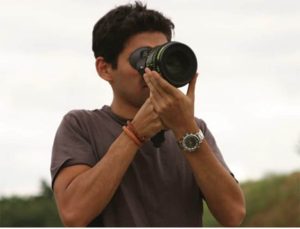
A hand- or shoulder-held camera is the fastest, most versatile and least conspicuous way to shoot. In the time it takes to set up a tripod, get a shot, then break down the tripod, I can get half a dozen shots handheld. It’s not always possible to be as steady as you need to be while balanced on two feet, so use anything available to keep yourself and the camera steady. Brace yourself against a tree, a wall, a car or a parking meter – support is everywhere. With a ShotSpot or a Steadybag, almost anything becomes a shooting surface. Use a conventional tripod only when you’ve exhausted all other options, or when you want a fluid pan, tilt or zoom.
A whole lotta shakin’
Alfred Hitchcock said close-ups should be used sparingly, because they are powerful. The same goes for shakycam. The steady camera is a respectful camera, allowing the viewer to process information without needless or annoying distractions. Still, there are times when shakycam is appropriate—to heighten a sense of edginess or violence in a scene. Yet when used in excess, shakycam or, as Roger Ebert calls it, “Queasycam,” is just plain rude. If you must shake the camera and, by extension, the viewer’s brain, do it with a good reason and exercise respect and restraint.
Walking shots
Often you’ll be called on to walk backwards, forwards or sideways while shooting a moving subject. Proficiency takes practice—teaching your legs or arms to absorb vertical movement—then training your eyes to hold the composition while you keep a lookout for obstacles. Whenever possible, enlist another crewmember to guide you by holding onto your shoulder or belt. For low walking shots with the camera in your hand, the elbows will absorb the up and down movement.
David Lent’s career as a cameraman, producer and product designer spans forty years. His seven documentaries include Life Without, Hotel Macedonia and The 5 Keys to Mastery. He is the author of The Laws of Camerawork and continues to work as a news, documentary and sports cameraman in Washington, DC.
DSLR Shooting Tips from Patrick Reis
Choose lenses made for motion pictures
The lenses designed for DSLRs are excellent for still photography, where focus is often auto and exposure is quickly adjusted with your thumb. Many motion picture shooters find these lenses difficult to use because the objective of a motion picture shooter is different from a still shooter. Don’t forget about the Compact Primes from Zeiss. The lenses are made for motion pictures with a large focus ring for focus pulling and a smooth iris ring for finer control of the exposure. Another added bonus: all of the lenses are the same size, so if your camera is on a rig and you want to change lenses, there is no adjustment needed to go from an 18mm to an 85mm.
Carry ND filters
ND filters are critical for DSLR shooting, especially when doing exteriors. The beautiful shallow depth of field is lost once you stop down past 5.6 or 8. ND filters allow you to continue to shoot at open apertures such as 4 and 2.8. I always have at least one fast prime lens with a three-stop ND filter in my kit wherever I go.
Lock your shutter speed
If your camera allows you to change the function of the buttons and dials, switch the shutter speed to a dial that locks or a button that isn’t easy to press. Shutter speed should stay consistent when shooting video, and it’s easy to press buttons or dials by accident and change the shutter speed without realizing it.
Shoot time lapse
DSLRs are the best cameras to shoot time lapse video with, partly because the resolution of the still photos is massive. Beware: that also means you need a robust editing system to handle the extremely large files. All you need for time lapse is an intervalometer and time.
Patrick Reis is a New York-based filmmaker and freelance shooter who began his career working with film before the digital video revolution. His experience spans over 10 years in commercials and TV, with clients including ESPN, Fox Sports and Nickelodeon.
Keep learning filmmaking
Want more lessons like this? Join StudentFilmmakers free for live webinars with working pros, and stream on-demand filmmaking classes in cinematography, directing, screenwriting, sound and post.