By Sky Crompton
On the last day of shooting Citizen Jia Li, Sky Crompton reflects on making heart-warming Asian pop cinema for a global audience and its cast.
A look into the story, the filmmaking process, and distribution.
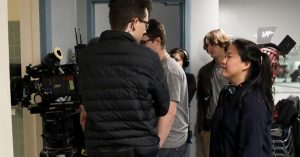
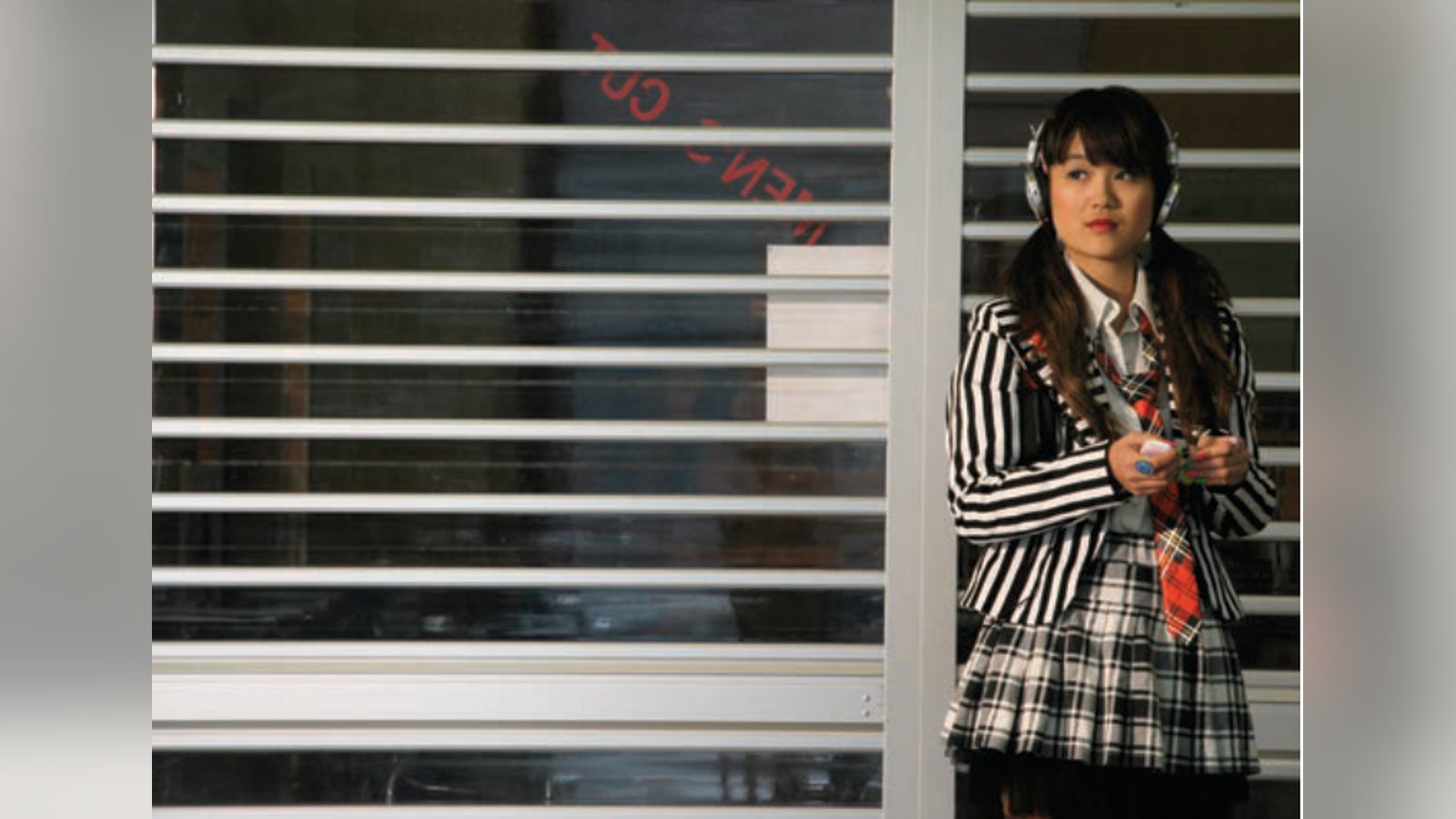
So we’re in Unit on the final day of shooting Citizen Jia Li [Citizen] and I keep bumping into actress Susanna Quan who plays Daisy, a Harajuku girl of mixed Japanese/Chinese background, and she can’t stay away so we end up having lunch between locations [yes, final days shooting and count them, three locations]. For her and many of us, we have become ‘family’ which I have only myself to blame for as I encouraged it from the beginning by giving the key cast and crew a voice in what we are making – no, I demanded it.
Citizen Jia Li was shot over 14 days for a finished budget of around $50,000 with production values that allow it to compete with its better funded multi-million dollar indie brothers. The only way we could achieve this was to do it simple and do it smart with the commitment of a wonderful dedicated team, which is nothing new in the indie feature world but a rarity for Asian Australian feature films of which we have on average less than one a year over the last decade and a half.
The Story
When I set out to tell a story of Asian Australia, I knew that I had to keep it small because of the budget and it being my first feature, so I decided to tell the story of a Chinese girl and three days in her life. This gives us small palettes with limited locations [80% of the locations were within a three kilometer radius of the unit base]. I also decided to set myself some goals as a writer and director. I wrote outside my comfort zone and created a film that was totally Asian, and with the help of the cast and crew I believe we did this, for it is a wonderful thing when someone comes to you after reading the script, or seeing the film and saying, ‘Oh, I thought the director/writer was Asian and female.’ It is then that you know that something special has been made.
The Process
I am a very process-driven person so that in approaching the screenplay and production, making a film is like a production line where each component fits to create an object of beauty. Thus with the screenplay I focused on character and structure to engage our audience and keep them interested. With Citizen, creating an ensemble of characters, I found my characters realised in the dramatic voices of the cast of Claudia Teh, Chris Pang and Susanna Quan.
As the film is in Mandarin and English mainly I engaged a translator and continuity supervisor Annie Gou who I would relight upon for all the mandarin dialog during shooting early in the piece to take all this dialog to Mandarin which we workshopped in early rehearsal with the cast. As I don’t speak Mandarin it was an affirming experience during the performances of the first rehearsals to bridge our universal language of the characters’ journeys.
This allowed the cinematography of Daniel Yun who I have known for around a decade to create a style which had a simpatico level of intimacy with the characters. The camera was in the story whilst being an observer and moving between these states effortlessly through his handheld work [as producer I decided that we did not have the time for dolly or jib]. Together we discussed how it would look and we looked to Asian films specifically for the colour palette and quality of light.
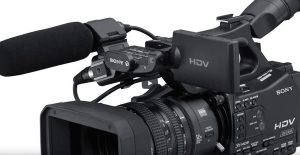
Australia has a rather unique quality of light, which is easily recognizable, and I wanted to suppress this for most of the film. To do this we set specific color balances on the HPX3000 P2 camera that we had for the shoot courtesy of Panasonic. This allowed us to get what I termed a Fuji color look, the washed blue green color palette you get when shooting with Fuji film stock. Other tricks were the use of a Panasonic DVX100 to simulate the handy cams the girls used when moving Jia’s belongings to Daisy’s apartment after being evicted and shooting a girl power shopping sequence as stills only with a Canon DSLR, which was shot by our stills photographer Tika Platis.
When it came to the shoot I knew there would be no going back. We got the shots when we were there, or we would never get them. [We had one shot missing in the edit, which was an ECU shot of a picture in Jia’s hand which we sorted in post]. With an average of over eight script pages per day this was only possible with the six months of pre-production and only shooting the shots I knew we needed for the edit. It was so tight that for at least two scenes there was only the single shot taken, and for one, a single take, but each of those is in the film. This was really filmmaking on the edge, but it was these very pressures that made us conscious of our craft and helped create magic each day on set.
It’s interesting to be asked about distribution. There is the constant struggle to think big and global with no P&A budget. And yet Citizen is just that – it is a global film, which is universally identifiable, which connects with Asians and Westerners alike.
Citizen has screened at Phoenix Comicon Film Fest [USA], Melbourne Underground Film Festival [AUST], Yellow Fever Independent Film Festival [N. Ireland], Asian Australian Film Forum [AUST] and at the Big Island Film Festival in Hawaii, along the way gaining a nomination for Best Actress for Claudia Teh.
Currently we are talking about the next steps for festivals and looking at attaching a quality distributor to bring the film to its intended endurance of the general population. It’s a small film so baby steps are okay. We have gotten this far, why not all the way? The next film we have planned is a little bigger and will probably have special effects and things that ‘blow up in it.’ But with lots of motivation, as I say to my students, character and structure, and do it by the numbers.
Sky Crompton is a Producer/Director/Writer and film scholar with over a decade of experience teaching film, TV, Animation and interactive media. His feature film, “Citizen Jia Li,” has screened internationally. Academically his research includes Asian Screen and transmedia. He has given papers at media conferences in Australia, Europe and Asia. Having developed animation and film courses his students have won numerous short film awards internationally. He can be contacted via twitter at: http://twitter.com/#!/gunghoscreen
Related filmmaking guides
- How to budget a student film
- Location scouting step by step
- Film directing: getting good performances
Keep learning filmmaking
Want more lessons like this? Join StudentFilmmakers free for live webinars with working pros, and stream on-demand filmmaking classes in cinematography, directing, screenwriting, sound and post.