Hiro Narita, ASC is the cinematographer of Never Cry Wolf, Honey, I Shrunk the Kids, The Rocketeer and Star Trek VI: The Undiscovered Country. Born in Seoul to Japanese parents and raised in Nara and Tokyo, he trained as a graphic designer, shot riot footage for Michelangelo Antonioni, and earned three Emmy nominations, the first for Farewell to Manzanar. These days he spends much of his time making cabinets, which he says has a surprising amount in common with filmmaking.
Early life: Seoul, Nara, Tokyo and Honolulu
Hiro Narita was born Hiro Morikawa on June 26, 1941, in Seoul, then called Keijō, to Japanese parents, Masao and Masako Morikawa. In 1945 the family moved to Nara, Japan, and later to Tokyo.
His father died young. His mother later married a Japanese American, and in 1957 the family moved to Honolulu, where Hiro graduated from Kaimuki High School.
He has told us that reading and writing were never his favorite things as a boy. He thinks that may be why he came to think in pictures. He went on to the San Francisco Art Institute and earned a BFA in graphic design in 1964.
Getting started
Hiro had a good job at a San Francisco design firm for less than six months before the U.S. Army drafted him. He served two years, from 1964 to 1966, as a designer and photographer at the Pentagon.
On weekends he watched movies, and art houses were full of new work by European and Japanese directors. “I was swept away,” he told the Italian film site Artdigiland in 2020. Roman Polanski’s Knife in the Water was the turning point. He noticed that the camera always seemed to be in the right place, and that what he did not see on screen grew in his mind’s eye.
Back in San Francisco, he chose film over design. He spent more than three years as an apprentice to filmmaker John Korty, working as assistant cameraman, gaffer, projectionist and poster designer, and learning animation too. All in all, he says, it took about ten years of meandering to go from graphic designer to cinematographer.
After a screen test, Antonioni sent him to film riots and student protests for Zabriskie Point, including the San Francisco State demonstrations and the 1968 Democratic Convention in Chicago. He was, in his words, “honoured but self-conscious, even petrified.” Several of his shots made it into the film. Near the end of the shoot he filled in as still photographer, which let him watch Antonioni prepare each scene alone before anyone else came near.
Antonioni also sent him to film the ruins of the World War II internment camp at Tule Lake, California, without telling him why. Six years later, Korty took a chance and hired Hiro as director of photography on Farewell to Manzanar, a TV movie about Japanese American internment. The sets were built at almost the same spot. As an immigrant from Japan in 1957, Hiro says he knew little about internment and had to learn fast. Former internees and their families volunteered as set builders, prop makers and extras. The film brought his first Emmy nomination, in 1976.
When he started, he took every job that came along, horror and exploitation films included. “Choice was not on my mind. I needed experience,” he told us in 2018. Later, worried about being typecast, he began choosing stories that interested him, whatever the genre.
Along the way he was an additional cinematographer on Martin Scorsese’s The Last Waltz, where David Meyer got him onto the crew and told him, “Go with your instincts.” He shot close-ups and pick-ups for Apocalypse Now at Francis Ford Coppola’s vineyard, and cutaways of R2-D2 and C-3PO in Death Valley for Return of the Jedi.
Never Cry Wolf and the big studio years
Carroll Ballard’s Never Cry Wolf made his name. Before they left California, Ballard showed him Maxfield Parrish paintings and said he wanted the magic of Arctic summer light. They spent five months in Alaska, British Columbia and the Yukon, then Ballard said he still did not have a movie, so they went back the next year for five more. One scene ended up with a fog version, a snow version and a rain version. Disney wanted Hiro replaced, but Ballard kept him on. The film won him the National Society of Film Critics and Boston Society of Film Critics awards for best cinematography.
Joe Johnston, who ran the miniature unit Hiro shot for Steven Spielberg’s Always, then hired him for Honey, I Shrunk the Kids, filmed largely on giant sets at Churubusco Studios in Mexico City, and The Rocketeer. For The Rocketeer’s 1930s look he studied color movie posters of black-and-white films from the period, and used a red and blue color enhancer filter to bring that saturation to the screen.
Nicholas Meyer and producer Steven-Charles Jaffe visited The Rocketeer set and liked his computer-controlled lighting grid. Hiro told Meyer up front that he was not a Trekkie. Meyer was glad, and Hiro shot Star Trek VI: The Undiscovered Country. Hocus Pocus, The Arrival and the live-action scenes of James and the Giant Peach followed.
Documentaries and directing
Hiro has said he never made a real distinction between documentary and drama. He shot Gordon Parks’s Solomon Northup’s Odyssey for American Playhouse and felt like an apprentice to Parks. Years later he filmed extra footage, using only two small lights, for Half Past Autumn: The Life and Works of Gordon Parks, which brought his third Emmy nomination.
He directed Isamu Noguchi: Stones and Paper for PBS’s American Masters, which premiered on June 25, 1997. That same year he shot Visas and Virtue, which won the Academy Award for live-action short. He made three films with artist and director Lynn Hershman Leeson, and in 2020 shot the segment “Late Lunch” in Eleanor Coppola’s Love Is Love Is Love.
Career timeline
| Year | Milestone |
|---|---|
| 1941 | Born June 26 in Seoul (Keijō) to Japanese parents |
| 1945 | Family moves to Nara, Japan, and later to Tokyo |
| 1957 | Moves to Honolulu; graduates from Kaimuki High School |
| 1964 | BFA in graphic design, San Francisco Art Institute; drafted into the U.S. Army |
| 1964 to 1966 | Designer and photographer at the Pentagon |
| 1968 | Assistant camera on Riverrun; films the Chicago Democratic Convention protests for Antonioni’s Zabriskie Point |
| 1976 | First major project as director of photography, Farewell to Manzanar; first Primetime Emmy nomination |
| 1978 | The Last Waltz released, with Hiro as an additional cinematographer |
| 1983 | Never Cry Wolf; second place, Los Angeles Film Critics Association, and third place, New York Film Critics Circle, for cinematography |
| 1984 | National Society of Film Critics and Boston Society of Film Critics awards for best cinematography, Never Cry Wolf; Excellence in Cinematography Award, Hawaii International Film Festival |
| 1987 | CableACE Award for The Blue Yonder; shoots the miniseries Amerika |
| 1989 | Honey, I Shrunk the Kids; visual effects photography on Always |
| 1991 | The Rocketeer and Star Trek VI: The Undiscovered Country |
| 1993 | Becomes a member of the American Society of Cinematographers; Hocus Pocus |
| 1997 | Directs Isamu Noguchi: Stones and Paper for American Masters; shoots the Oscar-winning short Visas and Virtue |
| 2000 | Second Emmy nomination, Dirty Pictures; shoots the Gilmore Girls pilot |
| 2001 | Third Emmy nomination (shared), Half Past Autumn: The Life and Works of Gordon Parks |
| 2006 | Best Cinematography, Boston International Film Festival, Valley of the Heart’s Delight |
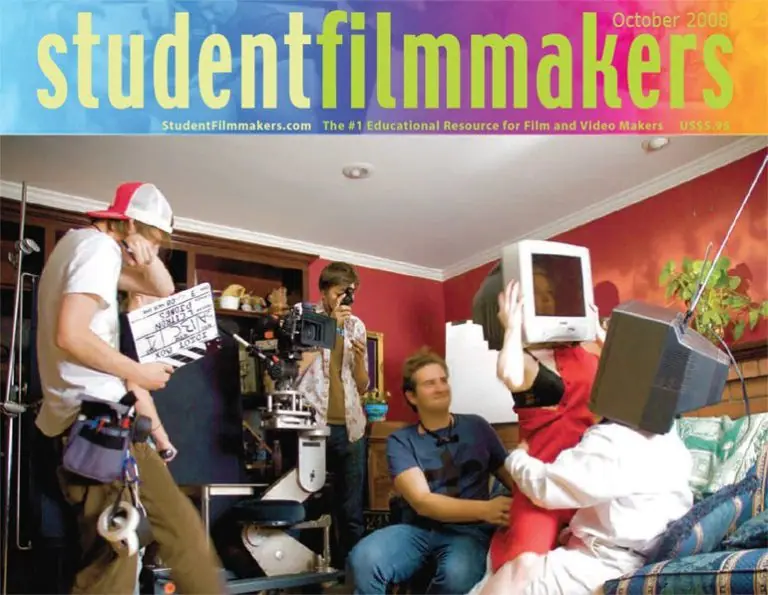
| 2018 | On the cover of Student Filmmakers Magazine, Volume 13, Number 4 |
| 2020 | Shoots “Late Lunch” for Eleanor Coppola’s Love Is Love Is Love |
| 2027 | Free live webinar with StudentFilmmakers, February 5 |
He is also a member of the Academy of Motion Picture Arts and Sciences. He has taught at the San Francisco Art Institute and given master classes, including at the Golden Eye festival in Georgia.
People Hiro Works With
- John Korty, his mentor for more than three years, who trained him in many sides of filmmaking and gave him his first big job, Farewell to Manzanar (1976).
- Carroll Ballard: Never Cry Wolf (1983) and additional photography on Nutcracker (1986). Hiro remembers Ballard always asking, “What else can we do?”
- Joe Johnston: the miniature unit of Always (1989), Honey, I Shrunk the Kids (1989) and The Rocketeer (1991).
- Steven Spielberg: second-unit work on Indiana Jones and the Temple of Doom (1984) and visual effects photography on Always (1989).
- Gordon Parks: Solomon Northup’s Odyssey (1984) and Half Past Autumn (2000).
- Lynn Hershman Leeson: Conceiving Ada (1997), Teknolust (2002) and Strange Culture (2007), and camera on !Women Art Revolution (2010).
- Producer Steven-Charles Jaffe, a friend since Hiro shot Golden Gate Bridge footage for Who’ll Stop the Rain, who brought him onto Star Trek VI.
- Eleanor Coppola, on “Late Lunch” (2020), with gaffer Eric Blum, who knew his “prepare but improvise” method, and director-cinematographer Dyanna Taylor on second camera.
Tools he loves
Hiro cares more about lenses than cameras. “I pay more attention to the choice of lens,” he told Artdigiland. He has shot Panavision and Arriflex on film and Sony cameras on digital, sometimes by choice and often for budget reasons. He moved to digital early and has no regrets: “I dived into digital cinematography twenty years ago and love it.”
He shot Star Trek VI in Super 35, which let him use spherical lenses for more depth of field. On The Rocketeer, computer-controlled dimmer boards let him repeat light changes in time with the music during the nightclub dance scene. For “Late Lunch” he used two Sony FS7 cameras from Zoetrope Studios, mostly on zooms, with 18mm and 180mm primes for a few shots, small HMIs that could run on house power, and Kino Flos hung above the windows.
Some of his favorite tools are not on any rental list. Early in his career a gaffer with years of theater experience taught him to light with tracing paper, old sheer curtains and aluminum foil, pulled out of a toolbox “like a magician would out of his hat.”
Life outside the set
In recent years Hiro has spent much of his time on cabinetmaking. He told us in 2020 that he finds a strong connection between it and filmmaking: “Everything is connected, creatively.”
He has stepped back from shooting and from regular teaching, but he still helps former students with their short films when the work is interesting and challenging, including one in Europe and one in San Francisco. He has watched student films from around the world for years and says he is impressed by how much they reflect their own cultures.
The films he returns to come from everywhere: Fellini’s 8½, Sergei Parajanov’s The Legend of Suram Fortress, Michael Radford’s Il Postino, and Bernardo Bertolucci’s The Last Emperor, shot by Vittorio Storaro, which he later used as a textbook in his own film classes.
In his own words
“In retrospect, it was the military service that changed the course of my professional life.” (Artdigiland, 2020)
“I was ready and open to whatever was there, seeing and appreciating it in the unfamiliar light.” (Artdigiland, 2020, on Never Cry Wolf)
“I’d like to say I have an ‘approach’ to my work, not necessarily a ‘style’.” (Artdigiland, 2020)
“This taught me not to feel precious about my own work, my ideas, and explore further. And surprise yourself.” (Student Filmmakers Magazine, 2019, on art school)
With StudentFilmmakers
Hiro first appeared with us in 2018, on the cover of Student Filmmakers Magazine, Volume 13, Number 4. The next year he gave us a long interview with associate publisher Jody Michelle Solis about lighting the dance in The Rocketeer, finding the look of Never Cry Wolf, and the phrase he often borrows from Asian cinema, “the beauty of things you don’t see.”
In 2020 he wrote three columns for us: “Mindful Nourishment,” on Knife in the Water, carrying a notebook and whether to go to film school; “Connecting the Dots,” on the gaffers, grips and crew who shaped his work; and “A Plan for Late Lunch,” on lighting Eleanor Coppola’s film in a real San Francisco house. His advice to study color is one of our “5 Best Pieces of Advice for Student Cinematographers,” and he is part of our Cinematographer Honor Roll.
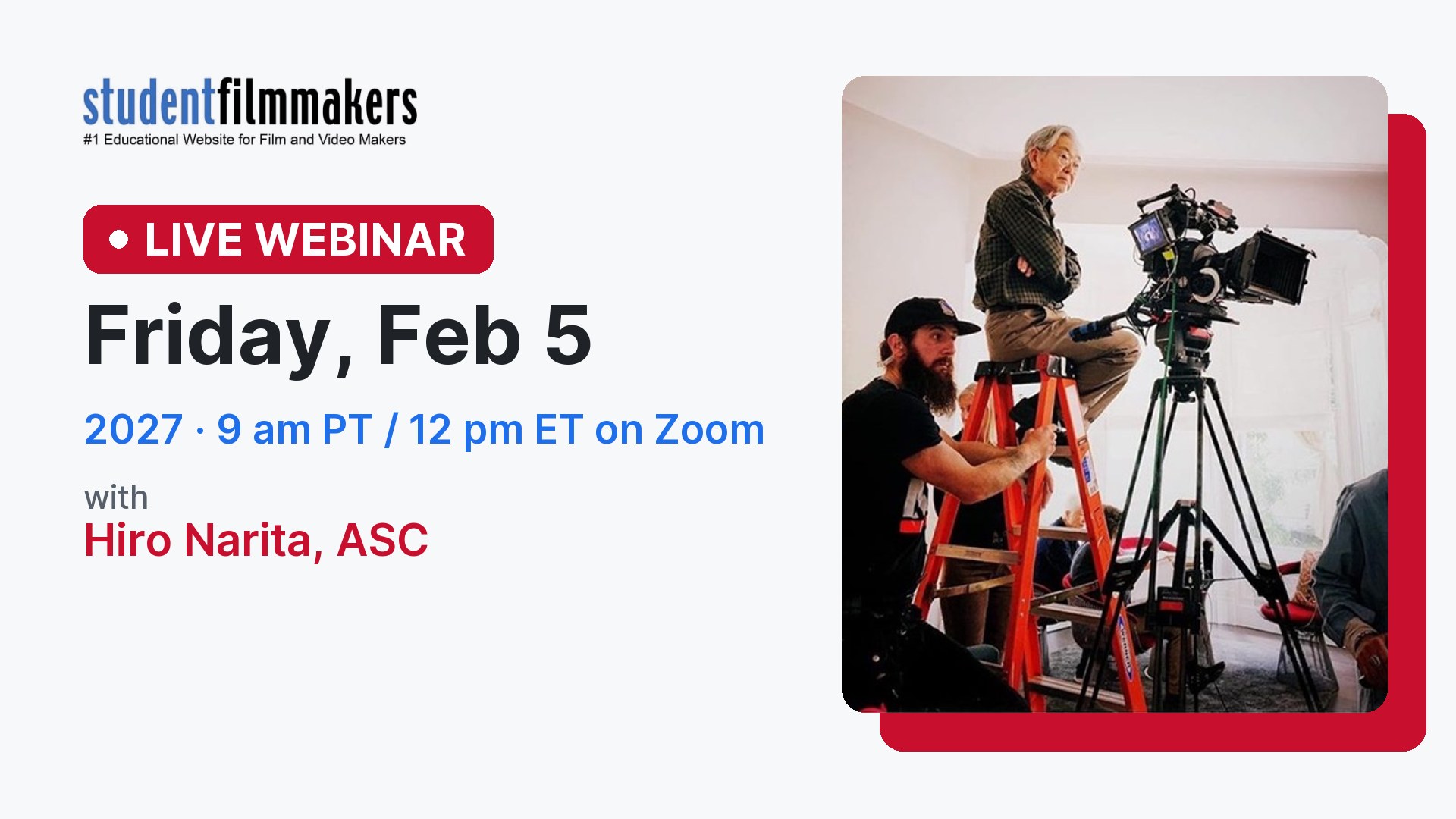
On Friday, February 5, 2027, at 9:00 am PT, he joins us on Zoom for a free live webinar, A Conversation with Hiro Narita, ASC, part of our Masters Series with Nancy Schreiber and Mark Irwin.
Current Productions
- The Magic of Hocus Pocus: listed on IMDb with Hiro appearing as himself, status filming, for 2027 (as of November 28, 2026).
- A Conversation with Hiro Narita, ASC: free live webinar with StudentFilmmakers on Zoom, Friday, February 5, 2027, 9:00 am PT.
Complete credits
Newest first, from IMDb (checked November 28, 2026), with Wikipedia, Artdigiland, the ASC and Contemporary Theatre, Film and Television noted in our source list.
Cinematographer
- 2020 | Love Is Love Is Love | feature | segment “Late Lunch”
- 2017 | Tania Libre | doc
- 2015 | Love & Taxes | feature
- 2009 | La Mission | feature
- 2008 | A Perfect Place | short
- 2007 | Strange Culture | doc
- 2006 | Valley of the Heart’s Delight | feature
- 2006 | The Darwin Awards | feature
- 2005 | Night of Henna | feature
- 2002 | Teknolust | feature
- 2001 | Other People | TV movie
- 2000 | Dvorak and America | doc
- 2000 | Gilmore Girls | series | “Pilot,” 1 episode
- 2000 | Dirty Pictures | TV movie
- 2000 | Fortress 2: Re-Entry | feature
- 1999 | Partners | series | 1 episode
- 1999 | Independent Lens | series | segment “Visas and Virtue”
- 1998 | I’ll Be Home for Christmas | feature
- 1998 | Shadrach | feature
- 1997 | Sub Down | TV movie
- 1997 | Conceiving Ada | feature
- 1997 | Visas and Virtue | short | Academy Award winner, live-action short
- 1996 | James and the Giant Peach | feature | live action
- 1996 | The Arrival | feature
- 1994 | Siegfried & Roy: The Magic, the Mystery | TV special
- 1994 | Long Shadows | TV movie
- 1994 | White Fang 2: Myth of the White Wolf | feature
- 1993 | Children of the Mist (They) | TV movie
- 1993 | Hocus Pocus | feature
- 1993 | Gunmen | feature
- 1992 | Tales from the Crypt | series | “Showdown”
- 1992 | Two-Fisted Tales | TV movie | segment “Showdown”
- 1991 | Star Trek VI: The Undiscovered Country | feature
- 1991 | The Inland Sea | doc
- 1991 | The Rocketeer | feature
- 1991 | Plymouth | TV movie
- 1989 | Mothers, Daughters and Lovers | TV movie
- 1989 | Honey, I Shrunk the Kids | feature
- 1989 | Shuttlecock | feature
- 1984 to 1988 | American Playhouse | series | 3 episodes: “Solomon Northup’s Odyssey,” “Go Tell It on the Mountain,” “Pigeon Feathers”
- 1987 | No Man’s Land | feature
- 1987 | Amerika | miniseries | 7 episodes
- 1986 | Fire with Fire | feature
- 1986 | The Magical World of Disney | series | 1 episode
- 1985 | The Blue Yonder | TV movie
- 1985 | Sylvester | feature
- 1984 | Prince Jack | feature
- 1983 | The Haunting Passion | TV movie
- 1983 | Never Cry Wolf | feature
- 1982 | The Stereo Demonstration Film | short
- 1980 | Nova | series | 1 episode
- 1979 | Rust Never Sleeps | concert film
- 1977 | Nanette: An Aside | TV movie
- 1976 | Farewell to Manzanar | TV movie
Camera department
- 2010 | !Women Art Revolution | doc | camera operator
- 2007 | Shrink Rap | series | camera operator, 1 episode (as Hiro Narito)
- 2005 | American Experience | series | camera operator, 1 episode
- 2003 | Anger Management | feature | director of photography, second unit
- 2002 | The Scorpion King | feature | director of photography, additional second unit
- 2002 | The Time Machine | feature | director of photography, second unit
- 2000 | Half Past Autumn: The Life and Works of Gordon Parks | TV doc | additional photographer
- 1998 | Simon Birch | feature | director of photography, second unit
- 1992 | Tales from the Crypt | series | camera operator, 1 episode
- 1990 | Roller Coaster Rabbit | short | director of photography, live-action unit
- 1989 | Tummy Trouble | short | director of photography, live-action unit
- 1988 | The Unbearable Lightness of Being | feature | U.S. unit
- 1986 | Nutcracker | feature | additional photography
- 1984 | Indiana Jones and the Temple of Doom | feature | second unit
- 1983 | Vietnam: A Television History | miniseries | camera operator, 1 episode
- 1983 | The Right Stuff | feature | additional camera operator
- 1983 | Return of the Jedi | feature | additional cinematographer (uncredited)
- 1982 | Human Highway | feature | camera operator, dream sequence
- 1980 | Shadows and Light | concert video | camera operator
- 1979 | More American Graffiti | feature | camera operator
- 1979 | Apocalypse Now | feature | camera operator, inserts
- 1978 | Who’ll Stop the Rain | feature | Golden Gate Bridge footage
- 1978 | The Last Waltz | concert doc | additional director of photography
- 1972 | The Candidate | feature | intern
- 1970 | Zabriskie Point | feature | additional camera (protest footage) and still photographer
- 1968 | Riverrun | feature | assistant camera
Director
- 1997 | American Masters | series | “Isamu Noguchi: Stones and Paper”
- 2003 | Anger Management | feature | second unit director, New York
- 1974 | Vision USA No. 32 | film
Visual effects
- 1989 | Always | feature | visual effects director of photography
Other crew
- 2009 | Generic Thriller | visual consultant
- 2009 | All About Dad | visual consultant
Self
- 2027 | The Magic of Hocus Pocus | filming
- 2020 | Hocus Pocus: Deleted & Extended Scenes | video | uncredited
- 2006 | Cinematographer Style | doc
- 2004 | Stories from Star Trek VI | video
- 1997 | The Arrival: New Horizons | video | director of photography
- 1994 | Movie Magic | series | 1 episode
- 1994 | Hocus Pocus: Begin the Magic | TV special | director of photography
Thanks
- 2019 | Niblock’s Sound Spectrums: Within Invisible Rivers | thanks
- 2016 | Syndicate | special thanks
- 2014 | Howard Here/After | short | special thanks
- 2014 | Inseguro | short | special thanks
- 2012 | The Return | very special thanks
- 2010 | The Red Bridge | short | special thanks
On StudentFilmmakers
Articles by, with and about Hiro
- StudentFilmmakers Magazine | Exclusive Interview with Hiro Narita, ASC (September 27, 2018)
- Exclusive Interview | A Conversation with Hiro Narita, ASC (August 20, 2019)
- Mindful Nourishment by Hiro Narita, ASC (May 28, 2020)
- “Connecting the Dots” By Hiro Narita, ASC (September 28, 2020)
- “A Plan for Late Lunch” By Hiro Narita, ASC (December 21, 2020)
- Cinematographer Honor Roll: Passing On the Art of Cinematography (November 8, 2026)
- Live Webinars: Nancy Schreiber (Jan 8), Mark Irwin (Jan 22), Hiro Narita (Feb 5) Teach Free ASC Classes on Zoom (November 19, 2026)
Other articles that mention him
- 5 Best Pieces of Advice for Student Cinematographers (November 18, 2020)
- Should I Go to Film School, or Get a Job? (November 24, 2020)
- How to Become a Cinematographer: 10 Steps, Skills and Pay (July 5, 2023)