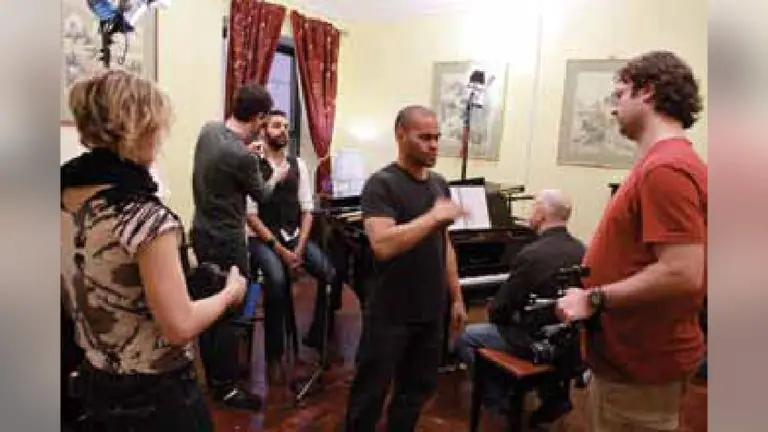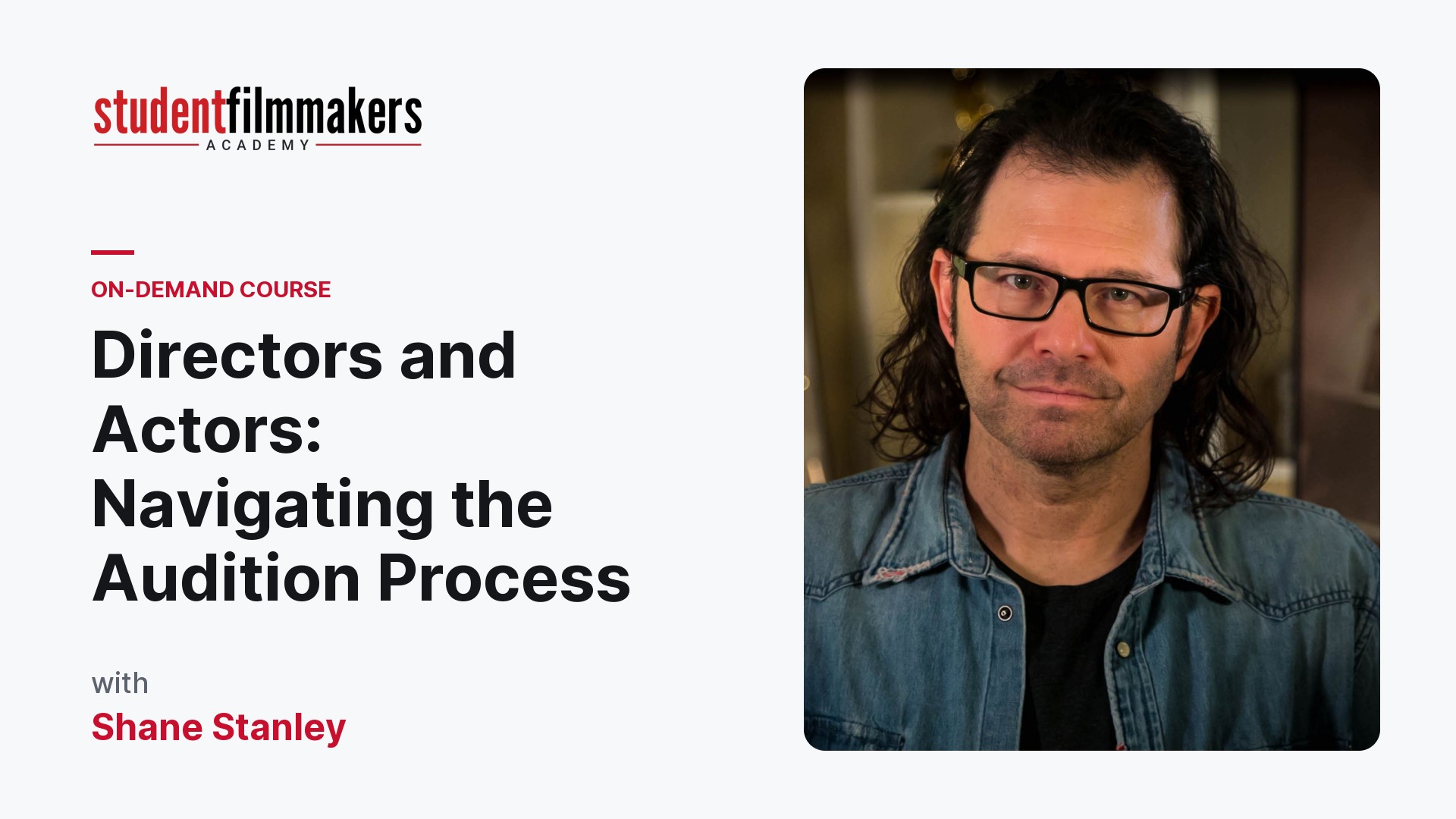
Shane Stanley, the Emmy-winning filmmaker who executive produced Gridiron Gang and directed Night Train and Double Threat, knows auditions from every chair in the room. He has been the nervous young actor, the hired hand pressing record, the casting assistant, the commercial director and the producer. His core rule for running an audition is respect. Treat every actor who walks in as an equal, give them a real scene partner, and make sure they leave glad they came, even if they do not get the part.
Why does respect come first in a casting session?
Shane opened the class by reading aloud a page from the filmmaking book he wrote. Its point: the actor in front of you studied your scene, skipped work or covered a shift, fought traffic, found parking and climbed the stairs to read for you. Treat them as you would if Dwayne Johnson walked in. In class he put it more simply:
“We’re all equal here. I don’t care who walks in, they’re treated with respect.”
He reminded filmmakers that many actors are working other jobs, and some have a family deadline: get work by a certain date or come home. Everybody, he says, is fighting battles you cannot see. He saved his harshest words for advertising agencies, which he calls the worst at brushing aside people who do not match a perfect-ten ideal.
What should the room look like before anyone reads?
Shane’s list is practical and cheap:
- Pick a building with parking. If yours has none, find one that does, so nobody arrives late and rattled.
- Spend about $18 on three cases of water for a hallway that might be 116 degrees in the Valley with no air conditioning.
- Print extra sides. Some actors will only have them on a phone, or their agent never sent them.
- Have someone greet each actor, sign them in, point out the restroom and tell them they have time to look over the lines.
- Put out a bowl of candy. Small, but people feel looked after.
Once they are inside, take two minutes before the read. Ask about their weekend, where they are from. Their guard comes down, they stop feeling like a number, and the read gets better. It also tells you who they are. “Who do we want to wake up and go to work with every day?” he asks. Nobody in the room should be scrolling a phone.
Who should read opposite the actor?
An actor, if you can manage it. A casting associate reading flat, robotic lines gives the actor nothing to play against.
“I strongly recommend you get an actor to do the reading in the room.”
Actors who self-tape know this already, he says. The smart ones pick a good scene partner, and you can hear the difference on the tape. A strong reader also makes the filmmakers look better.
How long should each audition take?
Kim Welch, the founder of StudentFilmmakers, asked this one. Shane’s answer depends on the day. With 15 to 20 people in four hours, you can give each one five to ten minutes. Commercial casting can mean 200 or 300 people a day. On a run of commercials he cast, the team saw about 900 people over three days. Nobody rewatches 900 tapes, so everyone in the room marked a plus or minus next to each name, and the casting director tallied them at the end of the day.
When the day is packed, he tells actors plainly that the hallway is full and the pace has to pick up, so they do not take it personally. He also suggests quiet signals in the room. If the director, producer and casting director all like someone, ask that actor to grab lunch and come back in an hour for a quick callback.
He warns against falling for someone too early, or settling on the last person because everyone is tired. That is how a producer ends up in love with one actor and the director with another.
What do you do when an actor nails it?
Change the direction completely:
“I strongly recommend that you give them direction and flip the script, give them a 180, give them a U-turn, because you want to be able to see how this actor is going to take direction.”
An actor who had four days to prepare one scene should be able to nail it. Shane has seen great auditions turn into weak performances once the actor had a whole script, its arc and its beats to manage. He has also seen an actor reinvent a role so fully that the team had to stop and ask whether they were ready to leave the character they wrote. Sometimes that is the best casting in the world, as long as everyone agrees to it.
He loves actors who ask, after reading their own role, to read the opposite part if it is still open. He has hired leads that way.
Should decision-makers agree before casting starts?
Yes, and some of his worst casting days came from skipping that talk. Before the first actor arrives, agree on the basics: whether the role could change gender, whether you are open to any race, and whether an unknown can play it if enough recognizable names surround them for sales.
He told a story about a soap star a producer insisted on casting. Shane noticed on tape that the actor’s eyes looked half closed whenever he delivered lines. The producer disagreed and hired him anyway. During the shoot, the DP kept signaling at the monitor that the actor looked asleep.
He also spoke frankly about insecurity. People on the deciding side of the table are often tired, desk-bound and not feeling their best. He has seen talented, very attractive actors rejected because a decision-maker felt uncomfortable around them. On one project, two actresses turned away for that reason went on to become huge stars. He compared it to The Vanishing, made before Sandra Bullock was famous: her later fame was like winning the lottery for the film’s owners.
How do you test chemistry in an ensemble?
For Gridiron Gang, the team screen-tested 50 or 60 young actors for the role of Willie Weathers, narrowed it to five, and then had Dwayne Johnson read with each finalist. On a small film, you can ask an actor you have already cast to read with the candidates for their love interest, if they are willing.
Early in his directing career, he gathered 13 or 14 working actors at a friend’s house in the hills for an improvised table read of an ensemble film. On a recent film, he sent two actors playing an engaged couple to spend a day together at the Grove and hike Runyon Canyon. Two others, playing former lovers who had not seen each other in ten years, he kept apart until he called action. Sometimes the director builds chemistry, and sometimes the job is to hold it back.
Where do you find actors who know the craft?
Shane says there is no shortage of people in Los Angeles; the question is craft. He sees fewer actors who truly know it, and more who think a social media following makes them one. His suggestions: call acting coaches who train people one-on-one, and look at smaller boutique agencies with a few hundred clients whose names show up working on IMDb. For small local roles on a film he shot in the Palm Springs area, a regional film group circulated headshots and reels, and he chose from self-tapes.
Some discoveries arrive by accident. Shane called in a young man who had only dropped off his roommate, and it turned out to be Joel David Moore, later in Avatar. Shane’s own father got into acting the same way, after driving a friend to an MGM audition.
What is his last piece of advice?
Go be an actor for a while. Shane got an agent and went out on auditions as a young filmmaker with no wish to act. He got towed, climbed stairs in 118-degree heat, and was once sent to an audition casting little people for a horror film, at six feet tall. And remember who is in front of you:
“Just because you’re sitting on one side of the table, auditioning, and you have the final say does not make you any more important, better, or more worthy, or valuable than the person on the other side of the table.”
A rejected writer can blame the script, he notes. An actor feels rejected as a person.
More on casting: Inside Casting Sessions, Audition Tips: How to Get the Right Actors for Your Films and Directing Actors Under Pressure with Shane Stanley.