By Scott Essman
Editor Niven Howie explains his methodology on Resident Evil: Afterlife, shot in 3D, and how 3D changed his work from production through the edit.
The history of cinema is filled with trends, some of which are fads while others break new ground. Among them, 3D films gained wide popularity in the 1950s to compete with the nascent television medium, only to slowly fade into obscurity when it was viewed as little more than a gimmick. By the 1980s, 3D in feature films was virtually non-existent, relegated to special presentations for particular occasions. But in 1986, Disneyland debuted Captain EO, a Michael Jackson vehicle, filmed in a striking new type of 3D that came to be known as RealD. In lieu of the red lens/blue lens glasses, the polarized 3D offered grey-shaded glasses which would produce a vividly stereoscopic image, greatly enhancing the 3D effect.
Oddly, few films in the 1980s or 1990s capitalized on RealD, ostensibly due to the high cost of the equipment required to produce the rich images. By the mid-2000s, to compete – again – with the growing home entertainment market, including DVDs, Blu-rays, advanced cable and satellite, and, most prominently, Internet delivery of films, feature filmmakers dusted off the new technologies and explored releasing films in RealD once again. Two types of processes to achieve the technique came to fruition: one in which the film would be shot in traditional 2D then converted in the editing process to 3D, and the other, more naturally, to film in the 3D process, using stereoscopic cameras, and process and screen the final film three-dimensionally.
Of late, the new RealD achievements of film have received varied responses from cineaste and fans alike. While many have praised the stereoscopic original negative in such films as Avatar, others have lamented the post-production conversion process of 2D into 3D, which did work very successfully in, for example, Piranha 3D, but was not as universally accepted, in the 2010 remake of Clash of the Titans and other releases.
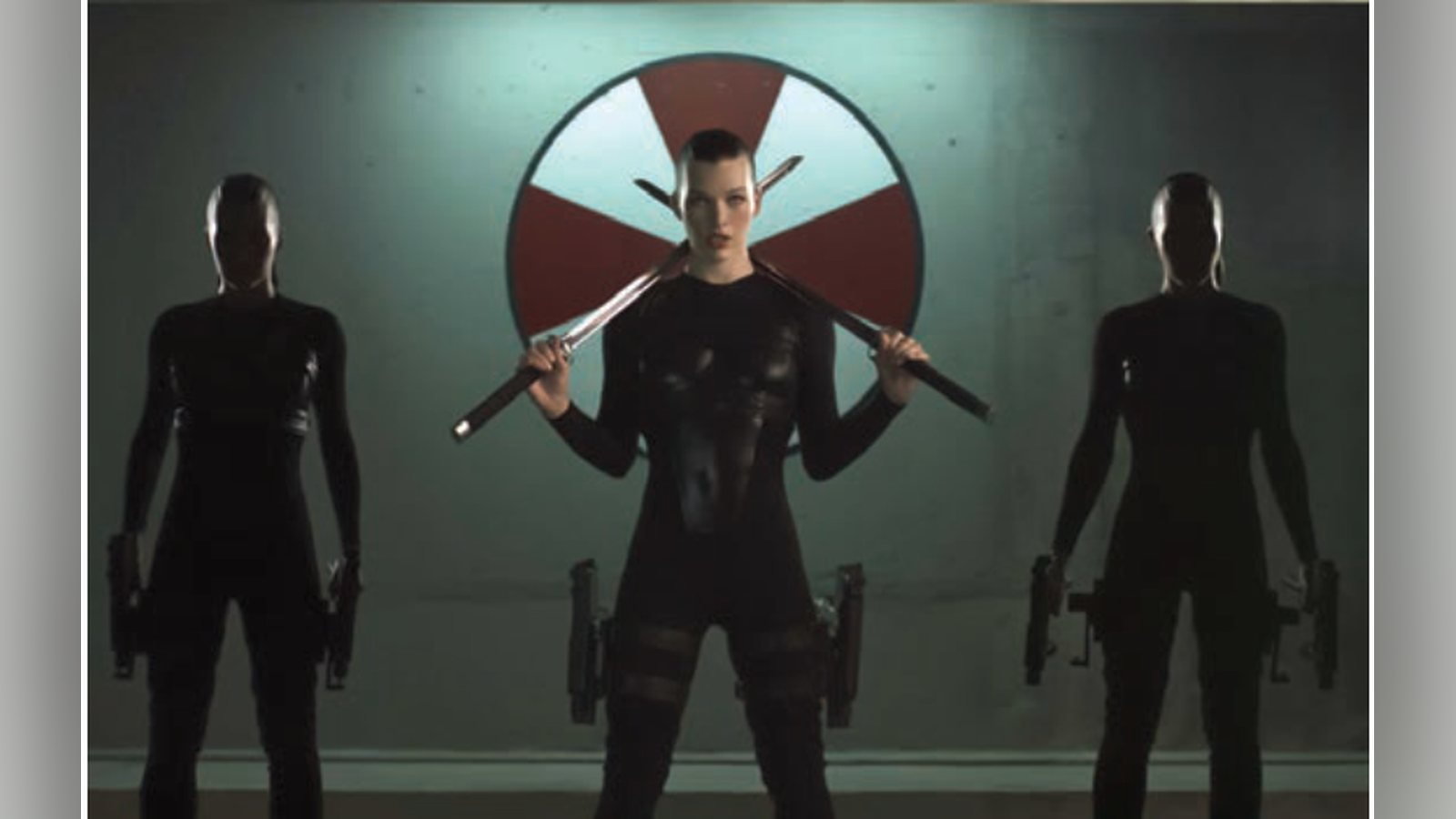
Now, the fourth film in the Resident Evil film franchise, RE: Afterlife, or RE4, as it is affectionately known, is the first film on record to be shot, edited on Avid, and released entirely in the RealD process. To achieve the RealD in the principal photography, the filmmakers shot from September through December of 2009 with the same Vince Pace 3D camera system with which Avatar was realized. Next, the files were converted directly on the set to DNxHD side-by-side for 3D offline editorial. The editorial team then utilized an Avid Unity MediaNetwork connected to three Media Composers—for the editor, assistant editor, and the visual effects editor.
Editor Niven Howie explained his methodology during production. “One thing that was very different on this one is that I actually met up with the house that was supplying our 3D camera kit,” he said. “We worked out a workflow for how we would supply dailies. Normally a lab processes the 35mm. On this, my assistant transfers to a drive and makes DVD copies of the dailies for the producers and director.”
Serving as their “3D lab”, the editorial team had a very expensive trailer on set. “They took the drives off the camera and processed them round the clock — it was all done in house,” Howie said. “The other thing that was different for me was to cut this in 3D. Most of the work would be done in 2D then switch the drives to 3D and conform the cut to 3D and screen it.” However, cutting in 3D meant that director Paul W.S. Anderson had the ability to see close to a final version during production and through the succeeding months that it took to edit the film.
In their on-set lab, the editorial team had a Quantel which handles high-level image processing. “It takes in the two hi-def images, from the left eye and the right eye,” Howie explained. “An operator balances them out – making sure that they are in sync. One camera looks through a half mirror and the other is getting the reflection. Plus, there is a difference in the brightness in the two.” Once the image is synched and balanced for brightness and contrast, Howie could screen dailies in this same trailer. “We had a 3D projector set up in the trailer,” he said. “Once we wrapped, we’d watch through that day’s filming. It would normally be the afternoon of the previous day and the morning of the same day. We were watching in 3D wearing the same type of RealD glasses that you wear when you go to a normal screen in the multiplex. “
On set, Anderson and the producers had two 46-inch 3D monitors with live taps – normally from the two cameras with which Anderson filmed RE4. Howie noted that these monitors assisted with the photographic process overall. “You catch some continuity errors on set that maybe you miss when looking at a small screen, “ he described. “It allows [Anderson] to play more with the 3D. You can adjust the amount of 3D on set. If you have the cameras too far apart, or close together, you can’t do anything with it. The IO or inter-ocular lenses – simulating the distance between the two eyes – physically move to mimic how your eyes are offset.”
Also on his set, Anderson could manipulate his stereoscopic lenses, depending on the size and depth of the shot, and the distance from the camera to the character. As such, Howie detailed the abilities of the crew to manipulate the 3D aspects of the film. “You can play with it in post, but if that IO is very small, you can’t make the 3D big… and if it’s too big, you struggle with it. Luckily, we had the same camera kit and some of the same crew who worked on Avatar. We took a gamble, as we were filming before Avatar came out. But James Cameron screened 20 minutes of the movie in 3D for Paul, and he was convinced that it was the right system to go with.”
During principal photography, Howie was availed of the exact same 46-inch 3D screen in his cutting room. “We loaded up the rushes and they looked as good as they looked on set,” he noted. “It allowed us to project onto a big screen and not look really nasty. All of my other editorial screens are 2D, so I can take my glasses off. Avid has been developing this system where the dailies are loaded in with a combined left and right eye, anamorphic stretched split screen. One image is stretched vertically left eye and on the right is the stretched vertically right eye. Then the monitors can use just the left eye to adjust the aspect ratio so that it looks great, or send it to the 46-inch as a composite. They developed that and were about to release it a few weeks after starting principal photography. We got them to release the software to us early before it was released to others. Avid confirmed that I was the first person in the world to cut this in 3D.”
Given the traditional editing process of choosing from amongst many angles to make a scene work, the 3D demanded several adjustments from editing in normal 2D, especially as RE4 is a huge action film. “Now you are dealing with depth, which does come into play,” Howie stated. “One thing that I found extraordinary is that some rules can be broken. Normally, you would not cut from a mid shot to another mid shot or a close shot to another close shot in normal 2D, but in 3D, you sense the difference in the shot and the cut works. There are some very different aspects to viewing 3D and some of the more mundane shots in 2D, are amazing in 3D.”
Howie expanded upon this idea, noting his change in the amount of cuts he made in RE4. “In action movies, recently, you’d have to do a stunt in five shots to make it exciting. In this movie, Ali Larter runs up this wall, leaps back and lands on her feet, but it’s done in three shots,” the editor said. “With depth, it makes it much more exciting to watch. I cut a little bit slower than I would have if it was 2D even though there’s some pretty fast action in there. In Death Race, we broke the record of number of edits at the lab (3000). The average edit length was a second and two frames, and the drama sequences were actually quite slow. In this one, I had just over half that number of cuts.”
Much of RE4 contained partial or full green screens behind the actors. “Something Paul realized that you can really use to your advantage with 3D is set extensions,” Howie described. “You build two possibly three walls of the set. The third wall you can have CG and push it as far back as you want and make the place vast. A lot of the sets were two or three walls and the third-fourth wall was CG. It worked really well.”
Given the 3D element, most visual effects were still more complicated. “The head of the visual effects company expected it to be twice the amount of work, but it was actually like 2 1/2 times the work,” Howie revealed. “You have to integrate each image and make sure that they match. If it’s slightly off between the eyes, you have to patch it. Effects were tricky and much more involved. Also, our preparation for doing rough visual effects and green screen keys was more than double the work. If you do a dynamic move in on a shot, you have to make sure that it matches from left eye to right eye.” Ultimately, you have to fully understand 3D and how it works. “It took me a few months to really work it out,” Howie said. “You have to get into the specifics of how the image is delivered to your brain. In fact, it’s swapped on the screen. It took a few diagrams and some physics to get my head around how to alter 3D and create a dynamic translation where you start off with shallow depth and increase the depth throughout the shot. You can have someone start behind the screen and bring them forward into the auditorium. We are pioneers in a way as there are not that many people who know how it works.”
“It was an extremely enjoyable educating period,” Howie said of his experience on the film. “We are extremely proud of what we achieved. Most of the films that have come out since Avatar have been dimensionalized in post. Even Avatar, the majority of it is CG, so you are already in this fantasy world like an animated Pixar movie. But not live-action with real sets, real actors, and real bits of scenery. We feel that we’re bringing something quite new to the cinema.”
Scott Essman started writing about and for entertainment while still at the University of Southern California in the mid-1980s. His filmography as producer, director and writer includes A Tribute to the Westmore, Monster Kids, Bud Abbott and Lou Costello Meet the Monsters, King Kong 75th Anniversary Tribute, Ray Harryhausen Interviews, The Mummy 75th Anniversary Tribute, Making the Monster: Special Makeup Effects Frankenstein Monster Makeup, Jack Pierce: The Man Behind the Monsters, and A Tribute to the Wizard of Oz.
Related filmmaking guides
- Top video editing software for students
- ADR: automated dialogue replacement explained
- The power of sound in film
Keep learning filmmaking
Want more lessons like this? Join StudentFilmmakers free for live webinars with working pros, and stream on-demand filmmaking classes in cinematography, directing, screenwriting, sound and post.