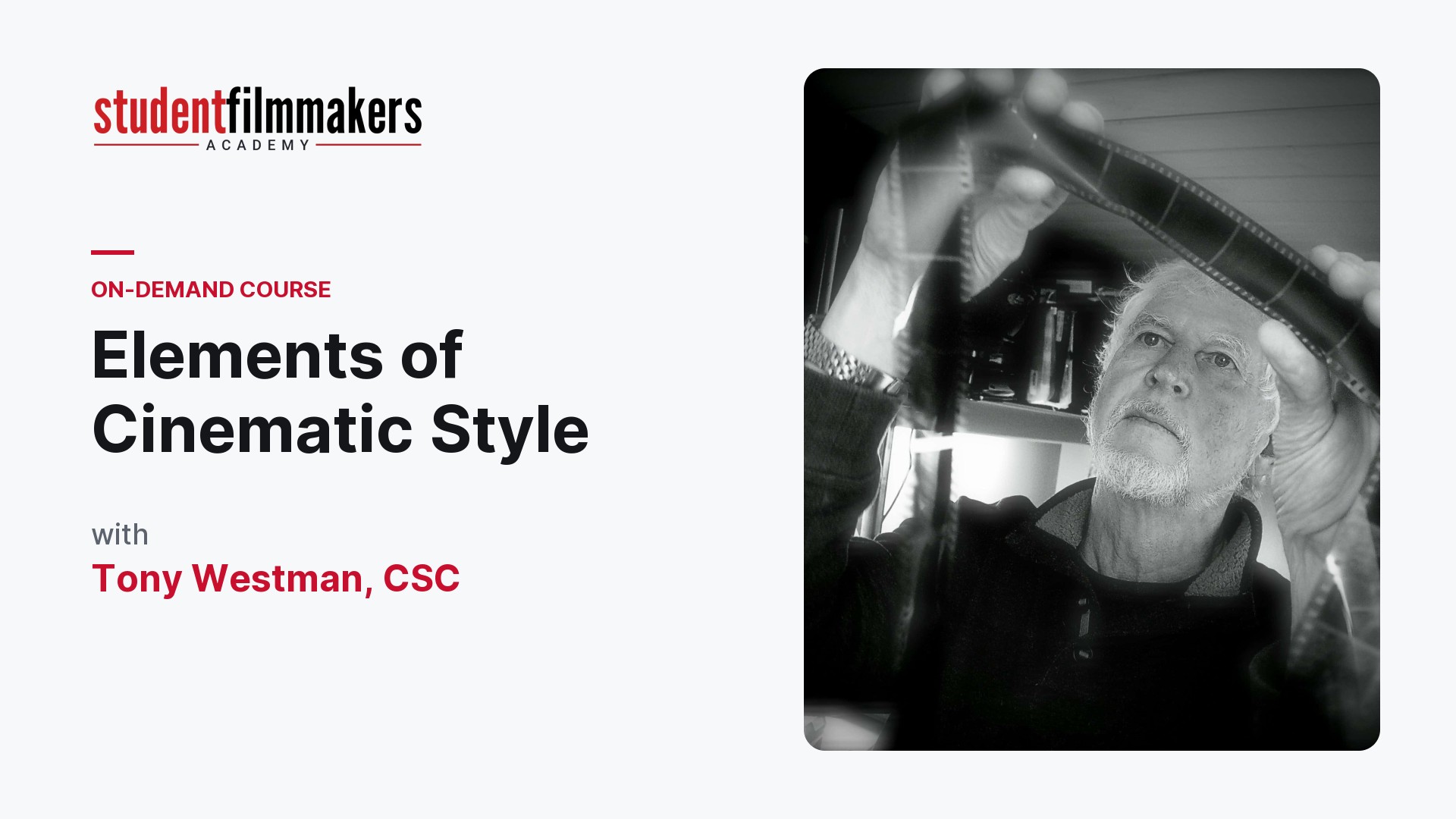
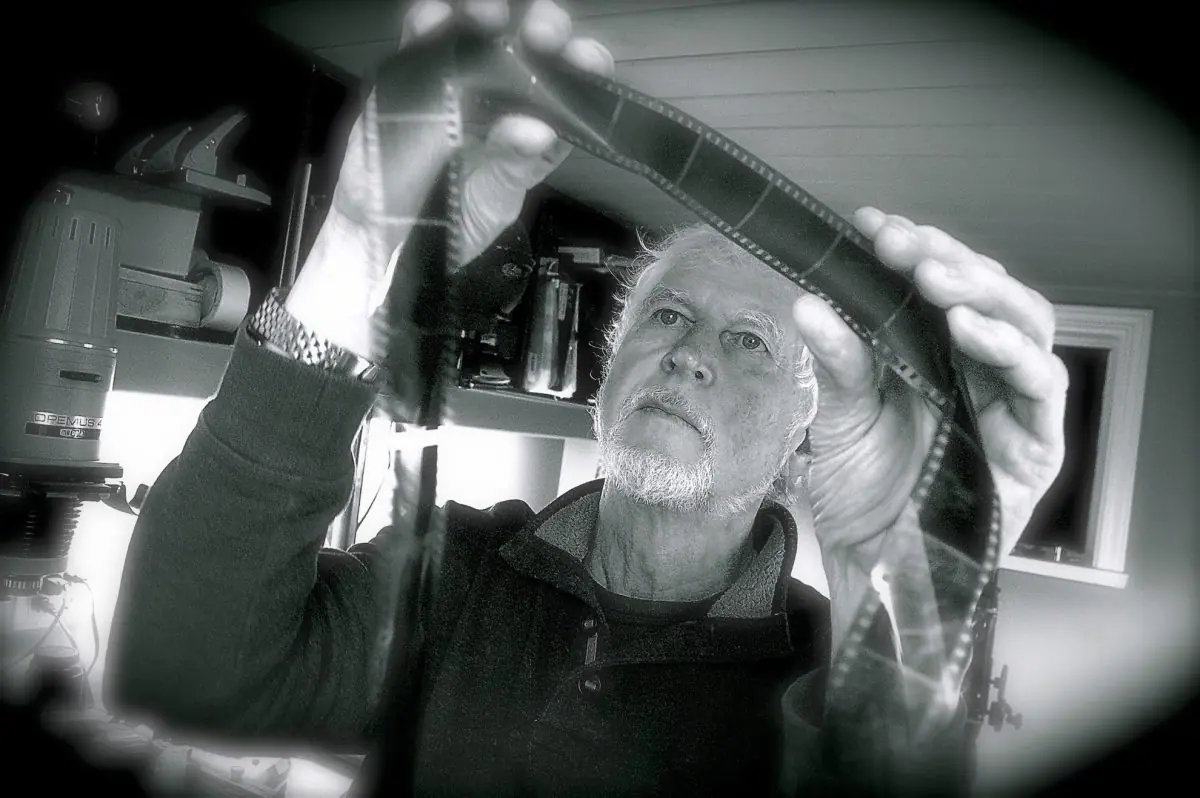
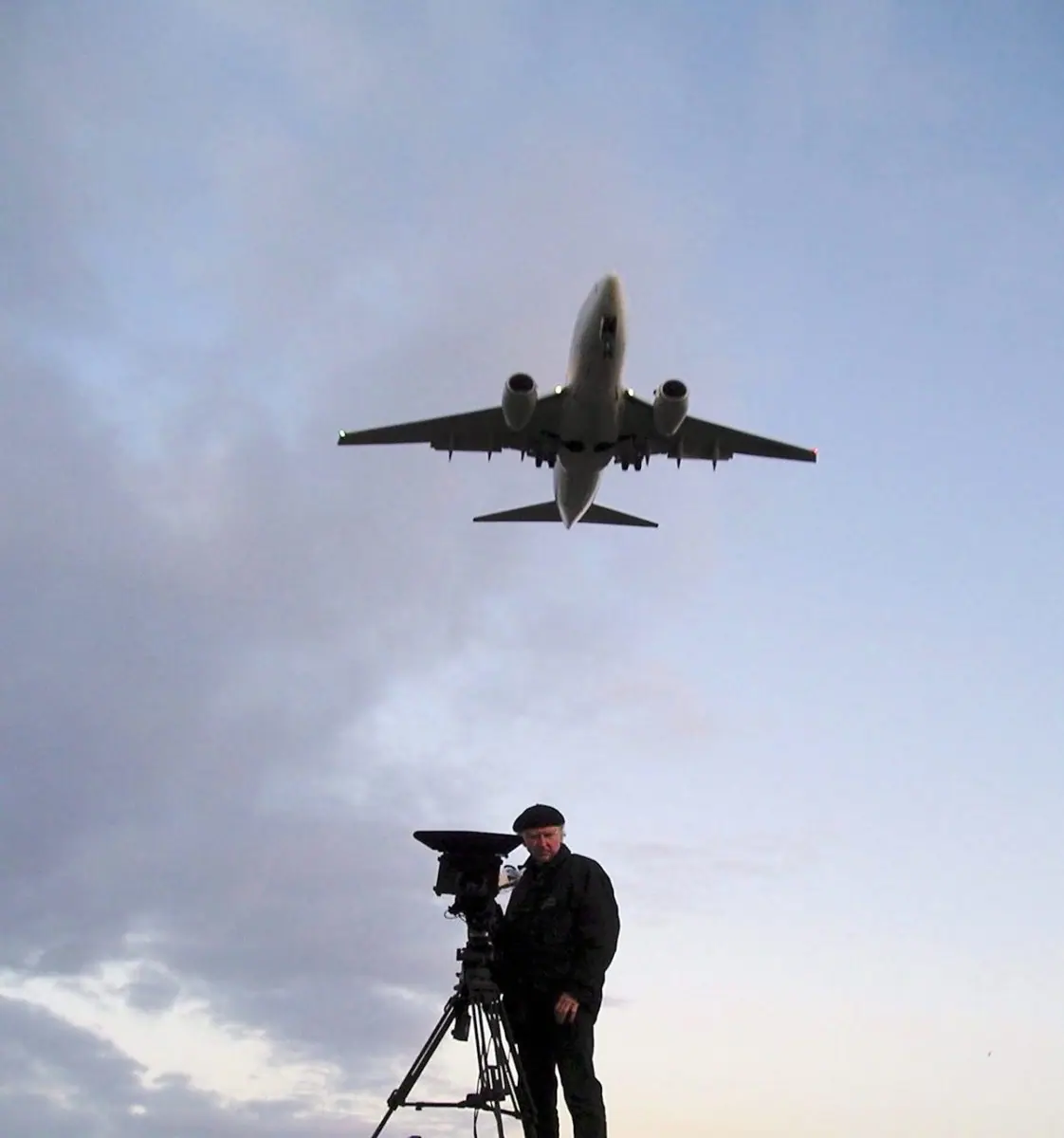
Tony Westman, CSC, DGC, DGA is a cinematographer, director, still photographer and teacher who has been making films for more than fifty years. He was director of photography on the Stephen King film Needful Things, the series The 4400 and Dead Like Me, and the documentary Force of Nature: The David Suzuki Movie, and he directed episodes of The Sentinel. He began at the National Film Board of Canada, where filming a beluga whale’s birth at the Vancouver Aquarium also led him to the woman who became his wife.
Early life and school
Tony Westman was born on November 24, 1946, in Seattle, Washington. He earned an honors diploma from Queen Anne High School in Seattle in 1965, then spent a year studying engineering at the University of Washington.
He moved north to Simon Fraser University, near Vancouver, and graduated in 1970 with a BA in political science, sociology and anthropology. The camera was already part of his life. While still a student he had solo photography shows at the university’s Centre for the Arts: Children of Bella Coola in 1969 and Man vs. Environment in 1970. In 1970 his photographs were also part of Image Series Six, a survey of contemporary photography from the National Film Board’s Still Division.
His first film on record is Harry the Hummer, an independent short from 1968. It received an honorable mention at the Vancouver International Film Festival in 1969.
Getting started
Tony has been making films since he graduated from SFU in 1970. In the early 1970s he worked as an assistant cameraman on National Film Board shorts such as Centaur and The Ungrateful Land, both 1972. He soon moved up to shooting and directing documentaries for the NFB, including Salmon People (1976), Sauk-Ai (1977), Beluga Baby (1978) and Family Down the Fraser (1978). Man Who Chooses the Bush won him Best Cinematography at both the Alberta Film Awards and the Yorkton Film Festival in 1975.
He kept taking still pictures the whole time. In 1973 he received a Canada Council grant for still photography, and the National Gallery of Canada added his work to its collection that year.
Beluga Baby recorded the birth and death of a beluga whale at the Vancouver Aquarium. Tony spent many hours a week there for four months, filming a pregnant beluga and working with research scientists. The film won the O Globo Science Award in Rio de Janeiro in 1978. During that time at the aquarium he met the woman who became his wife, a scientist. When he told us the story in 2021, they had been together for 43 years.
A Canada Council grant in 1977 paid for Granville: A Portrait, which he wrote, directed, shot and edited. It won Best Visual Essay and Best Photography at the Yorkton festival in 1980. From 1978 to 1980 he was also an assistant professor of film at Simon Fraser University’s Centre for the Arts.
Into features and network television
Through the 1980s Tony worked on the big productions that came to British Columbia. He was a camera operator on Housekeeping and Hot Pursuit, both 1987, and on five episodes of The Hitchhiker. On Rocky IV he was the camera operator for the Vancouver shoot. He also shot second unit on Mother Lode and was director of photography on Jack Darcus’s independent feature Deserters.
His documentary work took him around the world, from the Canadian Arctic to the deserts of Egypt, the jungles of Peru, China, Japan, Australia and the South Seas. In China he shot The Children of Soong Ching Ling for director Gary Bush, following the footsteps of Madame Soong Ching Ling and her work for child welfare. The film was nominated for the Academy Award for Best Documentary Short Subject at the 57th Academy Awards.
Series work followed: 14 episodes of the CBC’s The Beachcombers and 32 episodes of MacGyver for ABC and Paramount. In 1992 he directed and shot Charlton Heston Presents the Bible for A&E, executive produced by Fraser C. Heston.
Fraser Heston then gave him his first big-budget studio feature, Needful Things (1993), from the Stephen King novel. The crew turned Gibsons Landing, on British Columbia’s Sunshine Coast, into the town of Castle Rock and spent more than a month of nights there, mostly in real or man-made rain. Tony has said the job taught him the habits and management skills that let a DP stay creative under pressure. He and Heston made Alaska together for Castle Rock and Columbia in 1996.
Directing and series television
On The Sentinel, the UPN series from Danny Bilson and Paul DeMeo, Tony was director of photography and also directed six episodes, including “Poachers,” which he also wrote. He went on to direct episodes of The Crow: Stairway to Heaven, Higher Ground, The Fearing Mind, Dead Like Me and The 4400.
As a DP he shot UC: Undercover for NBC, which brought him the Canadian Society of Cinematographers Award for Best Cinematography in a TV Series for the episode “Siege.” He shot 26 episodes of Dead Like Me for Showtime and 34 episodes of The 4400, along with two Muppet movies for the Jim Henson Company and a run of TV movies for Disney, Lifetime and Hallmark.
He kept coming back to documentaries. For director Sturla Gunnarsson he shot Air India 182 (2008), a documentary about the terrorist bombing of the flight, and Force of Nature: The David Suzuki Movie (2010). Force of Nature premiered at the Toronto International Film Festival in September 2010 and won its People’s Choice Award for documentaries. In 2011 Tony won the Leo Award for Best Cinematography in a Documentary Program or Series for it.
Career timeline
| Year | Milestone |
|---|---|
| 1946 | Born November 24 in Seattle, Washington |
| 1965 | Honors diploma, Queen Anne High School, Seattle |
| 1969 | Honorable mention, Vancouver International Film Festival, for his short Harry the Hummer; first solo photo show at Simon Fraser University |
| 1970 | BA, Simon Fraser University; photographs in the NFB Still Division’s Image Series Six |
| 1973 | Canada Council grant for still photography; work enters the National Gallery of Canada collection |
| 1975 | Best Cinematography at the Alberta Film Awards and the Yorkton Film Festival, Man Who Chooses the Bush |
| 1977 | Canada Council film grant for Granville: A Portrait |
| 1978 | O Globo Science Award, Rio de Janeiro, for Beluga Baby; begins two years as assistant professor of film at SFU |
| 1980 | Best Visual Essay and Best Photography at Yorkton for Granville: A Portrait |
| 1985 | The Children of Soong Ching Ling, which he shot, is nominated for the Academy Award for Best Documentary Short Subject; camera operator on Rocky IV in Vancouver |
| 1987 | Joins the Canadian Society of Cinematographers; charter member and first president of IATSE Local 669, the Western Canada camera local |
| 1989 | Director of photography on MacGyver |
| 1993 | Needful Things, his first big-budget studio feature |
| 1997 | Joins the Directors Guild of Canada and the Directors Guild of America; writes and directs The Sentinel episode “Poachers” |
| 2002 | CSC Award, Best Cinematography in a TV Series, UC: Undercover, “Siege” |
| 2005 | Begins three seasons as DP of The 4400 |
| 2007 | Directs The 4400 episode “No Exit” |
| 2009 | Begins three years as Directors’ Caucus representative for the Directors Guild of Canada |
| 2010 | Force of Nature: The David Suzuki Movie wins the People’s Choice Award for documentaries at TIFF |
| 2011 | Leo Award, Best Cinematography in a Documentary Program or Series, Force of Nature; cinematography mentor at the Women in Film Banff workshop |
| 2014 | Master of Liberal Studies, Simon Fraser University, with a Graduate Studies Fellowship |
| 2015 | Solo show Becoming Surrey at the Surrey Art Gallery |
| 2022 | The Cinematheque in Vancouver holds a “Salute to Tony Westman” on July 27, with Tony in person |
He has taught film production at Simon Fraser University, Emily Carr University of Art and Design (1980 to 1981 and again from 2011), the Art Institute of Vancouver and Capilano University. He has also served on the Directors Guild of Canada’s film awards committee, in 2011 and 2014.
People Tony Works With
- Fraser C. Heston: Treasure Island (1990, Tony shot second unit), Charlton Heston Presents the Bible (1992), Needful Things (1993) and Alaska (1996). Charlton Heston presented the Bible series and acted in Alaska.
- Sturla Gunnarsson: the documentaries Air India 182 (2008) and Force of Nature: The David Suzuki Movie (2010).
- Jack Darcus: the independent features Deserters and The Portrait.
- Danny Bilson and Paul DeMeo, executive producers of The Sentinel, where Tony was DP and directed six episodes.
- Ira Steven Behr and Scott Peters, executive producers of The 4400: 34 episodes as DP and the episode “No Exit” as director.
- Kirk R. Thatcher and the Jim Henson Company: It’s a Very Merry Muppet Christmas Movie (2002) and The Muppets’ Wizard of Oz (2005), both directed by Thatcher. The Henson Company also made The Fearing Mind with Fox Family.
- Dan Angel: executive producer of The Fearing Mind, where Tony was DP and directed “Maximum Security,” and of Christmas Comes Home to Canaan (2011).
- Jaffe-Braunstein: the Lifetime movies And She Was (2007), The Client List (2010) and And Baby Will Fall (2011), and Christmas Comes Home to Canaan.
- John Masius, executive producer of Dead Like Me, which Tony shot and for which he directed “Be Still My Heart.”
Tools he loves
The tool Tony talks about most is not something you can rent. He calls it the “emotional lens,” and wrote for us that it is “a tool not made by Zeiss nor Canon but one forged by years of responding visually to experiences of life, art, memory, joy, and tragedy.”
His real-world tricks are often simple. For a dream sequence on The 4400, one wide image was lit with a single 12K outside a doorway, and a ghostly double image came from a TV monitor reflected in a piece of glass in front of the lens. For a hospital scene in Air India 182, with only a few hours to shoot, he wrapped the existing fluorescent tubes in green gel and flagged off the fill to make the room feel wrong.
Needful Things was the opposite: several cameras, dollies, Steadicam, a Technocrane and lighting cranes, with rain towers and fire hoses. His rule for rain at night is to backlight it, or it will not show up. Away from the set he still keeps a roster of still cameras and a darkroom. Blade Runner is one of his favorite films, and Vilmos Zsigmond, ASC is one of his favorite cinematographers.
Life outside the set
Still photography has run alongside his films for more than fifty years. He says he keeps it as the place where he controls the story, the visual language and the budget, and does it for love. His photographs are in the collections of the National Gallery of Canada and the National Film Board. He describes his photography as one that “embraces the Canadian landscape from coast to coast and up to the Arctic Ocean.”
In his sixties he went back to school. In 2014 he earned a Master of Liberal Studies at Simon Fraser University. His master’s project, Becoming Surrey: Journey through the Invisible City, is an essay and photographic montage of Surrey, British Columbia, changing from farms and suburbs into a city. It became a solo show at the Surrey Art Gallery in 2015, and he presented papers on it at academic conferences in Philadelphia and London, Ontario.
He met his wife, a scientist, while filming Beluga Baby. When we asked him about filming wildlife in 2021, he ended with a nod to her: it is good to have a scientist as your partner “and have a wild life together.” He is now retired from production, and he still sits on film juries.
In his own words
“The daunting task is not to imitate the great works of cinema, but to advance the traditions in imaginative ways.” (StudentFilmmakers, 2021)
“Documentary is a verb, not a noun.” (StudentFilmmakers, 2021)
“Make your dramatic films feel real and your documentary films dramatic.” (StudentFilmmakers, 2021)
“It always amazed me how much lighting we needed to do to make things look dark and creepy.” (StudentFilmmakers, 2021, on Needful Things)
“Our fundamental task is to facilitate the telling of a story with pictures.” (StudentFilmmakers class, 2023)
With StudentFilmmakers
Tony first appeared with us on May 18, 2021, in an exclusive interview with associate publisher Jody Michelle Solis. He talked about the differences between features, TV movies, series and documentaries, lighting Needful Things, filming Beluga Baby, and his top three directing tips.
In March 2022 he wrote “Cinematography with an ‘Emotional Lens'” for us, with examples from The 4400 and Air India 182. In June 2023 he taught our free live webinar “Cinematography & Elements of Style: Effective Techniques for Elevating Your Visual Storytelling.” That class is now a course in the StudentFilmmakers Academy. He is also part of our Cinematographer Honor Roll.
Current Productions
No current film or TV projects are publicly listed for Tony as of November 28, 2026. A 2022 profile of his photography describes him as retired from production.
Complete credits
Newest first, from IMDb (checked November 28, 2026) and Tony’s own résumé at tonywestman.com. Credits marked “résumé” are not listed on IMDb.
Cinematographer
- 2011 | Christmas Comes Home to Canaan | TV movie
- 2011 | And Baby Will Fall | TV movie
- 2007 to 2011 | Exes & Ohs | series | 13 episodes
- 2010 | The Client List | TV movie
- 2010 | Force of Nature: The David Suzuki Movie | doc | Leo Award
- 2008 | Air India 182 | doc
- 2007 | Kaya | series | résumé
- 2007 | And She Was | TV movie
- 2007 | The Party Never Stops: Diary of a Binge Drinker | TV movie
- 2005 to 2007 | The 4400 | series | 34 episodes
- 2006 | Augusta, Gone | TV movie
- 2006 | Cow Belles | TV movie
- 2005 | The Muppets’ Wizard of Oz | TV movie
- 2004 | I Want to Marry Ryan Banks | TV movie
- 2003 to 2004 | Dead Like Me | series | 26 episodes
- 2003 | Black Sash | series | 2 episodes
- 2002 | It’s a Very Merry Muppet Christmas Movie | TV movie
- 2001 to 2002 | UC: Undercover | series | 5 episodes, including “Siege” (CSC Award)
- 2001 | Off Season | TV movie
- 2001 | Halloweentown II: Kalabar’s Revenge | TV movie
- 2000 to 2001 | The Fearing Mind | series
- 2000 | Call of the Wild | series | 1 episode
- 2000 | Final Ascent | TV movie
- 2000 | Scorn | TV movie
- 2000 | The Last Stop | feature
- 2000 | Higher Ground | series | 1 episode (pilot)
- 1999 | Ricky Nelson: Original Teen Idol | TV movie
- 1997 to 1999 | The Sentinel | series | 32 episodes, résumé
- 1996 | Alaska | feature
- 1995 | Beauty’s Revenge | TV movie
- 1995 | She Stood Alone: The Tailhook Scandal | TV movie
- 1995 | Trust in Me | TV movie
- 1994 | The Odyssey | series | 12 episodes
- 1994 | The Diary of Evelyn Lau | TV movie
- 1993 | Needful Things | feature
- 1992 | Charlton Heston Presents the Bible | video / A&E series | also director
- 1991 | The Portrait | feature | résumé
- 1990 | The Coltons | TV pilot | résumé
- 1989 to 1991 | MacGyver | series | 32 episodes
- 1988 to 1989 | The Beachcombers | series | 14 episodes
- 1985 | The Children of Soong Ching Ling | short doc | résumé (IMDb lists him as camera operator)
- 1984 | Hoppy: A Portrait of Elisabeth Hopkins | short
- 1984 | This Is Only a Test | short
- 1983 | Attention: Women at Work! | short
- 1983 | From Bears to Bartok | film
- 1983 | Deserters | feature
- 1982 | The Making of a Chilling Tale | TV short
- 1981 | Excerpt from MS: The Beast | short
- 1980 | Granville: A Portrait | short | also writer, director, editor; résumé
- 1979 | Bamboo, Lions and Dragons | short
- 1979 | Going the Distance | film (NFB) | also associate director
- 1978 | Beluga Baby | short doc (NFB) | also director
- 1977 | Mental Patients’ Association | short (NFB)
- 1977 | Sauk-Ai | short (NFB) | also director
- 1976 | Salmon People | short doc (NFB) | also director
- 1976 | The Supreme Kid | feature
- 1975 | Baby This Is for You | short (NFB)
- 1975 | Lumsden | short
- 1975 | Man Who Chooses the Bush | short (NFB)
- 1975 | Soccer | short
- 1974 | Paper Tigers and Dragons | short (NFB) | résumé
- 1973 | Goodbye Sousa | short
- 1973 | Visual Alchemy | short
- 1968 | Harry the Hummer | short | résumé
Director
- 2007 | The 4400 | series | “No Exit”
- 2004 | Dead Like Me | series | “Be Still My Heart”
- 2000 to 2001 | The Fearing Mind | series | “Maximum Security”
- 2000 | Higher Ground | series | “Our Strongest Link”
- 1998 | The Crow: Stairway to Heaven | series | “Like It’s 1999”
- 1996 to 1999 | The Sentinel | series | 6 episodes: “True Lies,” “Mirror Image,” “Blind Man’s Bluff,” “Poachers,” “Sentinel Too,” “Smart Alec”
- 1992 | Charlton Heston Presents the Bible | series (A&E) | also cinematographer
- 1980 | Images for Tomorrow | film (Science Council of B.C.) | résumé
- 1980 | Granville: A Portrait | short | résumé
- 1979 | Going the Distance | film (NFB) | co-director (résumé); IMDb lists associate director
- 1978 | Beluga Baby | short doc (NFB)
- 1978 | Family Down the Fraser | short (NFB)
- 1978 | Woven in Time | short doc, with artist Evelyn Roth | résumé
- 1977 | Sauk-Ai | short (NFB)
- 1976 | Salmon People | short doc (NFB)
Writer
- 1997 | The Sentinel | series | “Poachers”
- 1980 | Granville: A Portrait | short | résumé
Camera department
- 2003 | Obâchan’s Garden | doc | additional camera
- 1995 | Crying Freeman | feature | director of photography, insert unit
- 1994 | Avalanche | TV movie | director of photography, second unit
- 1994 | The NeverEnding Story III | feature | director of photography, aerial unit, Canada
- 1992 | Diagnosis Murder: Diagnosis of Murder | TV movie | camera operator
- 1991 | Lightning Force | series | second unit cinematographer, 2 episodes
- 1990 | Treasure Island | TV movie | director of photography, second unit
- 1987 | Housekeeping | feature | camera operator
- 1987 | Hands of a Stranger | TV movie | camera operator
- 1987 | Hot Pursuit | feature | camera operator
- 1985 to 1986 | The Hitchhiker | series | camera operator, 5 episodes
- 1986 | Spot Marks the X | TV movie | camera operator
- 1986 | Vanishing Act | TV movie | camera operator
- 1986 | Danger Bay | series | additional and underwater photography, 2 episodes
- 1985 | Rocky IV | feature | camera operator, Vancouver
- 1985 | The Children of Soong Ching Ling | short doc | camera operator
- 1985 | Into Thin Air | TV movie | camera operator
- 1983 | The Golden Seal | feature | camera operator, second unit
- 1982 | Mother Lode | feature | director of photography, second unit
- 1976 | Some People Have to Suffer | short | camera
- 1974 | Oceans of Science | short | assistant cameraman
- 1974 | Tomorrow Is Too Late | short | assistant cameraman
- 1972 | Mudflats Living | short | camera, second unit
- 1972 | Pleasure Faire | short (NFB) | additional photography
- 1972 | The Ungrateful Land: Roch Carrier Remembers Ste-Justine | short (NFB) | assistant cameraman
- 1972 | Centaur | short (NFB) | assistant cameraman
Other crew
- 2019 | Harry, This Is Nora | short | puppetry consultant
Actor
- 1971 | Loving and Laughing | feature
On StudentFilmmakers
Articles by, with and about Tony
- A Conversation with Tony Westman csc (May 18, 2021)
- Cinematography with an ‘Emotional Lens’, by Tony Westman (March 8, 2022)
- Taking Storytelling to New Heights with Tony Westman, CSC (June 20, 2023)
- Cinematographer Honor Roll: Passing On the Art of Cinematography (November 8, 2026)
His class in the StudentFilmmakers Academy
- Elements of Cinematic Style with Tony Westman, CSC, and our article from it: Needful Things Cinematographer Tony Westman Teaches Us the Building Blocks of Cinematic Style (November 28, 2026)