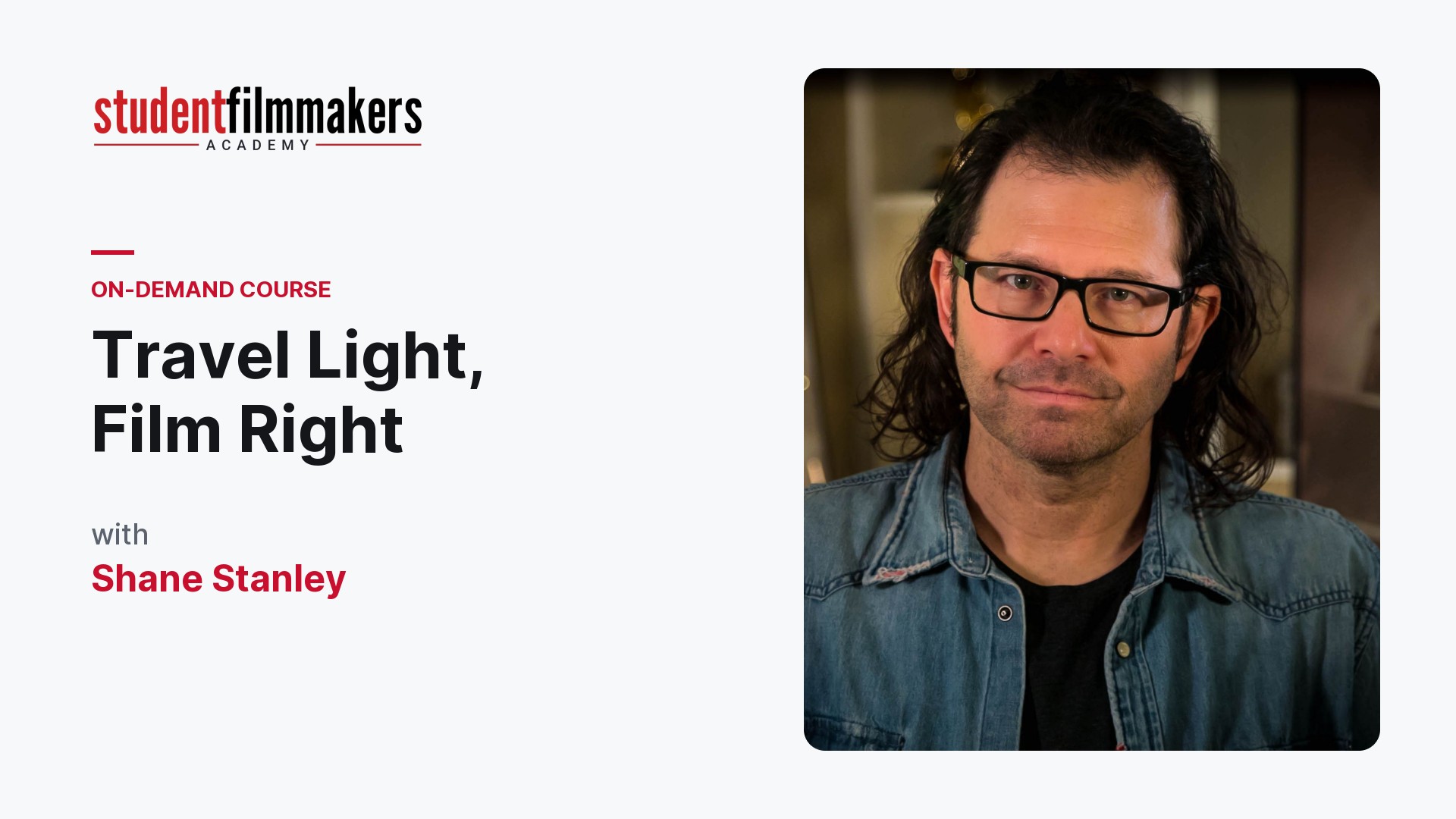
Ask Shane Stanley where an indie budget leaks, and he won’t start with the big lines in the budget. The Emmy winner, director of Double Threat and Night Train and executive producer on Gridiron Gang, came to a StudentFilmmakers webinar fresh off a feature shot during the 2023 strikes. He listed the small charges that pile up and made the case for a shoot small enough to fit in a van.
Why should a director think like a line producer?
Because on an indie, nobody else will. A line producer is the one at the front, cutting deals with vendors, crew and locations inside a budget handed down by the executive producer. Stanley keeps a second budget next to the official one: what each line was budgeted at, and what he will actually pay. The goal is to drive that second number down.
He learned the job working for line producer Gary Bettman, who hung a sign over his office door:
“Free is never free.”
Bettman and other line producers Stanley worked under in his sitcom days interviewed every hire, down to second ACs, and asked what they brought to the job. Sometimes the answer was a pile of sandbags, C-stands or film short ends that had walked off another production. That gear might look like savings, Stanley warned, but think about what those people will take from you. On his latest film, loss and damage hit about $4,000, almost all of it missing items. On an action film shot at sea through two hurricanes, it had been $109.
Which costs are you required to carry?
Two big ones before a frame is shot, if you work with the guilds:
- A 10 percent contingency. SAG won’t green-light the project without it, so a $250,000 film sets aside $25,000 of real money.
- A bond, usually 40 to 60 percent of your total spend on cast, including fringes.
Stanley also pushes back on the customary 10 percent agent fee. If an agent pitches a client and you hire them, fine, they earned it. If you found the actor and chased the agent down, he doesn’t pay it.
Where do the hidden costs come from?
Once a deal is closed, the extras start arriving. One agent sent $1,600 in hair, nail and makeup requests, including three manicures at $250 each. A friend in the nail business told Stanley the priciest manicure around was about $80. His advice:
“You as a producer have to stand up and say no. You have the right to say no.”
Crew deals have changed too. After seeing productions spend 25 to 30 percent of their budgets on COVID safety, crews started asking why that money couldn’t go to them. On his strike-era shoot, with about 80 percent new faces because his regulars were working in Italy, he ran into charges he’d never seen in 35 years:
| Charge | What happened | His fix |
|---|---|---|
| Six-day “penalty” | Crew billed a full sixth day at time and a half, though the six-day weeks were agreed up front | Pull out the deal memo; nothing about it was in there |
| Kill fee | When production gave everyone an unscheduled day off, the crew billed half a day’s rate for it | Same: no kill fee was ever agreed |
| Uber rides | Crew without cars, facing $8-a-gallon gas, added ride receipts to invoices | Pay only real exceptions, like a driver dropping a truck at a pre-light |
| Meal penalties | People “forgot” that grace had been called before lunch | Know the rules and say them out loud |
Everything goes in writing, he said, because the trouble is always what’s not in the deal memo. He even wondered aloud whether going union would have cost less, since union rules at least protect both sides.
How can you save on extras, props and makeup?
Plan with your cinematographer before you book anyone. His last film had a banquet hall with 40 tables of 12. Instead of hundreds of extras at $125 to $135 a day, they brought in roughly 50 to 70, after lunch so they didn’t need a hot meal, had them bring wardrobe changes, and moved them around between setups. With longer lenses and foreground, the room looked like it held 200 people.
Other savings he uses:
- Prop sharing. A co-producer used an art department sharing site and spent about $130 of a $5,000 prop budget.
- Buy and return. He’s not shy about buying a prop online and sending it back.
- Crew cars. Offer the sound mixer a $20 bump to use their car in a scene, with insurance covered.
- Makeup sponsors. A makeup artist once asked him for a letter instead of a kit fee and took it to MAC, which then supplied four of his movies. Try smaller boutique brands, not the giants.
Why does more gear cost more time?
This was the surprise of his last film. Vendors hadn’t rented in months because of the strikes, so deals were incredible, and the production ended up four times heavier than he normally travels: a box truck just for camera, three-ton grip and electric trucks, honeywagons and drivers. Old crew members told him it wasn’t his style. They were right.
“When you have all this stuff, it requires more bodies and more time. Well, time is money, bodies are money.”
More bodies also mean more meals and more invoices, and the trucks have to be stored at night. Many policies won’t cover unattended vehicles, so rental houses may refuse to release gear unless the trucks are parked at one of a few approved lots, for a fee every night. The film fell behind early, and he blames the sheer amount of gear and too few hands to move it.
His usual kit is the opposite: Canon C70s, which he used on Night Train and Double Threat and which fit in a car. Asked if he gives anything up, he said no. Lenses matter more, the camera is Netflix approved, and he likes its grittier, less glossy look.
What does traveling light look like?
Asked how to keep lighting compact, Stanley described one film lit with nothing but available light and bounce boards, plus a few borrowed units for night scenes. His definition of light: a one-ton van with a trailer, not three big trucks that announce a film shoot on the block. Night Train, with lots of night work, ran on a two-ton truck. Double Threat, shot under pandemic limits on crew size, had a van and a friend’s pickup.
He keeps days to about 10 hours and avoids company moves; his last film had one in 24 days. He starts with easier days so cast and crew can find their legs, and he doesn’t push the hard scenes to the end.
Is product placement worth it?
Sometimes. Free drinks for the crew in exchange for a few cans on screen is a good deal. But one film was gifted so much product that they had to rent a 40-foot trailer, hire someone to drive it and ship everything back. Paying placements now usually send half after the company approves a cut and the rest on release.
“Don’t try to fund your film on product placement, folks.”
Without paid placement, be careful with brands. Greek labels on bar bottles, build fake social media screens instead of showing real apps, and never let your villain drink a real soda.
How do you pay actors you can’t afford?
With what he calls “if-come” deals. Say an actor usually gets $100,000 and you have $50,000. Offer the $50,000 plus 2 percent of adjusted gross on a streaming deal, or $100,000 for every $3 million at the box office. The agent can take that back to the client, and everyone wins if the film breaks out.
His last word was about state tax incentives: count the full cost. A 30 percent credit may mean a local partner company, travel and hotels, and selling the credit through a broker for less than face value.
Related reading on budgets: balancing budget and schedule, hiring crew as independent contractors, and tips on financing your independent film.