Andrew Laszlo, ASC (1926 to 2011) was the cinematographer of The Warriors, Southern Comfort, Streets of Fire, First Blood, Innerspace and the miniseries Shogun, and he filmed the Beatles at Shea Stadium for Ed Sullivan. He survived the Holocaust as a teenager, arrived in New York at 21 with almost nothing, and worked his way from still photography to more than 40 features and television films. In his later years he wrote six books and taught young cinematographers, including a full day with StudentFilmmakers in New York in 2005.
Early life in Hungary
He was born László András on January 12, 1926, near Pápa, Hungary, and his family settled in Pápa when he was about three. His father was Leslie (Laci) Laszlo. Andrew was a strong swimmer, skater and fencer at school, and his interest in photography began there too. He started a small business printing photos for his classmates.
When his father was called up to the Hungarian Army in the late 1930s, the family business fell apart, and the teenager learned to make lampshades to help support his family while he was still a full-time student. When the war began, he was an apprentice at the Motion Picture Studios of Budapest.
In 1944 he was sent to a forced labor camp, and his family was deported to Auschwitz. He later lived through Bergen-Belsen and Theresienstadt, which was liberated on May 8, 1945. His Variety obituary and his IMDb biography say he was the only member of his family to survive. He told the whole story himself in his 2002 memoir, Footnote to History.
After the war he went back to Pápa, restarted his photo business, finished his high school diploma and took a job at the Hungarian Film Bureau in Budapest. Film and Digital Times dates his start to 1946, sweeping the floor of a film lab in Budapest. With an uncle in New York, the painter and lithographer George Laszlo, ready to sponsor him, he left Hungary by way of Germany. He walked down the gangplank of the SS Ernie Pyle in Manhattan on January 17, 1947, five days after his 21st birthday.
Getting started in New York
His first goals were simple: learn English as fast as he could and find any work connected to photography. He worked in the darkroom of a company that printed textiles and wallpaper by a photographic process, and for a while he was a door-to-door baby photographer.
Then came what he called the greatest break of his life. He was drafted for the Korean War and ended up in the U.S. Army motion picture school, serving in the Signal Corps as a combat photographer. The school had all the equipment and had the students shoot 35mm film day after day. “Doing it is the greatest way to learn,” he said in the documentary Cinematographer Style.
After the Army, breaking in was hard. He had no track record and could not get past producers’ secretaries. He sent out hand-printed résumés on sandpaper so people would remember them, and on shirt cardboard so they could not be crumpled into the wastebasket. He took any job that put him behind a camera. After working for a producer of industrial films in Pittsburgh, he became a camera operator on The Phil Silvers Show in the mid-1950s.
He began working with Ed Sullivan in 1953, filming programs in Portugal, Alaska and Ireland. In 1959 Sullivan took him to Havana for an interview with Fidel Castro, telling the crew they were going to the Dominican Republic. The local power could barely handle the American lights, and Andrew got the footage anyway.
Features, the Beatles and Shogun
Andrew moved up to director of photography on Naked City (1962 to 1963), then The Nurses and Coronet Blue. His first feature was One Potato, Two Potato (1964), a drama about an interracial marriage. He shot Francis Ford Coppola’s You’re a Big Boy Now (1966) and William Friedkin’s The Night They Raided Minsky’s (1968).
On August 15, 1965, he filmed the Beatles at Shea Stadium for Ed Sullivan, the first huge rock concert filmed for television. With 14 cameras around the stadium and 56,000 screaming fans, the crew shot more than 200,000 feet of film. About 10,800 feet made it into the finished documentary.
He chose to stay in the New York suburbs rather than move to Hollywood. In 1979 he shot Walter Hill’s The Warriors, and he devised new lighting for its subway car interiors. It was the first of three films with Hill, followed by Southern Comfort (1981) and Streets of Fire (1984).
The NBC miniseries Shogun (1980) was filmed entirely in Japan, with many actors and extras who spoke no English. Andrew liked to tell the story of a huge battle in Osaka harbor that went off, with guns firing and boats sinking, before the cameras were rolling. The whole scene had to be shot again. He tells it in his book It’s a Wrap.
Through the 1980s he shot First Blood, Remo Williams: The Adventure Begins, Poltergeist II: The Other Side, Joe Dante’s Innerspace and Star Trek V: The Final Frontier. He also ran Andrew Laszlo Productions, which made commercials for advertisers such as Kodak, Budweiser, Chevrolet and American Express. His last feature was Newsies (1992), with Christian Bale and Robert Duvall, and after it he turned to teaching and writing.
Career timeline
| Year | Milestone |
|---|---|
| 1926 | Born January 12, near Pápa, Hungary |
| 1944 | Sent to a forced labor camp; his family is deported to Auschwitz |
| 1945 | Liberated at Theresienstadt on May 8 |
| 1947 | Arrives in New York on January 17 aboard the SS Ernie Pyle |
| 1950s | Drafted for the Korean War; U.S. Army motion picture school and Signal Corps combat photographer |
| 1953 | Begins filming programs for Ed Sullivan |
| Mid-1950s | Camera operator on The Phil Silvers Show |
| 1962 | Director of photography on Naked City (1962 to 1963) |
| 1964 | First feature, One Potato, Two Potato |
| 1965 | Becomes a member of the American Society of Cinematographers; films the Beatles at Shea Stadium on August 15 |
| 1966 | Shoots Francis Ford Coppola’s You’re a Big Boy Now |
| 1974 | Emmy nomination for The Man Without a Country (ABC) |
| 1979 | Shoots The Warriors, the first of three films with Walter Hill |
| 1980 | Shoots the miniseries Shogun in Japan |
| 1981 | Emmy nomination for Shogun (NBC) |
| 1982 | Shoots First Blood |
| 1992 | Last feature, Newsies |
| 2000 | Publishes Every Frame a Rembrandt: Art and Practice of Cinematography, with Andrew Quicke |
| 2002 | Publishes his memoir, Footnote to History |
| 2004 | Publishes It’s a Wrap (ASC Press) and the novel The Rat Catcher |
| 2005 | A Conversation with Andrew Laszlo, ASC, with StudentFilmmakers in New York, April 16 |
| 2006 | Appears in the documentary Cinematographer Style; publishes the novel A Fight of No Consequence |
| 2008 | Publishes Banjin, a novel drawn from his time in Japan on Shogun |
| 2011 | Dies October 7 at his home in Bozeman, Montana, at 85 |
| 2012 | The ASC presents its student awards as the ASC Andrew Laszlo Student Heritage Awards |
People Andrew Works With
- Walter Hill: The Warriors (1979), Southern Comfort (1981) and Streets of Fire (1984).
- Ed Sullivan: programs filmed abroad from 1953, the 1959 Havana trip, and The Beatles at Shea Stadium (1965).
- Paul Bogart: episodes of The Nurses and Coronet Blue, and the feature Class of ’44 (1973).
- Lamont Johnson: Coronet Blue (1967) and Somebody Killed Her Husband (1978).
- David Greene: the pilot The Happeners and episodes of Coronet Blue (1967).
- James Sheldon: episodes of Naked City and The Nurses.
- Arthur Hiller: Popi (1969) and The Out of Towners (1970).
- Jeffrey Laszlo, his son, a cinematographer who shot the documentary Cinematographer Style (2006), in which Andrew appears.
Tools and techniques
Andrew learned on 35mm film in the Army, shooting thousands of feet. He believed the hard conditions of his era shaped the work. Looking back on The Warriors in Every Frame a Rembrandt, he wrote that faster film stocks, faster lenses, smaller and more powerful lights and electronic postproduction would make it a different movie today, with no need for the same ingenuity. His subway car lighting on that film is still studied. At Shea Stadium he planned coverage for 14 cameras at once.
Life outside the set
Andrew married Ann Granger, a New Yorker, shortly before he left the Army. They raised four children, Andrew, Jim, Jeffrey and Elizabeth, in the New York suburbs, and they had five grandchildren.
After Newsies he gave his time to teaching, woodworking and metalworking, and fly-fishing on Montana’s rivers. He also wrote fiction: The Rat Catcher (2004), A Fight of No Consequence (2006), about a former boxer trying a comeback, and Banjin (2008), inspired by his months in Japan on Shogun.
In his own words
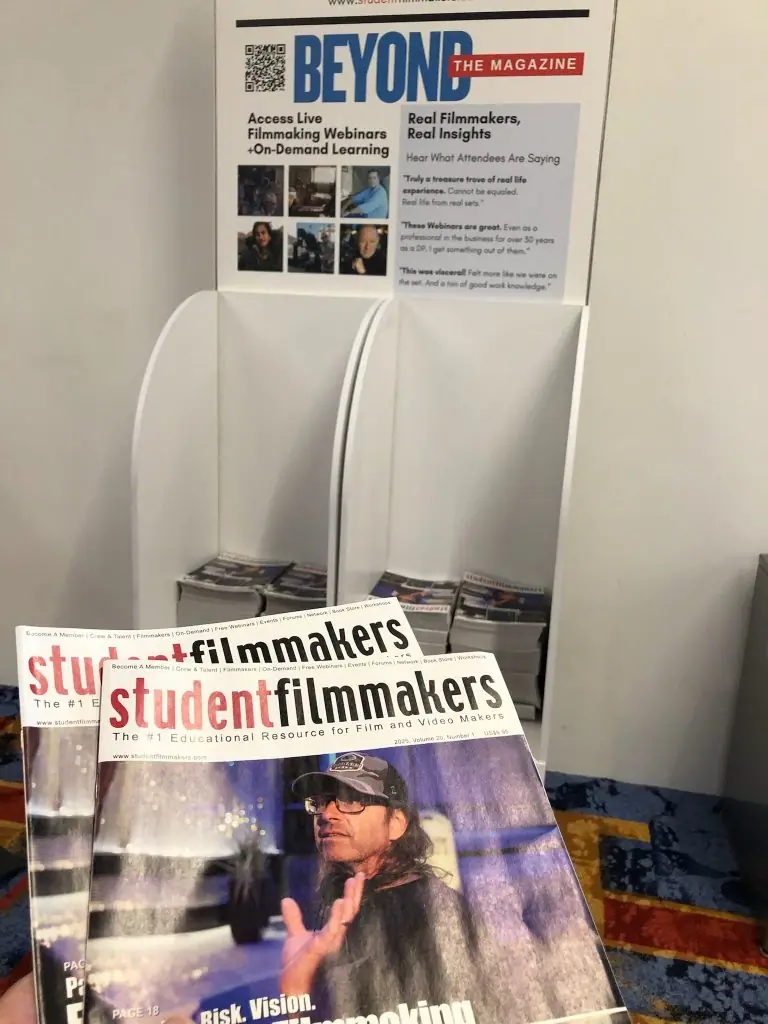
“It would have been wonderful if I had a magazine such as the StudentFilmmakers magazine available to me when I first started dreaming about becoming a cinematographer.” (to StudentFilmmakers)
“I never believed I was anybody special. I still don’t think so.” (Footnote to History, 2002)
“You have to eat it, dream it, talk it and take every opportunity to get yourself established.” (Film and Digital Times, interview recorded June 2007)
“You are not going to get anything out of it if you don’t put something into it.” (Film and Digital Times, interview recorded June 2007)
“As I said earlier, the important thing is to stick with it.” (Cinematographer Style, 2006)
With StudentFilmmakers
On April 16, 2005, Andrew spent a full day with students, filmmakers and professionals at the St. James Building, 1133 Broadway, in New York. The event was called A Conversation with Andrew Laszlo, ASC. He told his war stories, showed clips from his films, and walked through how particular shots were made and how he worked with directors, producers, crews and stars. A photo that publisher Kim Welch took that day later ran in American Cinematographer.
After he died, StudentFilmmakers covered the winners of the 2012 ASC Andrew Laszlo Student Heritage Awards. He is part of our Cinematographer Honor Roll, in Part 1, Where It Started.
Current Productions
Andrew Laszlo died on October 7, 2011. His final credits as cinematographer were the TV movie 209 Hamilton Drive (1991) and the feature Newsies (1992).
Complete credits
Newest first, from IMDb (checked November 28, 2026), with Wikipedia, the Television Academy and his obituaries noted in our source list.
Cinematographer
- 1992 | Newsies | feature
- 1991 | 209 Hamilton Drive | TV movie
- 1990 | Ghost Dad | feature
- 1989 | Star Trek V: The Final Frontier | feature
- 1987 | Innerspace | feature
- 1986 | Poltergeist II: The Other Side | feature
- 1985 | Remo Williams: The Adventure Begins | feature
- 1984 | Thief of Hearts | feature
- 1984 | Streets of Fire | feature
- 1983 | Love Is Forever | TV movie
- 1982 | First Blood | feature
- 1982 | I, the Jury | feature
- 1981 | Southern Comfort | feature
- 1981 | The Funhouse | feature
- 1981 | Thin Ice | TV movie
- 1980 | Shogun | miniseries | 5 episodes; also the TV movie version
- 1980 | Top of the Hill | TV movie
- 1979 | The Warriors | feature
- 1978 | Somebody Killed Her Husband | feature
- 1978 | The Dain Curse | miniseries | 3 episodes
- 1978 | Hunters of the Reef | TV movie
- 1977 | Thieves | feature
- 1976 | Cool Red | film
- 1975 | From Sea to Shining Sea | series | 1 episode, “The Unwanted”
- 1973 | The Man Without a Country | TV movie
- 1973 | Class of ’44 | feature
- 1972 | To Find a Man | feature
- 1971 | Jennifer on My Mind | feature
- 1970 | The Owl and the Pussycat | feature
- 1970 | Lovers and Other Strangers | feature | as Andy Laszlo
- 1970 | The Out of Towners | feature
- 1970 | Black Water Gold | TV movie
- 1969 | Popi | feature
- 1969 | Teacher, Teacher | TV movie
- 1968 | The Night They Raided Minsky’s | feature
- 1967 | Coronet Blue | series | 12 episodes
- 1967 | The Happeners | series pilot
- 1966 | You’re a Big Boy Now | feature
- 1966 | The Beatles at Shea Stadium | TV documentary
- 1964 to 1965 | The Nurses | series | 6 episodes
- 1964 | One Potato, Two Potato | feature
- 1962 to 1963 | Naked City | series | 10 episodes
Camera department
- 1990 | The Bonfire of the Vanities | feature | second unit director of photography (uncredited)
- 1985 | That’s Dancing! | feature | additional photographer
- 1980 | Rockshow | concert film | cameraman
- 1979 | Wings Over the World | TV movie | cameraman, concert performance
- 1977 | Washington: Behind Closed Doors | miniseries | second unit photography, 6 episodes
- 1973 | Miracle on 34th Street | TV movie | director of photography, New York
- Mid-1950s | The Phil Silvers Show | series | camera operator
Self
- 2006 | Cinematographer Style | doc
- 2005 | The Battleground: Casting the Warriors | video
- 2005 | The Phenomenon: Releasing the Warriors | video
- 2005 | The Way Home: Making the Warriors | video
- 1991 | International Cinematographer’s Guild Heritage Series | series | 1 episode
- 1984 | Inside ‘Streets of Fire’ | video
Archive footage
- 2017 | Shotguns and Six Strings: The Making of a Rock ‘n’ Roll Fable | video | uncredited
- 2013 | Rumble on the Lot: Walter Hill’s Streets of Fire Revisited | video | uncredited
Thanks
- 2013 | Rumble on the Lot: Walter Hill’s Streets of Fire Revisited | video | dedicatee
- 2011 | Special Collector’s Edition | series | in memory of, 1 episode
- 2002 | Drawing First Blood | video | special thanks
Books
- 2008 | Banjin | novel
- 2006 | A Fight of No Consequence | novel
- 2004 | It’s a Wrap | memoir of filmmaking (ASC Press)
- 2004 | The Rat Catcher | novel
- 2002 | Footnote to History | autobiography
- 2000 | Every Frame a Rembrandt: Art and Practice of Cinematography | with Andrew Quicke (Focal Press)
On StudentFilmmakers
Articles with and about Andrew
- Cinematographer Honor Roll: Passing On the Art of Cinematography (November 8, 2026)
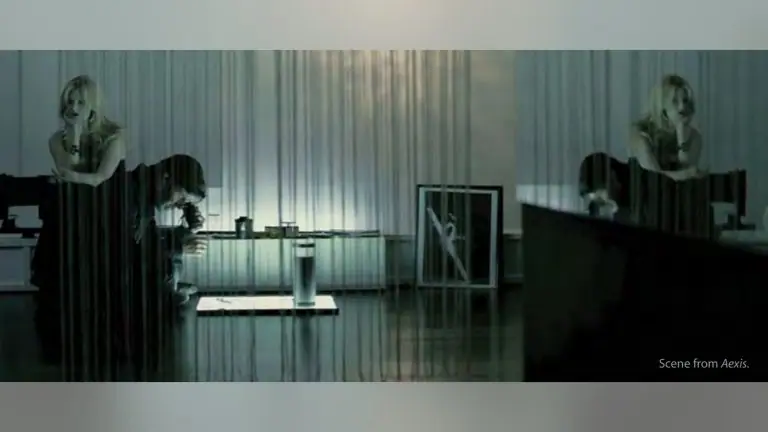
- Aexis: ASC Student Heritage Award Winner (November 4, 2026)
- Josephine and the Roach: ASC Student Heritage Award Winner (November 4, 2026)
Other articles that mention him
- “Lighting for Film: Keep It Simple” by Michael Corbett (September 5, 2019)
- StudentFilmmakers Magazine Collection: 80 Digital Editions (June 19, 2020)
- 8 Inspiring Pieces of Advice for New Filmmakers (November 18, 2020)