By Dean Goldberg
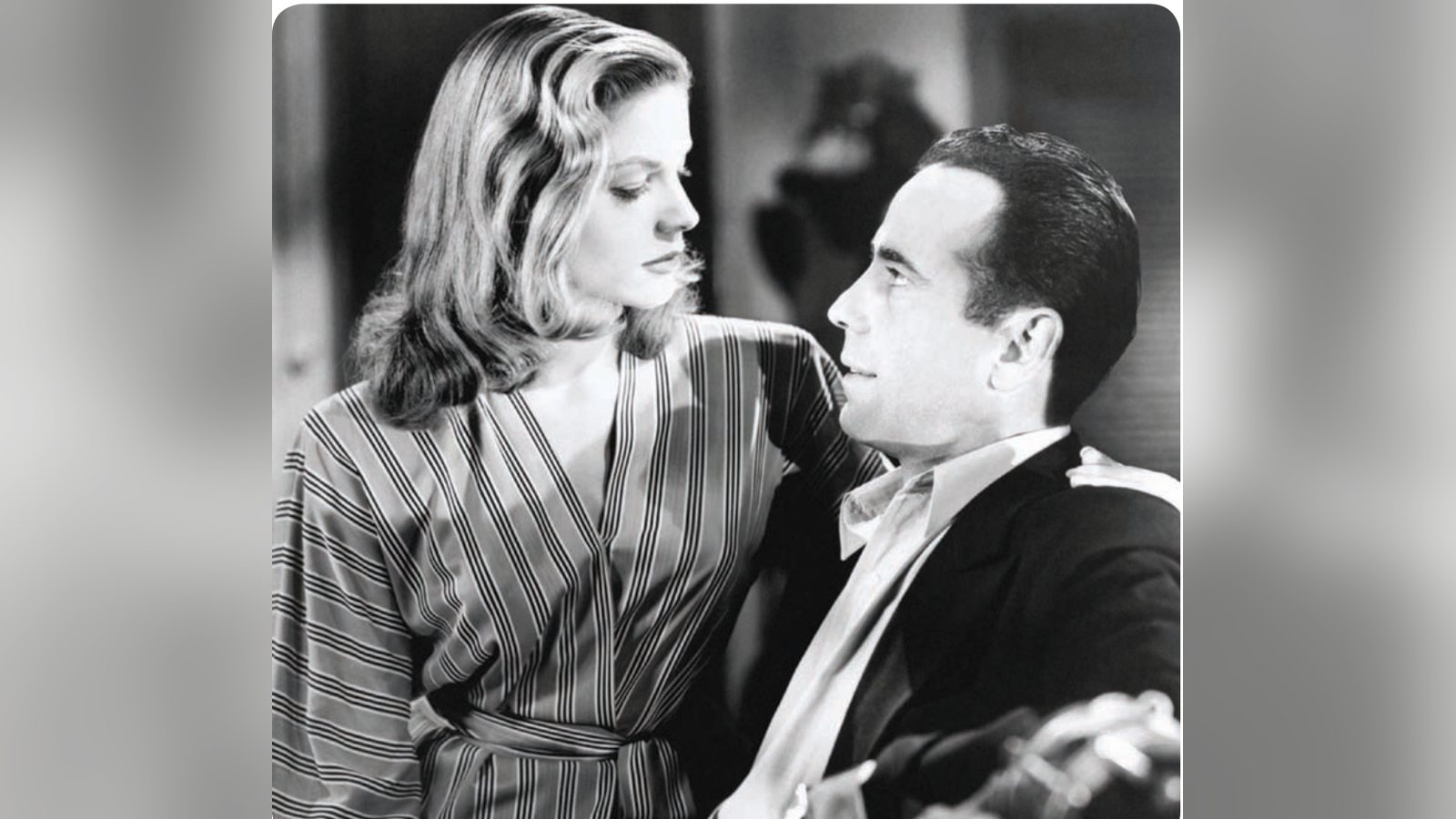
Does a production student need cinema studies? Dean Goldberg makes the case for film history, starting with Bacall and Bogart in To Have and Have Not.
That was the line 20-year-old model turned actress Lauren Bacall threw to 46-year-old Humphrey Bogart in the 1944 adventure romance To have and have not. It became one of the most famous lines in movie history and put Bogart firmly into the pantheon of leading men-tough guys while launching young Lauren Bacall into a glamorous orbit that lasted for more than a decade. The legendary Howard Hawks directed the film. Hawks knew his way around every popular genre of film, from westerns, Red River, to musicals, Gentlemen prefer Blondes (with a dazzling Marilyn Monroe). Sid Hickox, a master cinematographer who had lensed Katherine Hepburn in 1932 for George Cukor in a A Bill of Divorcement photographed the film. He filmed Bogie again in The Big Sleep, another that teamed B& B.
Did I also mention that the screenplay came from a Hemingway novel of the same name? Or that Hawks hated the book and basically took the title some pages and, with the old man and the sea himself, rewrote the damn thing?
Question: Was this little capsule of information interesting? Helpful? Worthwhile? What exactly is the point of all this random information? At my own august (but modest) institution of learning I might actually find out after my students filled out the obligatory “student evaluation” form at the end of the semester. The question would most likely look like this:
Overall this class was a valuable learning experience.
It usually goes about 70/30 in my favor, which means that I bored the heck out of a third of the class, while on the other hand 7 out of 10 stayed awake. The numbers don’t really tell the story though, since some don’t even answer. Comments? That gets even stickier. Few pontificate about the class in any meaningful way. Judging by past evaluations the comments will range from “I wish we watched some movies in color! I mean black and white, WTF?” Or, “Goldberg’s a cool guy but the movies are really long and boring,” to “I wish the seats weren’t so hard.”
Of course my snippets of relevant information about the history of a particular iconic film would be part of a more serious epistemological, sociological and political lecture that would synergize both pedagogy with empirical analogy. (Translation: I’d gossip, tell geeky tech film stories and then we’d watch the movie.) In the end even though most of my students end up writing boring papers about their experience with about as much enthusiasm as they have when forced to baby sit during their spring break, a few have some interesting things to say, and one or two— (remember I said “modest college?), will write amazing papers that reflect their excitement about the industry.
The question of how important Cinema studies are to a production student’s education has been an issue for as long as I can remember, one as complicated and full of entanglements and confusion as ever. Some of the problems stem from the difference between the two separate skills in relation to how they fit into the academic environment. In many some undergraduate institutions and many grad schools you’ll find a majority of Cinema Studies courses are taught by professors from other disciplines, like history, english or philosophy. Often the film courses are relegated to adjuncts that are more familiar with the DVD versions of films than they are of the theatrical versions. Then there’s the misnomer that because one loves movies one might be expert enough to teach a class in cinema. I often hear comments like “I know every director and actor of every western ever made,” to which my usual response is to slowly walk backward a few steps then turn and run.
Finally there’s a turn on the old saw that says “Those that can’t do, teach. Those that can’t teach, teach gym.” The new maxim might go something like, “Those that have no interest in gym might try their hand at teaching Cinema.” From the town library down the to the lovely old gentleman on TCM, there’s always someone ready to stroll down Hollywood’s memory lane. Seems like everyone’s an expert on the movies.
So why bother making our way through the minefield of film theory and practice? It’s pretty simple actually. Though nothing can replace on location experience, lighting and camera instruction, screenwriting and editing workshops and industry internships—the final product of all that work (film or HD) is part of an ongoing artistic journey that began in the 19th century is still evolving and deserves to be studied with the same rigor as we study art, music or literature.
In fact, filmmakers have a leg up since many artists and writers reflect their influences in their work at the risk of being labeled “derivative” or even worse, while moviemakers revel in their plagiarism. We do what’s been done before with absolutely no hesitation or guilt. Want a fast example? See if you can find rolling boulder sequence in the 1959 version of Journey to the Center of the Earth, then screen the much more famous opening scene in Raiders of the Lost Ark. An homage to Henry Levin the little known director? I think not. More likely, Spielberg never forgot the thrill watching James Mason, Pat Boone and company running for their lives on the big screen. So when he dove into is his treasure trove of exciting visuals, the idea of the bolder “chasing” the good guys broke through the collage running through his head. But who knows? Maybe it was the cinematographer’s head, or the art director’s. It doesn’t really matter, because in the end, the scene, with different actors, different art direction, and different music—came to life anew. The fact is that the process of filmmaking should be filled with knowledge of the content, meaning, psychology, science, politics, art, music and history of what’s come before, if the work is going to mean anything to anyone. I won’t argue that so many movies are a popular entertainment full of blunt stupidity and generic formulas that fill our malls with mind numbing visual and audio noise, but movies are also an art form that has informed and enlightened audiences of all kinds—workers, academics, war brides, little kids in 3d glasses—and done it for more than a century. It is a form that utilizes the essence and magic of all the arts while providing us with a real-time experience that changes each time we let it unfold before us.
Movies are a reflection of our nature, our world, our history and ourselves. For the filmmaker, they are the virtual libraries that can be added to, taken from or even—by the most talented of us—rewritten.
Related filmmaking guides
Keep learning filmmaking
Want more lessons like this? Join StudentFilmmakers free for live webinars with working pros, and stream on-demand filmmaking classes in cinematography, directing, screenwriting, sound and post.