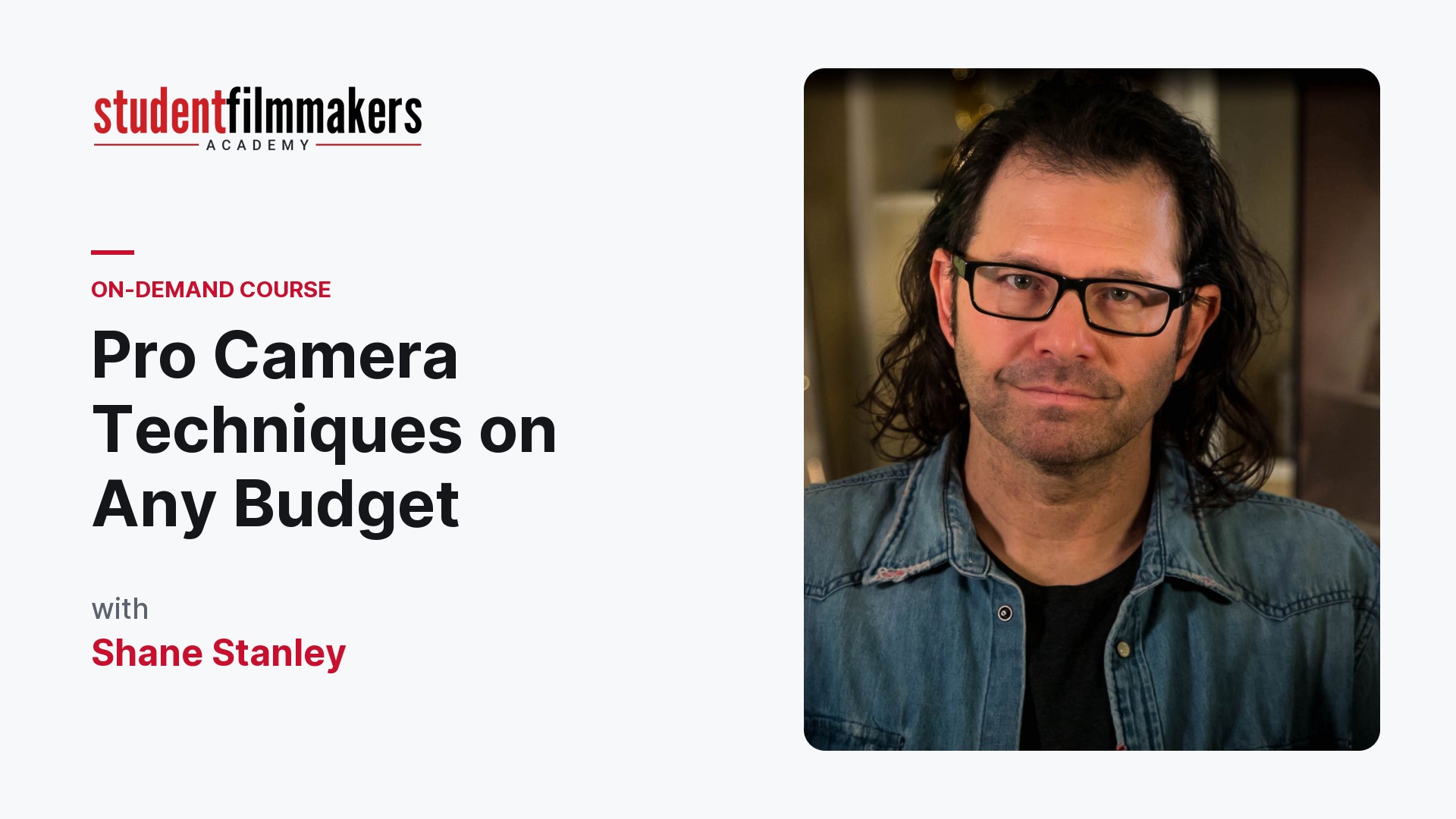
Ask Shane Stanley, the Emmy-winning filmmaker who directed Night Train and was an executive producer on Gridiron Gang, what goes wrong in small films, and he names the camera problem he sees most in films that need rescuing is simple: not enough coverage. In this hour-long camera class, he walks through stills from his own sets and shows how planning, staging and a few cheap tools let a small production look far bigger on screen.
What makes a low budget film look professional?
Shane opens with five things, beyond a good script, that lift any film, and then spends most of the class on the camera side. His recurring point is that money is rarely what separates a film that looks small from one that looks big. Planning is. Lovely footage is no help to an editor who is missing the pieces a scene needs.
Everything he teaches comes with the real problem behind it, from his own productions, so you can borrow the reasoning as well as the trick.
How should you cover a scene?
Start wide, then work your way in, so the editor has every piece the story needs. Shane pays special attention to two kinds of shot that new directors skip:
- Listeners. Reactions from the person who is not talking give the editor somewhere to go.
- Cutaways. Quick shots of a detail or another part of the room that let an editor fix a problem.
He also discusses when to shoot a dirty single, with a piece of the other actor in the foreground, and when a clean single is the better choice.
Are two cameras worth it on a small set?
Yes, if you plan for it. Shane covers how to run two cameras on an indie set without losing time to the extra setup, so the second camera adds coverage instead of slowing the day.
When is a oner worth the risk?
A whole scene in one unbroken take can be thrilling. But if a line goes wrong or a beat runs long, there is no other angle to cut to. Shane talks through when a oner earns its place and how to protect yourself, so a failed take does not cost you the scene.
How do you make a small production look bigger?
This part of the class is built around stories from his sets:
- A Civil War battle with a fraction of the extras. Hurricanes left him with only a couple of dozen reenactors on a night that called for hundreds. He explains how he still got the battle scene he needed.
- A diner in Night Train. A small location was staged so it felt fuller and busier than it was.
- A dressing-room mirror. He shows how the crew stopped the camera appearing in the reflection.
- A motorcycle rider shifting at speed. A safe rig got close inserts of the rider working the gears.
Beyond those, he talks about simple tools: sliders and gimbals for movement, inserts for texture, and filling the background so the frame looks lived in. None of it needs a big crew.
Do you need special gear for this?
No. Nearly everything Shane teaches is about planning and staging, so it applies to whatever camera you own today. It is aimed at first-time directors, film students and self-shooters heading into a shoot with a small crew and little time, and at producers deciding where a modest budget will show up most on screen. Editors and assistant directors will likely recognize the problems he describes, and appreciate the fixes.
What did the audience ask?
Filmmakers watching live asked about making a whole film on one lens, whether anamorphic lenses are worth it, and punching in on a wide shot during post to create a closer one. Shane explains when punching in can save a scene and what it costs in image quality. He also answers two questions every beginner asks: which camera to buy first, and which single camera-movement tool to buy before anything else.
What happens when the day goes wrong?
Shane closes on planning for the worst. Weather turns, light runs out, money runs short. His advice is to prepare for those days before they arrive, so a bad day still ends with the scene in the can.
Two pieces from our archive go deeper into coverage, Coverage: Telling the Story with the Camera, The ABCs of Coverage, and for thin budgets there is Cinematic Magic on a Shoestring.