Maine Media Workshops added new film and multimedia courses. Film program director Mimi Edmunds and faculty member Ted Wachs talk about learning there.
New Courses
A multimedia program has been added to foster the expansion of artistic and journalistic work to include all imaginable hybridizations of media. Mimi Edmunds, Film Program Director for Maine Media Workshops, has added about 19 new classes since last year. “We’re leaving the world of standard def, so we will redefine and introduce new classes.” New courses recently introduced involve high definition cinematography, new directing techniques for the short film form, as well as making documentary shorts for the web. Additionally, they have introduced a new class called DIT (Digital Imaging Technician), offer a new documentary camera class, and courses on making the theatrical documentary and on episodic filmmaking.
Edmunds, who has a background in broadcast journalism, (CBS’s 60 Minutes; documentary divisions of CBS, the Discovery Network and PBS), will be teaching throughout the fall semester and professional certificate program which starts September 9th.
Over a hundred workshops run throughout the summer months.
StudentFilmmakers staff catches up with Mimi Edmunds, and interviews Ted Wachs, long-time Workshops film instructor who joined MMW’s staff year-round last year as Film Technical Director and college instructor. Wachs talks about the hand-on technical aspects of MMW’s film programs.
Q&A with Ted Wachs
How does your school deal with changing technologies?
Ted Wachs: The Maine Media Workshops has a long history of sponsors that support us. They know that our students will purchase or rent the equipment that they learn on here. The sponsors update our equipment on a yearly basis and also loan us gear on a weekly basis for specific workshops.
What kinds of technologies do you use and will you be adding?
Ted Wachs: We embrace all of the technologies available to the industry. That includes analog and digital capture, and optical and digital color correction. Our lighting equipment includes tungsten, HMI, fluorescent, and LED fixtures.
What kinds of cameras and editing systems do the students use? How available are they, and what is the camera to student ratio?
Ted Wachs: We have 24 new HDV cameras from Canon, from the XHA-1 to the range topping XLH-1, a Panasonic Meeting today’s educational needs for future professional filmmakers at Main Media Workshops includes honoring historical forms and practices while embracing new technologies and modes of creative expression. Located in the small village of Rockport, Maine, the area that has long attracted artists because of its supreme physical beauty. This provides an immersive environment conducive to concentrated work. The campus provides studios, darkrooms, digital labs, post-production labs, fully equipped camera and technical departments, as well as a library and sound stage for student productions. Students at Rockport College benefit from being part of the Maine Media Workshops community through interaction with the visiting faculty in multiple disciplines, while working with the accomplished full-time faculty.
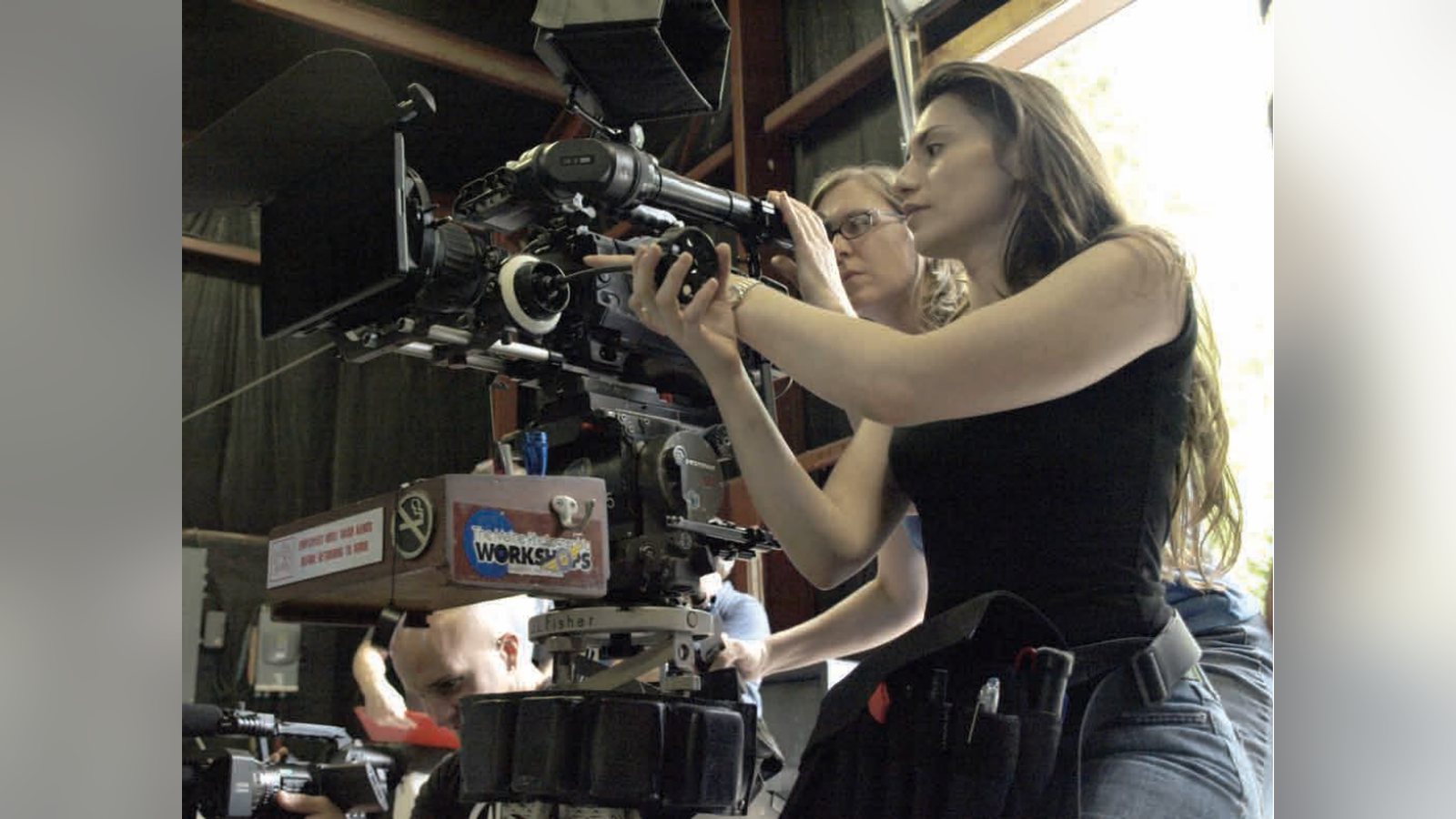
SDX-900, a Sony DSR -500, and three 16mm Arriflex film cameras. On specific weeks, we have additional film cameras from Panavision and Arriflex, and state of the art digital video cameras from Panasonic.
We occasionally have prototypes of equipment not yet available to the industry, and factory representatives to demo them. Camera/ student ratios change on a weekly basis. This week we have the Documentary Camera Workshop running and each student has their own HD camera supplied by the school. Our editing systems are Final Cut Pro, and we do run occasional Avid workshops.
What is your teaching style or philosophy? What is important?
Ted Wachs: Intensive, hands-on one week workshops is our speciality. We feel that a student should learn every piece of equipment that they use. In other words, if they are going to use a jib arm, they need to learn how to set it up. We also have 2-week, 4-week, 7-week, and 12-week workshop programs, and a 1-year Professional Certificate program. What’s important is that filmmaking is story driven and that technique should support the story.
Does the digital technologies of today get lumped in with the term “filmmaking,”
or is it distinctly different?
Ted Wachs: Digital technologies are just another brush in the filmmaker’s palette. Again, filmmaking should be story driven, and the choice of film verses digital tape verses digital files should be appropriate to the story. My departed professor/mentor from photography school said, ‘Technique is only important when it’s bad’. Content is paramount.
In addition to the workshops provided, are there other things offered to students to help them prepare for working in the real world and in the industry? This might include career counseling, internship programs, mentorship programs, working [hands-on] with productions, learning to work with professional equipment…
Ted Wachs: All of the above. Although we do not have a job placement service, students often become interns or teaching assistants here at the Workshops. I have used many of our students on productions outside of the Workshops, and through our referrals, many students have gotten started in the industry. I get e-mails from past students from all around the world telling me how the Workshops have helped them find and keep jobs. Most of all, most of our instructors are working professionals, and many of our students are working professionals, and the networking possibilities are endless.
Will you always be teaching film? Could you talk a little bit about ‘film versus digital’.
Ted Wachs: I’m a film guy. Film is film, and digital wants to look like film. Digital video has made huge strides over the past few years, especially in its ability to hold the highlights. But there are no standards, and digital is constantly evolving and changing. 16mm and 35mm film and film cameras have been a standard for many years. Kodak continues to improve their film stocks, and Arriflex and Panavision still update their cameras, but you can still use a 30-year-old film camera and still get great results. We will keep teaching film until Kodak closes its doors and the last shred of film in our refrigerator is gone. With constantly changing formats, the average viability of a digital video camera is only a few years. I just did my first Red Digital One job, and the camera performed quite well, but there are still issues. Digital video is coming on strong, but film will continue to be the premier capture material for many years to come. The final question of film verses digital is the ability to archive.
Q&A with Mimi Edmunds
You’ve added a lot of new classes over the past year. Is this due to changing technologies, new techniques, and trends?
Mimi Edmunds: I’d just like to say that we’re driven by demand in terms of interest and trend and style and the way the whole industry is moving both in feature films, television, and web-based, visual imaging making – and not necessarily led by technologies.
Because technologies change, we can add new classes. But what also drives us is trends and interests in filmmaking and different styles, which may require a smaller camera, a larger camera, a different kind of camera, a different approach, a different software,… So, it’s a combination of both.
I’d like to introduce the idea that we really like to keep it in a balance. What do we think is important? What do we think is more in demand this year in terms of what people want to do with their careers and where the film industry is going? And when I say film, I mean all moving visual imaging making.
What is your teaching style or philosophy? What is important?
Mimi Edmunds: The philosophy here is that it’s very experiential, that you will learn by doing. But we also like to teach the richer context of filmmaking. We have a course in our professional certificate program on film history and on the context in social and cultural environments in film has grown up in. We do teach by doing, but we also, in our college program, take a little more academic approach in that people are tested and have final projects and actually earn grades.
Philosophically, I’d give 30% lecture time to 70% doing it and instruction while doing. What you’re learning at the workshops are skills, skills to make movies, to make films, to make stories in the moving visual media. And those skills obviously involve some editorial decisions and some judgement that requires an understanding of the larger context of the world. And so we aren’t just doing the same old things that everyone has seen, and we’re not making trite films or clichés. We want to go further and make new and more imaginative and original work – bringing out the filmmaking art in every person.
The other thing is small classes. The size of my classes are more like tutorials or seminars. And that’s because of that belief in ‘doing,’ and also that belief in one-on-one time.
Will you still be teaching film?
Mimi Edmunds: ‘Film’ as a category of moving visual image making. I’m not saying ‘film’ when I mean just celluloid. We use it as a larger term, so of course a film could be on digital, it could be on video – it’s not all gonna be on 16. But we use the term as more of a category of moving images. So, will we be teaching film? Yes, absolutely. Will we be teaching 16 mil? Yes. We will teach 35 because we have an adapter, but if we use the new cameras it still doesn’t mean that it isn’t a film. So we will always teach film.
Keep learning filmmaking
Want more lessons like this? Join StudentFilmmakers free for live webinars with working pros, and stream on-demand filmmaking classes in cinematography, directing, screenwriting, sound and post.