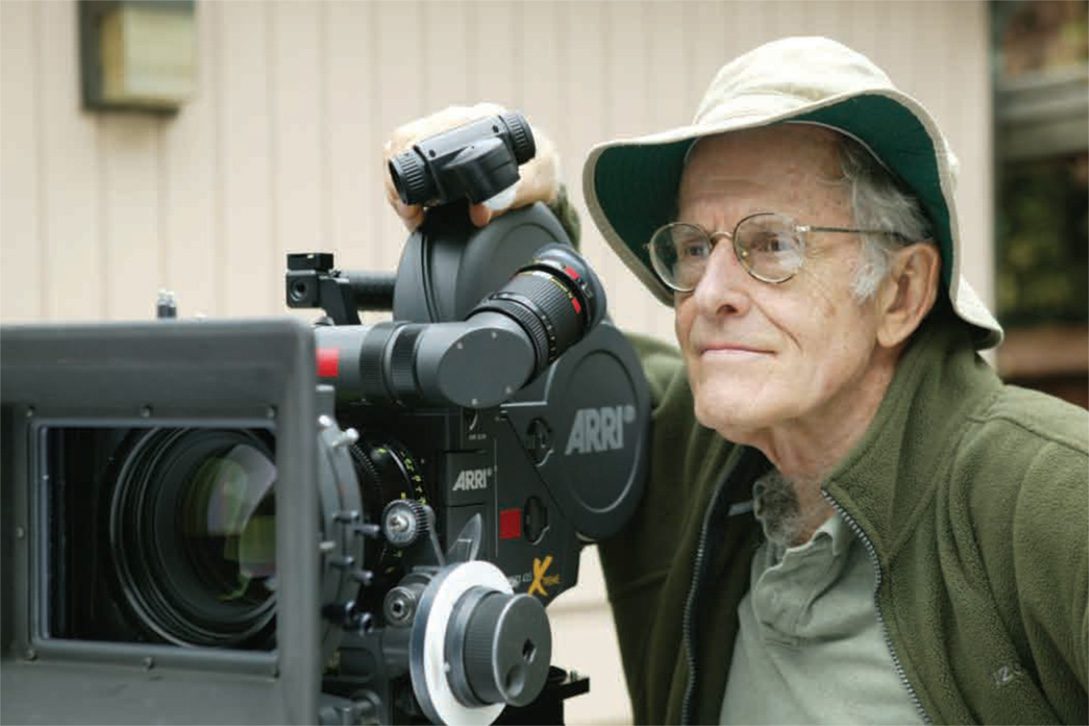
Ron Dexter, ASC is a cinematographer, director and inventor who spent his career shooting high-budget television commercials on 35mm, ran his own commercial studio in Hollywood for about 20 years, and built the camera gear he needed when nobody sold it. The Dexter dolly and the Dexter high hat carry his name. He has been teaching ever since, and he once turned down a job because a stunt was, in his words, too dangerous.
Early years
Ron has not published his birth date, hometown or schooling, and we have not found them in any reliable source. His own site dates his working life: a paid cameraman from 1962, a director-cameraman from 1968, and a builder of cranes and dollies from 1965.
Getting started
His early work mixed documentary and special effects. He has told us he worked with a cameraman in special effects in Hollywood who had a dolly design that came from RKO Fox, and he copied and adapted it for his first dolly. He built that dolly for Harvest (1967), a United States Information Agency film made for overseas audiences, which he and director Carroll Ballard shot as one-man crews, each filming about half. Most of it was scenic farmland at dawn and dusk, shot with low, moving camera to make the frame feel three-dimensional. He put a motor on the dolly, ran it from a camera battery, and could make dolly shots alone in the field.
His first crane was just as homemade. A director named Joe Hanwright wanted a crane move, so Ron built one from a section of ladder, speed rail and a box for counterweight, lay down on it with a handheld Arri and a 200-foot magazine, and started the shot at ground level. When the crew asked him to go faster, a loose joint dumped him off the front end.
IMDb lists him as cinematographer on San Francisco Summer 1967 and, in 1970, on Gas! -Or- It Became Necessary to Destroy the World in Order to Save It and the short Ry Cooder: How Can a Poor Man Stand Such Times and Live?
Commercials and inventions
Most of Ron’s career went into network television commercials, shot on 35mm, for clients including Kodak, Ford, Chevrolet, United, Pepsi, Mountain Dew and Budweiser. He shot in 18 countries and 40 states, with crews of 30 in Hollywood and with no crew at all, and filmed subjects from diamonds to 747s and people from Bob Hope to Frank Sinatra. He owned or built most of the 35mm equipment he used.
The Dexter dolly grew from that first USIA rig. He set his track at 30 inches instead of the two-foot standard, used larger pipe and wooden ties, and made versions that would carry Fisher and Chapman dollies. He is quick to say he did not invent skate-wheel bearings; he used steel ball bearings. He also built and sold the Dexter high hat, co-designed the Body Mount and the Pitching Lens, built one of the first video assists for the Arri IIC, Arri 35-3 and Arri 35 BL, and holds two patents for film equipment.
He has also directed as a member of the DGA, now retired, and served as a union board member and negotiator. IMDb lists him as director and executive producer of On the Edge (1998). In stop-motion, he has described building the motors and lens mounts for Davey and Goliath, which he also directed and shot on film, and shooting Gumby with digital still cameras.
Career timeline
| Year | Milestone |
|---|---|
| 1962 | Begins working as a paid cameraman |
| 1965 | Starts building cranes and dollies |
| 1967 | Photographs Harvest with Carroll Ballard, building his first dolly for it; shoots San Francisco Summer 1967 |
| 1968 | Begins working as a director-cameraman |
| 1970 | Director of photography on Gas! -Or- It Became Necessary to Destroy the World in Order to Save It |
| 1998 | Directs and executive-produces On the Edge |
| 2006 | Appears in the documentary Cinematographer Style |
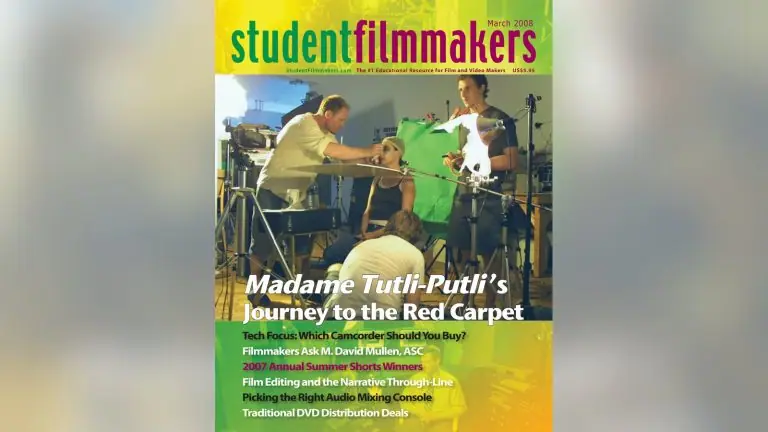
| 2008 | Exclusive interview in the August issue of Student Filmmakers Magazine |
| 2021 | Talks with StudentFilmmakers about camera movement and camera effects |
He is a member of the American Society of Cinematographers. We could not find the year he joined.
People Ron Works With
- Carroll Ballard, who directed Harvest (1967), which the two shot together as one-man crews.
- Riggers and grips: on location Ron asks the local grips to do their own rigging, and he says the best riggers are the people who build camera cars.
Public credits do not show other partners he has teamed with more than once, so we have kept this list short.
Tools he loves
Ron’s tools are the ones he made. On location he shipped wooden cross ties and bought metal conduit locally to make 20- to 25-foot track, bolted four trucks to a sheet of plywood for a dolly, and often gave the whole thing to the overseas crew when he left. He always packed his Dexter high hat, chain pliers and ratchet straps.
He loves a small move. Backpack dollies and cranes, with a bag of rocks for counterweight if need be, let the camera look up when it is low and down when it is high, perfect for a reveal over a hedge. Even a handheld pan gains life if you walk a slight arc, because the perspective changes. He is cool on the dolly zoom, which he calls a gimmick without a strong story reason, and he reminds students that new gear such as the Steadicam is only worth using when it serves what you want to say.
Life outside the set
Since retiring from commercials, Ron has kept teaching. He has taught hundreds of students, trained many of his own crews, designed a film course for the Irish government, and written a 250-page website about equipment and production. He has also made many no-budget video projects for the fun of it.
In his own words
“To learn to drive, you have to learn in a parking lot, you don’t get on the freeway.” (StudentFilmmakers, on learning to use a crane)
“People especially get hurt when they’re trying to help you get the shot, and the sun’s going down.” (StudentFilmmakers)
“That’s the key to being a good cinematographer, is being able to give the director the feel that they want.” (StudentFilmmakers)
“The question is, what do you want to say, and what’s the best way to do this?” (StudentFilmmakers)
With StudentFilmmakers
Ron first appeared with us in the August 2008 issue of Student Filmmakers Magazine, in an exclusive interview on camera work and capturing happy accidents. In November 2021 we published his conversation with us on camera movement and camera effects: building dollies and cranes, rigging safely, the dolly zoom, backpack cranes, and shooting stop-motion animation. His advice to student cinematographers also appeared in our 2020 roundup “5 Best Pieces of Advice for Student Cinematographers.”
He is in Part 2 of our Cinematographer Honor Roll.
Current Productions
No current projects are publicly listed for Ron as of November 28, 2026. His own site describes him as retired from commercials and still teaching.
Complete credits
From IMDb (checked November 28, 2026), which lists few of his credits because most of his work was television commercials. Other IMDb entries under the name Ron Dexter (on Invasion of the Body Snatchers, The Black Stallion Returns and The Magical World of Disney) are separate listings and are not included, because we could not confirm they are him.
Cinematographer
- 1970 | Ry Cooder: How Can a Poor Man Stand Such Times and Live? | short
- 1970 | Gas! -Or- It Became Necessary to Destroy the World in Order to Save It | feature | director of photography
- 1967 | San Francisco Summer 1967 | TV movie
- 1967 | Harvest | short | photography, with Carroll Ballard
Director
- 1998 | On the Edge | feature
Producer
- 1998 | On the Edge | feature | executive producer
Camera department
- 1998 | On the Edge | feature | additional footage
Self
- 2006 | Cinematographer Style | doc
On StudentFilmmakers
Articles with and about Ron
- Camera Work and Capturing Happy Accidents (August 2008 issue; posted online November 4, 2026)
- 5 Best Pieces of Advice for Student Cinematographers (November 18, 2020)
- Ron Dexter, ASC on Camera Movement and Camera Effects (November 16, 2021)
- Cinematographer Honor Roll, Part 2: Ron Dexter, ASC (November 8, 2026)
Other articles that mention him
- StudentFilmmakers Magazine Collection: 80 Digital Editions (June 19, 2020)
- 8 Inspiring Pieces of Advice for New Filmmakers (November 18, 2020)
- How to Become a Cinematographer: 10 Steps, Skills and Pay (July 5, 2023)
- Top 10 Cinematography Schools for Aspiring Cinematographers (August 19, 2026)