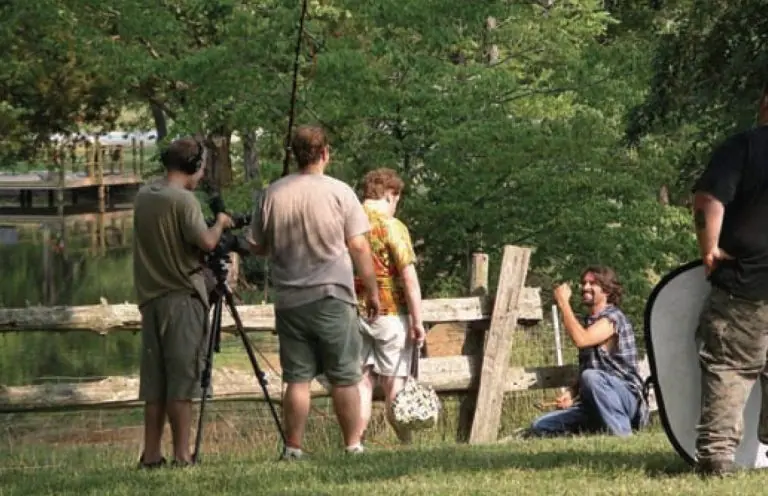
Stephen Goldblatt, ASC, BSC is the cinematographer of The Hunger, The Cotton Club, Lethal Weapon and Lethal Weapon 2, The Prince of Tides and Batman Forever, both nominated for the Academy Award, and later of Angels in America, Closer, Julie & Julia, The Help and Red, White & Royal Blue. He began as a still photographer in London in the 1960s, went to film school alongside Tony Scott, and received the ASC Lifetime Achievement Award in 2023. He still takes photographs whenever he is not making films.
Early life: Johannesburg to London
Stephen Lewis Goldblatt was born on April 29, 1945, in Johannesburg, South Africa. His parents opposed apartheid, and when he was seven they moved the family to London. He did not care much for his new schools, their sports or their teachers.
Photography gave him a way forward. At the Guildford School of Art he learned composition by photographing eggs on a 4×5 view camera. Before long he was working as a photographer. He photographed the state funeral of Britain’s wartime prime minister for Paris Match, which earned him three pages in the magazine, worked for London Life, and was a backup photographer at the Beatles’ sessions for the White Album.
Getting started
He told our magazine that at 17 or 18 one of his jobs was shooting special stills on film sets at Shepperton Studios outside London. For about six months he got to know the crews and loved what he saw: the collaboration between the director, the cinematographer, the camera crew and the script supervisor. The film unions then were closed to outsiders, so he decided to go to film school.
He had never made a film, but the Royal College of Art, a postgraduate school, kept a place or two for what he calls “the lunatic exceptions.” They took him on the strength of his photography. Ridley Scott had just graduated, Tony Scott was in his year and became a close friend, and Elton John played the student bar on Friday nights.
When he left three years later, he sold his Hasselblad, his Mamiyas, his Nikons and all his lenses, so that he could not go back to stills. He took any camera job he could find, from children’s television to industrial films. Then a classmate, Carlos Pasini Hansen, took him to the Xingu region of the Brazilian jungle for four or five months to make a documentary with just a sound recordist and an anthropologist. He shot two ethnographic films for Granada Television’s Disappearing World series, in the Amazon and in the Andes.
Documentaries led to commercials, often for Tony Scott and Brian Gibson. His first features followed: Breaking Glass for Gibson in 1980, then Outland for Peter Hyams. In 1983 he and Tony Scott made The Hunger, Scott’s first feature. On the strength of it, Francis Ford Coppola asked him to take over The Cotton Club, which he calls the beginning of his feature work in America.
A career in features
He joined the American Society of Cinematographers in 1987, recommended by Howard Schwartz, Vilmos Zsigmond and Jordan Cronenweth. That year he shot Lethal Weapon for Richard Donner, followed by Lethal Weapon 2 in 1989. The Prince of Tides, directed by Barbra Streisand, brought his first Academy Award nomination, and Batman Forever, for Joel Schumacher, his second.
After a break from films in the late 1990s, when he went back to photography, he began a long run with Mike Nichols: the HBO miniseries Angels in America, Closer and Charlie Wilson’s War. He also shot the TV movies Conspiracy and Path to War, both nominated for Emmys along with Angels in America. Conspiracy he shot handheld on Super 16mm for a documentary feel.
Later features include Rent and Percy Jackson & the Olympians: The Lightning Thief for Chris Columbus, Julie & Julia for Nora Ephron, The Help, Get On Up and Ava for Tate Taylor, The Intern for Nancy Meyers, Our Souls at Night, Wild Mountain Thyme and, in 2023, Red, White & Royal Blue. Wikipedia now describes him as retired.
On The Help, he told us, the team had to shoot a 150-page script in 58 days, all on location, for $25 million, and make it look like a $70 million film. He shot it on film, because he trusted film more than the digital cameras of the day to hold the contrast between Viola Davis and a very white baby in the same frame.
Career timeline
| Year | Milestone |
|---|---|
| 1945 | Born April 29 in Johannesburg, South Africa |
| 1952 | Moves with his family to London, at seven |
| 1968 | Still photography on the short My Little Grey Home in the West |
| 1969 | Co-cinematographer, with Tony Scott, on Forum |
| 1974 | Camera on two episodes of Granada’s Disappearing World |
| 1980 | First feature, Breaking Glass |
| 1983 | The Hunger, Tony Scott’s first feature |
| 1984 | The Cotton Club for Francis Ford Coppola |
| 1987 | Joins the American Society of Cinematographers; shoots Lethal Weapon |
| 1992 | First Academy Award nomination and ASC Award nomination, for The Prince of Tides |
| 1996 | Second Academy Award nomination and ASC Award nomination, for Batman Forever |
| 2001 | Emmy nomination for Conspiracy |
| 2002 | Emmy nomination for Path to War |
| 2004 | Emmy and ASC Award nominations for Angels in America |
| 2007 | Camerimage Lifetime Achievement Award |
| 2011 | Shoots The Help |
| 2014 | Camerimage Golden Frog nomination for Get On Up |
| 2023 | ASC Lifetime Achievement Award, March 5; last feature, Red, White & Royal Blue |
He is a member of the ASC and the British Society of Cinematographers, and he has mentored young filmmakers through the Sundance Institute.
People Stephen Works With
- Tony Scott: classmate at the Royal College of Art, Forum (1969), commercials, and The Hunger (1983).
- Brian Gibson: commercials and Breaking Glass (1980).
- Richard Donner: Lethal Weapon (1987) and Lethal Weapon 2 (1989).
- Joel Schumacher: Batman Forever (1995) and Batman & Robin (1997).
- Mike Nichols: Angels in America (2003), Closer (2004) and Charlie Wilson’s War (2007).
- Chris Columbus: Rent (2005) and Percy Jackson & the Olympians: The Lightning Thief (2010).
- Tate Taylor: The Help (2011), Get On Up (2014) and Ava (2020).
- John Patrick Shanley: Joe Versus the Volcano (1990) and Wild Mountain Thyme (2020).
- Production designer Mark Ricker and costume designer Sharen Davis on The Help, whose work he credits for its period feel.
Tools he loves
Stephen thinks of the camera as “an invisible character.” On a period film that means little zooming, no showy cranes, and any crane moves hidden inside the shot. The style is built from small details: the lenses, the diffusion, the quality of the light, and the saturation and contrast set in the digital intermediate.
He tests costumes and sets on camera before shooting so the designers can see how colors really read, since film and digital do not render reds, greens and blues the way the eye expects. Sometimes he does it with still photographs, on a computer display calibrated to mimic the film stock.
Earlier in his career he learned Kodak’s 35mm stocks by pushing them in practice, worked with Brute arcs and large diffusion frames, and used in-camera tricks such as front projection. By 2013 he had shot nothing but digital stills for ten years, and he says digital stills are better than film “in every respect,” but for movies he judged each camera by how it was built, not by the label.
Life outside the set
Photography has been Stephen’s other life since he was a teenager. He told us he is “a still photographer when I’m not doing movies.” Thousands of his photographs from Nigeria in 1970 that had never been published were rediscovered in 2019, He photographed the Beatles in 1968.
In his own words
“Film did not start with ‘Raiders of the Lost Ark’; it has a long, long history, and a fascinating one too.” (StudentFilmmakers Magazine, 2013)
“I liked the collaborative life.” (StudentFilmmakers Magazine, 2013, on his months photographing at Shepperton Studios)
“I was determined to be a cinematographer, and I had to make good — I didn’t have any other financial resources.” (American Cinematographer, 2023)
“I was flying by the seat of my pants.” (American Cinematographer, 2023, on his early features)
With StudentFilmmakers
Stephen talked with our magazine in its 2013 Back-to-School/IBC issue, in an interview we titled “The Camera as an Invisible Character.” He told the story of Shepperton, the Royal College of Art and the Brazilian jungle, explained how he recreated early-1960s Mississippi for The Help, and gave one big tip to young cinematographers: study film, all of it, backwards and forwards in time. We published the full interview online in November 2026. He is part of our Cinematographer Honor Roll.
Current Productions
No current projects are publicly listed for Stephen as of November 28, 2026. His most recent credit is Red, White & Royal Blue (2023), and Wikipedia describes him as retired.
Complete credits
Newest first, from IMDb (checked November 28, 2026), with directors checked against Wikipedia.
Cinematographer
- 2023 | Red, White & Royal Blue | feature
- 2020 | Wild Mountain Thyme | feature
- 2020 | Ava | feature
- 2017 | Our Souls at Night | feature
- 2015 | The Intern | feature
- 2014 | Get On Up | feature
- 2011 | The Help | feature
- 2010 | Percy Jackson & the Olympians: The Lightning Thief | feature
- 2009 | Julie & Julia | feature
- 2007 | Charlie Wilson’s War | feature
- 2005 | Rent | feature
- 2004 | Closer | feature
- 2003 | Angels in America | mini series | 4 episodes: “Millennium Approaches: Bad News,” “Perestroika: Heaven, I’m in Heaven,” “Perestroika: Stop Moving!,” “Perestroika: Beyond Nelly”
- 2002 | Path to War | TV movie
- 2001 | Conspiracy | TV movie
- 1999 | The Deep End of the Ocean | feature
- 1997 | Batman & Robin | feature
- 1996 | Striptease | feature
- 1995 | Batman Forever | feature
- 1993 | The Pelican Brief | feature
- 1992 | Consenting Adults | feature
- 1991 | The Prince of Tides | feature
- 1991 | For the Boys | feature
- 1990 | Joe Versus the Volcano | feature
- 1989 | Lethal Weapon 2 | feature
- 1988 | Everybody’s All-American | feature
- 1987 | Lethal Weapon | feature
- 1985 | Young Sherlock Holmes | feature
- 1985 | Lionel Richie: “Say You, Say Me” | music video
- 1984 | Styx: Caught in the Act | concert video | film segments
- 1984 | The Cotton Club | feature
- 1983 | Styx: Kilroy Was Here | short
- 1983 | The Hunger | feature
- 1982 | The Return of the Soldier | feature
- 1981 | Outland | feature
- 1980 | Breaking Glass | feature
- 1973 | The Mangrove Nine | short doc
- 1973 | Odeon Cavalcade | short
- 1972 | Pass of Arms | short
- 1971 to 1972 | The Flight of the Arctic 7 | mini series
- 1969 | Forum | feature | with Tony Scott
Camera department
- 1980 | The Alternative Miss World | doc | lighting director
- 1974 | Disappearing World | series | camera operator, 2 episodes (“Mehinacu,” “Quechua”)
- 1971 | Things Fall Apart | feature | still photographer
- 1970 | The Hornsey Film | doc | camera operator
- 1970 | Loving Memory | feature | camera assistant (as Steve Goldblatt)
- 1968 | My Little Grey Home in the West | short | stills photography
Director, writer and producer
- 2002 | Farkleberry Farm: Wet and Wooley | short
Actor
- 1971 | Things Fall Apart | feature | Bushnell
Self
- 2024 | Icons Unearthed | series | 2 episodes on Batman, also additional materials and thanks (6 episodes)
- 2019 | Alan Pakula: Going for Truth | doc
- 2016 | Close Encounters with Vilmos Zsigmond | doc
- 2013 | Light & Shadow | short
- 2013 | Roger Ebert’s 14th Annual Film Festival: A Retrospective | short
- 2012 | A Family Affair: Bringing ‘Lethal Weapon’ to Life | video
- 2012 | Pulling the Trigger: Expanding the World of ‘Lethal Weapon’ | video
- 2010 to 2011 | FilmFellas: A Webisodic Series | series | 5 episodes
- 2007 | The 11th Annual Hollywood Awards | TV special
- 2006 | No Day But Today: The Story of ‘Rent’ | video
- 2006 | Cinematographer Style | doc
- 1996 | The 68th Annual Academy Awards | TV special | nominee
Thanks
- 2018 | All About Nina | feature | special thanks
- 1997 | A Brother’s Kiss | feature | special thanks
On StudentFilmmakers
Articles with and about Stephen
- Stephen Goldblatt, ASC, BSC: The Camera as an Invisible Character (2013 Back-to-School/IBC issue; online November 4, 2026)
- Cinematographer Honor Roll: Passing On the Art of Cinematography (November 8, 2026)