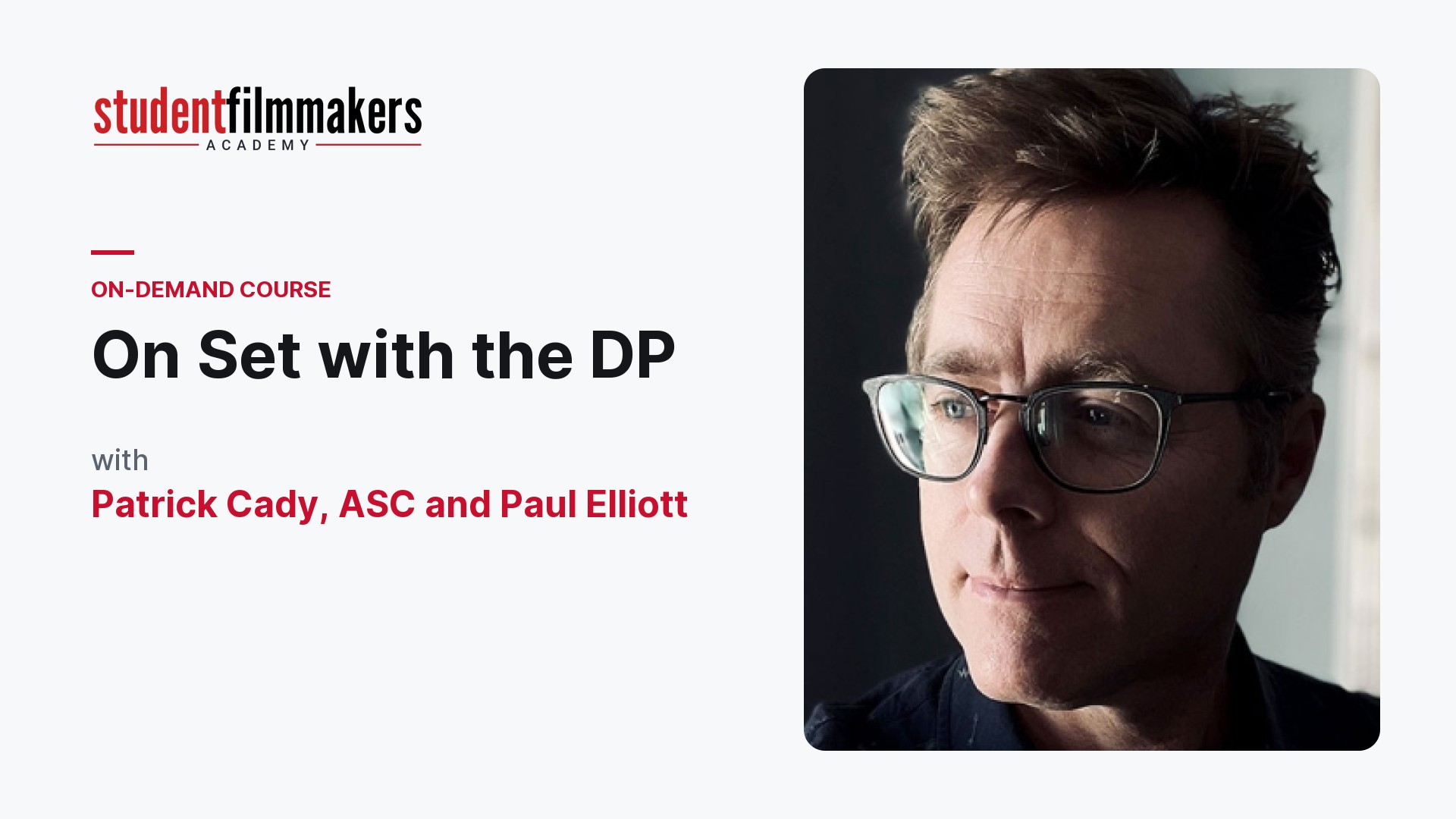
Patrick Cady, ASC, Emmy-nominated for his cinematography on Insecure and a longtime cinematographer and director on Bosch, teamed up with Paul Elliott, the director of photography on Dark Winds and episodes of House of Cards, to explain what a director of photography actually does on a television series. Their answer: the DP carries the show’s look from episode to episode, and the best ones clear the path so the director and the actors get the time they need.
The two know the partnership from both sides. Paul was the cinematographer on episodes Patrick directed of Interrogation, and the pair later worked together again on Duster. So when one of them describes what a director should bring to the DP, the other can say how it felt from across the monitor.
Who owns the look on a TV show?
On most series, the cinematographer stays while directors rotate in for an episode or two. That makes the DP the keeper of the visual rules: how the show is lit, how it moves, which lenses it favors. A guest director’s job in prep is to learn that grammar fast and to read the showrunner, the person who has the final word on tone. Patrick and Paul describe how a director can arrive having studied earlier episodes, so the first conversation with the DP is about the new script, not the basics.
How much camera language does a director need?
Enough to talk shots. Paul makes the case that a director does not have to light a set, but should know what a wide lens does compared with a long one, what a camera move adds, and how to describe a frame in terms the camera crew uses. That shared language is what lets a director and DP build trust in a short prep window.
What goes into a shot list for television?
Patrick and Paul both plan with shot lists, and they sort scenes into A, B and C. An A scene is where the story turns, so it gets the most care and the most setups. C scenes are simpler and can be covered quickly. Ranking scenes this way tells the whole crew where the day’s time should go before anyone unpacks a light.
Their stories range across shows such as Bosch, Cold Case and NCIS: Origins, each told with the reason behind a choice and, sometimes, what happened when the plan fell apart.
Light the room or light the faces?
They compare two approaches. Lighting the whole space lets actors move anywhere and lets the camera turn around fast. Lighting for faces gives more shape and control in each shot, but costs time with every new angle. Which one a DP chooses depends on the show’s style, the schedule and how freely the director wants the actors to roam.
Why does TV coverage look the way it does?
Episodes get trimmed to fit a running time, so the editor has to be able to drop a line, or a whole exchange, without the cut showing. That shapes coverage: singles and overs that let a scene be shortened cleanly. The trick is to give the editing room that freedom while still shooting something with a point of view.
One example from Paul: a tense meeting scene that could have been flat coverage. He made it kinetic by panning only when the next actor spoke, so the camera’s movement followed the argument itself. The pair also talk about the opposite instinct, knowing when to pull back from a moment instead of pushing in on it.
How does a DP protect time for the actors?
By working ahead. If the gear for the next setup is prepped and the lighting plan is settled before the cast arrives, the minutes saved go to rehearsal and extra takes. For Patrick and Paul, that is a large part of the job that never shows up on screen.
Where to go next
For a broader view of the role, read What Does a Cinematographer Do? and How to Become a Cinematographer: 10 Steps, Skills and Pay. For planning shots, Coverage: Telling the Story with the Camera is a good companion. The full class, with audience questions, follows both men through prep, the set and the edit.