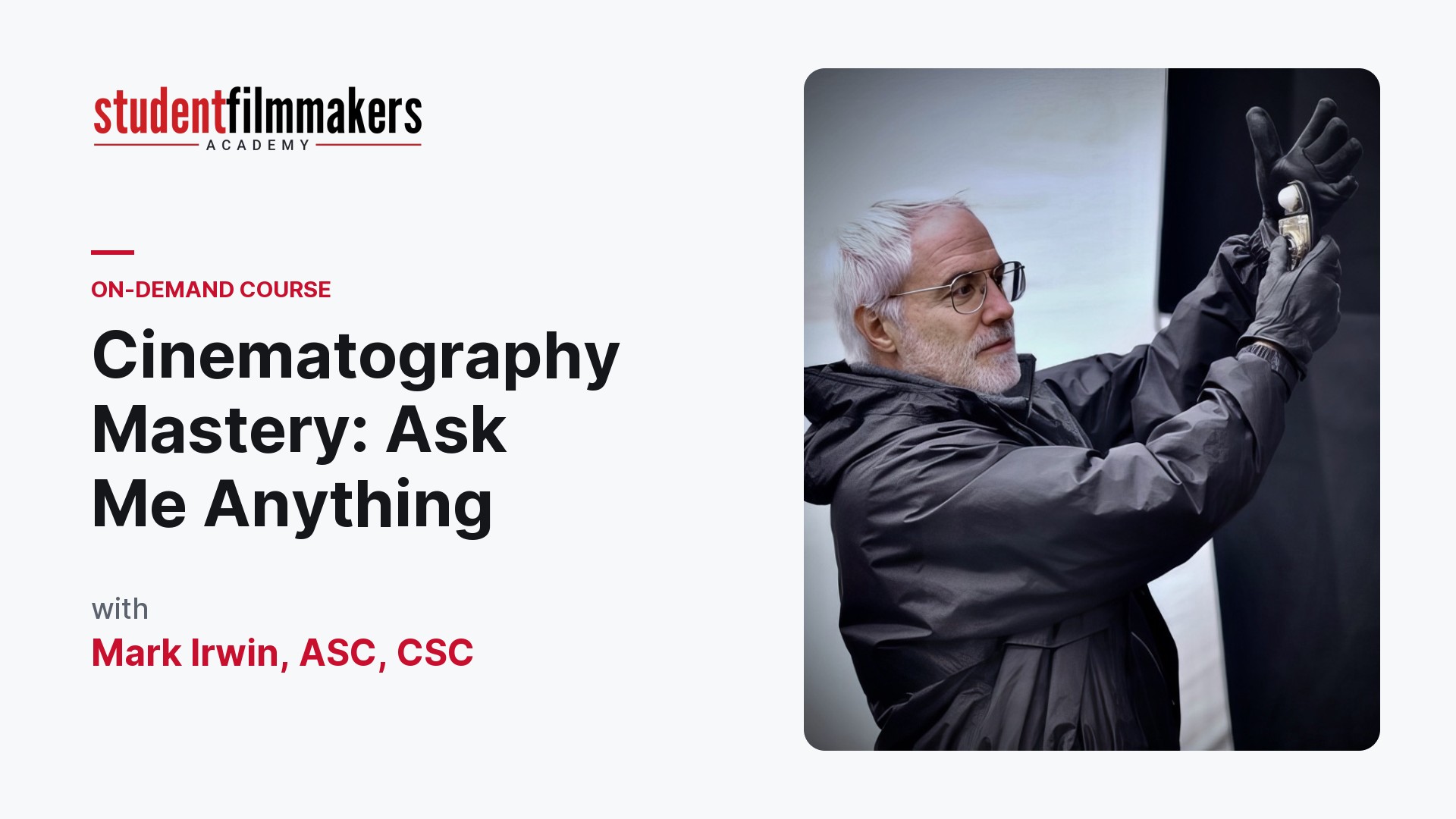
Mark Irwin, ASC, CSC is the cinematographer behind The Fly, Videodrome, Scream, RoboCop 2 and Dumb and Dumber. In this open session he took whatever filmmakers asked, and one answer ran under all the others: the camera is never what stands between you and a good film. The story, the people and the choices you make with light are.
There was no lesson plan. Filmmakers on the live call raised their hands and Irwin answered for about 75 minutes, so the hour wanders the way a good conversation with a veteran DP does: from a horror set in Toronto to a comedy set in Los Angeles, from lenses to luck.
How does a DP adjust to very different directors?
Irwin has worked with directors who sit at opposite ends of the scale. Some arrive with every setup planned and typed. Others want to find the scene on the day with the actors and only then decide where the camera goes. He described what Craven, Cronenberg, the Farrellys and Todd Phillips, whom he shot Road Trip for, each needed from him.
His point for young cinematographers is that neither method is the correct one. Your job is to learn how the person in the director’s chair thinks and to serve that, whether it means following a shot list to the letter or staying loose enough to light a scene nobody has blocked yet.
Can your camera hold your film back?
Irwin’s answer was a firm no. Filmmakers often blame their gear when a project falls short, and he pushes back on that. If a film is not working, look first at the script, the performances and the decisions behind each frame.
He applies the same thinking to lighting crews. Over the years he has learned to pack lighter. Fewer units mean faster setups, and faster setups help the whole company finish the day’s schedule, which crews call making your day. Simple, confident lighting also leaves more time for the actors.
Where does AI fit for a cinematographer?
A question about artificial intelligence came up, as it does in most classes now. Irwin treats it like every new tool he has seen arrive in a long career: judge it by whether it helps tell the story. It is not a replacement for the people telling it, and it does not change what makes an image work on screen.
Is comedy harder to shoot than horror?
Many people assume horror is the technical challenge and comedy is the easy job. Irwin, who has shot plenty of both, explained why comedy can be the harder of the two, and what running a second camera did for Dumb and Dumber. With a B camera rolling beside the A camera, two angles of a single take get filmed together and the performances match from shot to shot.
He also told the story of how Scream came together, one of the films most often asked about by the students who join his classes.
What did Videodrome teach him about hard light?
On Cronenberg’s Videodrome, released in 1983, Irwin worked with hard light: small or distant sources that throw crisp shadows and strong contrast. He talked about how that kind of light, together with lens choice, shapes how an audience reads a character and sets the style of a film. Soft light from large, diffused sources does a different job, wrapping faces gently. Knowing when to use each is a big part of a cinematographer’s voice.
If you want to try soft light on a small budget, our guide to building a 2.5K soft box on a budget walks through one build.
How do you keep a career going?
The session ends on the long view. Irwin spoke openly about partnerships, about what did not work, and about staying resilient when work slows down. One of his suggestions is to team up with young directors early, so you grow together and they bring you along as their careers rise. His years with Cronenberg, which ran from the late 1970s through The Fly in 1986, are one example of what a long director and DP partnership can do for both people.
New to the job title itself? What Does a Cinematographer Do? covers the basics, and you can read about an earlier visit in our recap of an earlier webinar with him.